A record of documented arms, meaning and origin, researched for the Waz family lines. Documented in 2 countries.
Reg. 7165 · Belgian, W–Z
Coat of Arms & Family Crest Details
Symbols on this shield
chiefAuthority, wisdom and dominion
hammerHonest labour, and the smith's craft
Colours
Silver (Argent)Means: Peace and sincerity
Red (Gules)Means: Military strength
Blue (Azure)Means: Loyalty and truth
Gold (Or)Means: Generosity
Historical info
Source
J. B. Rietstap, Armorial Général, Gouda: G. B. van Goor Zonen, 1884–87
Blazon (the actual original written record)
“Parti-émanché d'arg. et de gu., au chef d'azur, ch. de trois maillets penchés d'or. C.: (Arm. v. G.) un bouc iss. d'arg., accorné d'or, posé de front, entre un vol d'azur.”
BelgiumBruxelles, c. 1737
Digital archive packCoat of arms PNG, gold border print PDF, vector SVG and the certificate of authenticity. Sent to your email in minutes.
Map of Belgium showing where the Waz arms are recorded
The Waz arms were recorded in Bruxelles, c. 1737.
This is where the arms were entered in the register. Families often moved to other parts of the country, so the same name can turn up in more than one region.
The body that granted and recorded arms in Belgium in this period.
Charles VI, Holy Roman Emperor
Sovereign of the period
Charles VI, Holy Roman Emperor
1711–1740
Reigning in Belgium when the Waz arms are first recorded.
How Arms Worked in Belgium
In Belgium, a coat of arms is considered personal property that is passed down through the male line to legitimate descendants. Families often use the same shield design across generations to show their shared heritage. If a branch of the family wants to change the design, they must apply for an official update to their specific version of the arms.
Granting authority
The Conseil héraldique is the official body that regulates and approves all coats of arms in Belgium.
How they got arms
Families obtain their coats of arms through formal royal grants or by confirming their historical right to use existing designs.
Where arms were recorded
All approved coats of arms are officially recorded in the public registers of the Conseil héraldique since 1844.
The family's standing
Recorded among the armigerous families of Belgium.
Origin & History of the Waz Family in Belgium
The history of the Waz family in Belgium is rooted in the vibrant urban landscape of Brussels during the eighteenth century. By 1737, records confirm that members of the family were already established residents within the city walls. During this period, Brussels was a center of trade and craftsmanship under the rule of the Austrian Netherlands. Families like the Waz were often part of the growing middle class that supported the city’s economy through specialized labor or local commerce. Living in the capital allowed the family to participate in the social and administrative life of a city that was recovering from earlier conflicts. While the exact origins of the name remain a subject of local study, its presence in the city archives suggests that the family was well-integrated into the fabric of Brussels society long before the modern era.
Coat of Arms & Family Crest Details
Symbols on this shield
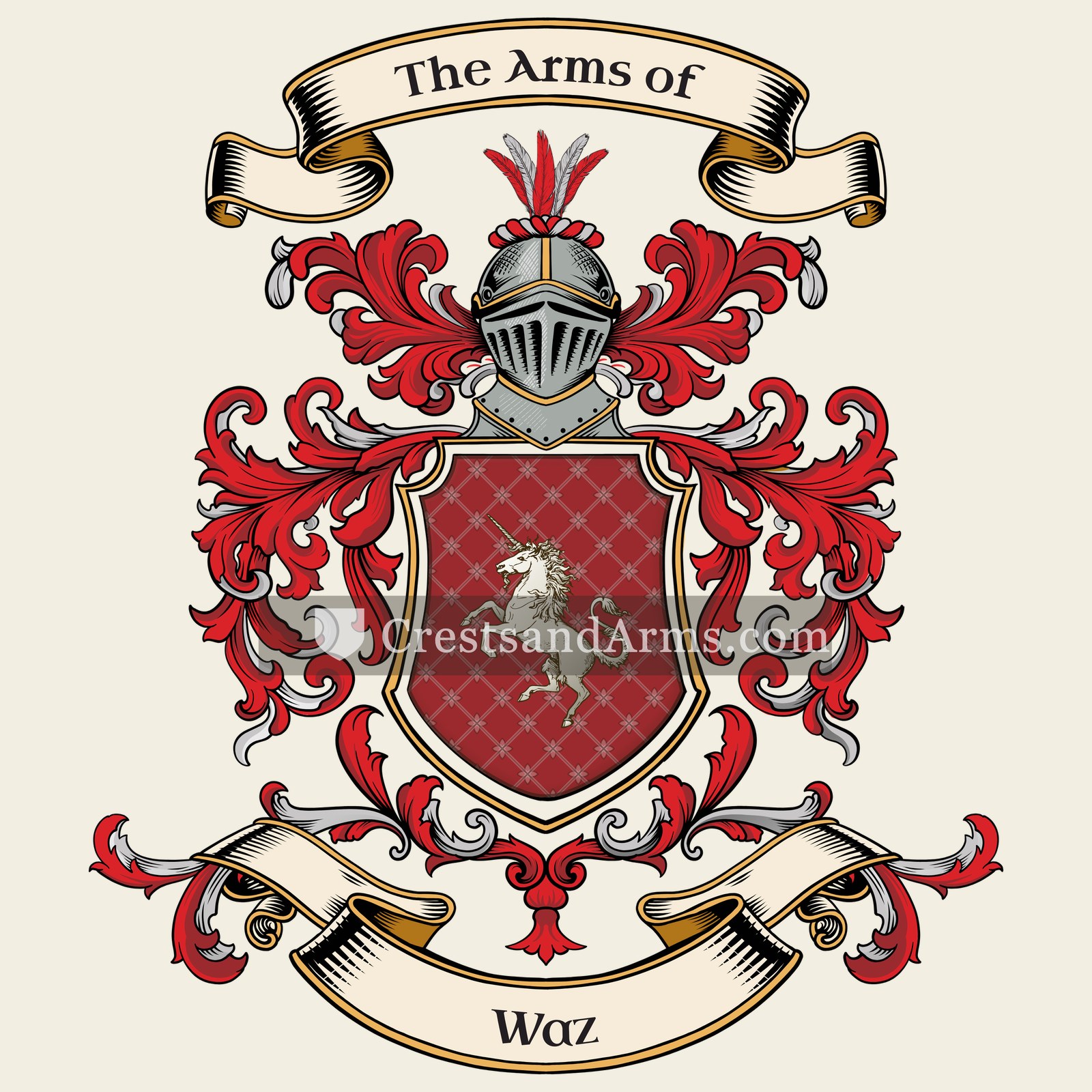
unicornPurity, and extreme courage in defence of honour
Colours
Red (Gules)Means: Military strength
Silver (Argent)Means: Peace and sincerity
Historical info
Source
J. B. Rietstap, Armorial Général, Gouda: G. B. van Goor Zonen, 1884–87
Blazon (the actual original written record)
“De gu. à une licorne d'arg.”
LorraineLorraine, c. 1627
Digital archive packCoat of arms PNG, gold border print PDF, vector SVG and the certificate of authenticity. Sent to your email in minutes.
Map of France showing where the Waz arms are recorded
The Waz arms were recorded in Lorraine, c. 1627.
Lorraine sat on the border between France and the German lands, and border country bred soldiers. Families here held small estates and served in arms, and a fighting man was exactly the sort who carried a shield of his own.
This is where the arms were entered in the register. Families often moved to other parts of the country, so the same name can turn up in more than one region.
The body that granted and recorded arms in France in this period.
Louis XIII of France
Sovereign of the period
Louis XIII of France
1617–1643
Reigning in Belgium when the Waz arms are first recorded.
How Arms Worked in France
In France, a coat of arms was a mark of honor that passed down through the male line to all legitimate descendants. Families often used the same shield without changes to show their shared heritage. If a branch wanted to stand out, they could add a small mark to their shield to show their specific place in the family tree.
Granting authority
The Juge d'armes de France acted as the official authority that regulated and verified coats of arms across the country.
How they got arms
Families typically inherited their arms from ancestors, though they could also receive them through royal grants or by proving their noble status.
Where arms were recorded
Coats of arms were officially recorded in the Armorial Général de France, which began its main collection in the year 1696.
The family's standing
Recorded among the armigerous families of Lorraine.
Origin & History of the Waz Family in France
The history of the Waz family in France is deeply rooted in the historic region of Lorraine, where members of the family were documented as early as 1627. During the seventeenth century, Lorraine was a territory defined by its strategic location between the French Kingdom and the Holy Roman Empire, often serving as a crossroads for trade and cultural exchange. Families living in this area during this period frequently navigated the complexities of shifting political borders and the aftermath of the Thirty Years' War, which brought significant upheaval to the local population. As the Waz name appears in regional records from this time, it suggests a family that was well-established within the local agrarian or artisan communities that formed the backbone of Lorraine society. By maintaining a presence in this specific region, the early members of the family contributed to the long-standing traditions of the eastern French provinces, reflecting the resilience and stability required to thrive in a landscape frequently touched by historical change.
Related Branches & Arms
Root word
Wase
A Germanic term referring to a muddy or swampy area.
This name
WazA topographic name for someone who lived near a marsh or wetland.
also spelled
Waz
Wass
Documented Sources
J. B. Rietstap, Armorial Général, Gouda: G. B. van Goor Zonen, 1884–87
Archives: State Archives in Belgium (Algemeen Rijksarchief), Parochieregisters van het Brussels Hoofdstedelijk Gewest
Book: De Brouwer, J., De bevolking van Brussel in de 18de eeuw, 1974
Digital archive packCoat of arms PNG, gold border print PDF, vector SVG and the certificate of authenticity. Sent to your email in minutes.


 chiefAuthority, wisdom and dominion
 hammerHonest labour, and the smith's craft
 chiefAuthority, wisdom and dominion
 hammerHonest labour, and the smith's craft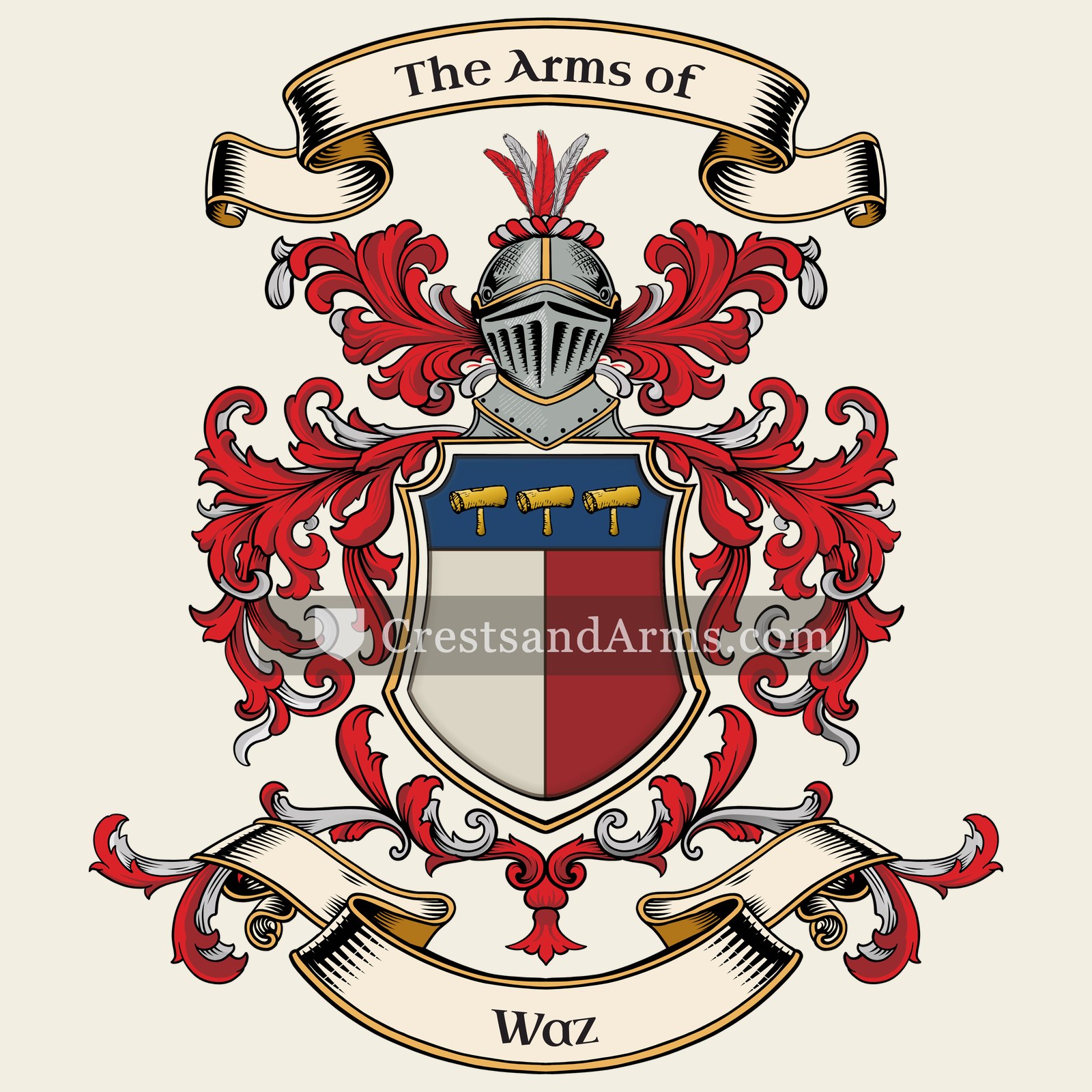


 unicornPurity, and extreme courage in defence of honour