Map of Germany showing where the Weidenbenner arms are recorded
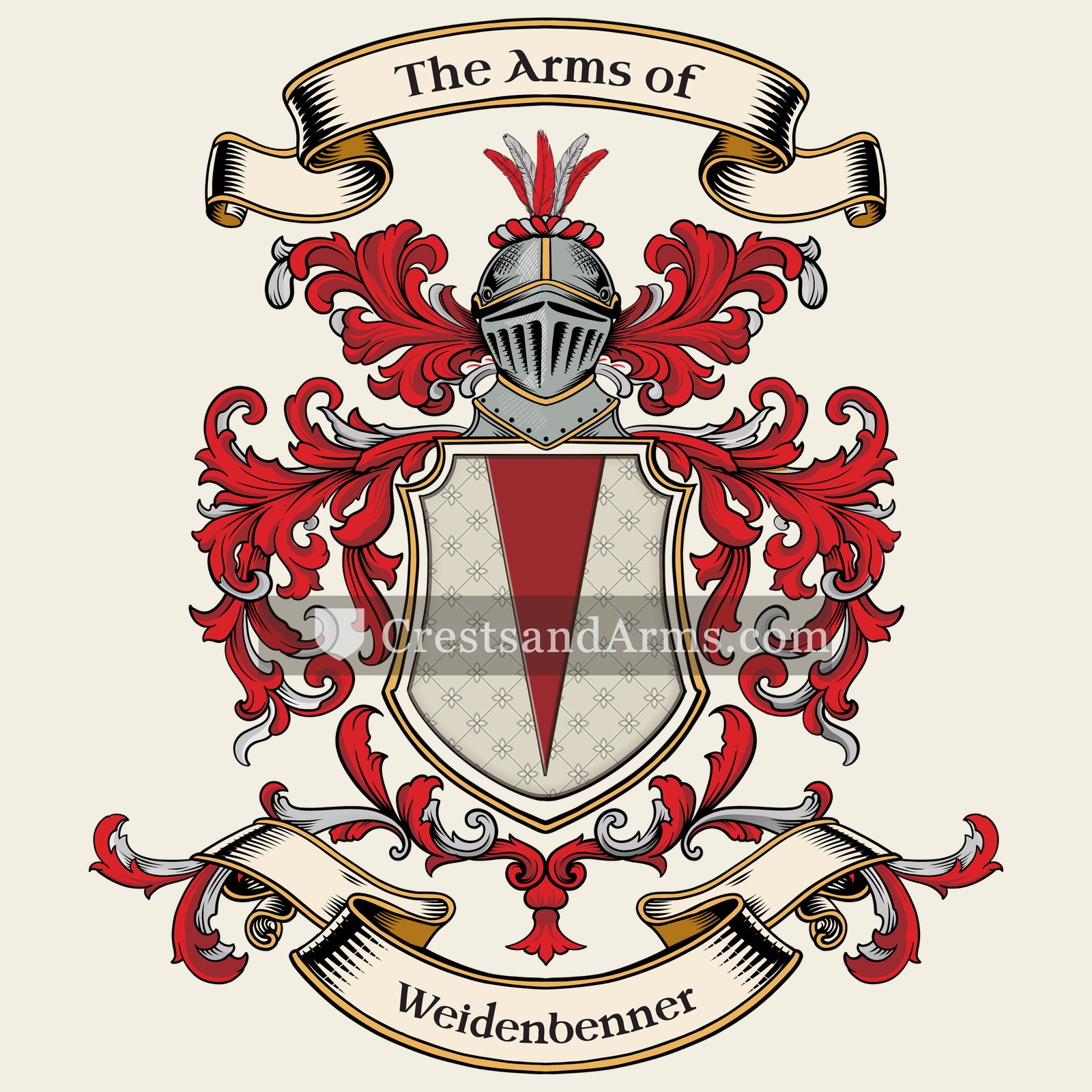
The Weidenbenner arms were recorded in Franconia, c. 1765.
Franconia was a patchwork of small territories in central Germany, full of minor landowners and prosperous market towns. So many separate households held land there that the region produced a great many coats of arms.
This is where the arms were entered in the register. Families often moved to other parts of the country, so the same name can turn up in more than one region.
The body that granted and recorded arms in Germany in this period.
Francis I, Holy Roman Emperor
Sovereign of the period
Francis I, Holy Roman Emperor
1745–1765
Reigning in Germany when the Weidenbenner arms are first recorded.
How Arms Worked in Germany
In the Holy Roman Empire, coats of arms were often granted to individuals by the Emperor or his representatives. These arms were then passed down through the generations to all legitimate descendants of the original holder. Younger branches of a family usually kept the same shield design without needing to change it, as the arms belonged to the entire lineage.
Granting authority
The Holy Roman Emperor held the sole power to grant new coats of arms throughout his vast imperial territories.
How they got arms
Families typically obtained their coats of arms through a formal imperial grant or by proving their noble status to the authorities.
Where arms were recorded
These grants were officially recorded in the Imperial Chancery registers, which began keeping formal records of such honors during the Middle Ages.
The family's standing
Recorded among the armigerous families of Franconia.
Origin & History of the Weidenbenner Family in Germany
The family name Weidenbenner originates from the historical region of Franconia, where records confirm the family was established by at least 1765. The name itself is descriptive and follows a common German naming pattern that combines two distinct words. The first part, Weiden, refers to the willow tree, while the second part, benner, is an old occupational term for a barrel maker or a cooper. This suggests that the earliest ancestors to carry this name likely lived near willow groves and worked as craftsmen who used flexible willow branches to bind wooden barrels. By settling in the Franconian landscape, which was known for its dense forests and skilled trade guilds, the family became part of a long tradition of rural artisans who provided essential goods for the local agricultural economy. Over generations, this occupational title transitioned into a permanent surname that identified the family within their community.
Related Branches & Arms
Root word
Weide and Bennen
Pasture or willow tree and to bind or to name.
This name
WeidenbennerA topographical or occupational name referring to someone who bound or worked with willow branches.
also spelled
Videnberg
Widenberg
Documented Sources
J. B. Rietstap, Armorial Général, Gouda: G. B. van Goor Zonen, 1884–87
Brosius, Dieter. Fränkische Geschichte. 1996
Heintze, Albert. Die deutschen Familiennamen: geschichtlich, geographisch, sprachlich. 1903
Staatsarchiv Bamberg, Standesamtliche Unterlagen und Kirchenbücher, 1765
Digital archive packCoat of arms PNG, gold border print PDF, vector SVG and the certificate of authenticity. Sent to your email in minutes.