Map of France showing where the Weidlich arms are recorded
The Weidlich arms were recorded in Strasbourg, c. 1663.
This is where the arms were entered in the register. Families often moved to other parts of the country, so the same name can turn up in more than one region.
The body that granted and recorded arms in France in this period.
Louis XIV of France
Sovereign of the period
Louis XIV of France
1643–1715
Reigning in France when the Weidlich arms are first recorded.
How Arms Worked in France
In France, a coat of arms was a mark of honor that passed down through the male line to all legitimate descendants. Families often used the same shield without changes to show their shared heritage. If a branch wanted to stand out, they could add a small mark to their shield to show their specific place in the family tree.
Granting authority
The Juge d'armes de France acted as the official authority that regulated and verified coats of arms across the country.
How they got arms
Families typically inherited their arms from ancestors, though they could also receive them through royal grants or by proving their noble status.
Where arms were recorded
Coats of arms were officially recorded in the Armorial Général de France, which began its main collection in the year 1696.
The family's standing
Recorded among the armigerous families of France.
Origin & History of the Weidlich Family in France
The history of the Weidlich family in France is deeply tied to the unique cultural landscape of the Alsace region during the seventeenth century. By 1663, records confirm that members of the family were established in Strasbourg, a city that served as a vital crossroads between Germanic and French influences. During this period, the region was transitioning through significant political changes, eventually leading to its formal integration into the Kingdom of France. Families like the Weidlichs often navigated these shifts by maintaining their local roots while adapting to the evolving administrative and social structures of the French state. Their presence in Strasbourg suggests they were part of the urban middle class, likely involved in the trades or civic life that defined the city’s prosperity during the early modern era. Through their continued residence in this borderland, the family became a small but enduring part of the complex history of the Alsatian people.
Coat of Arms & Family Crest Details
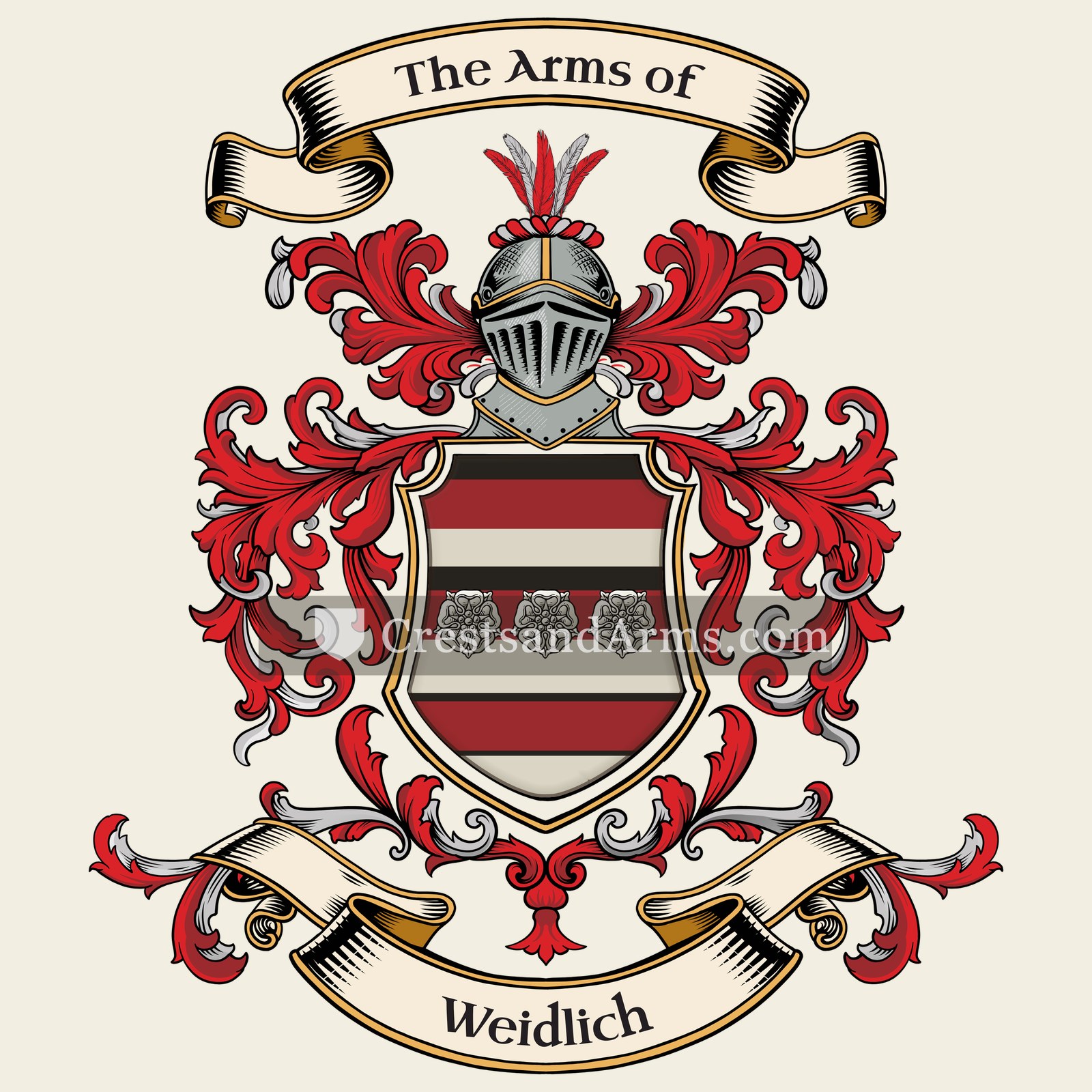
Symbols on this shield
fessThe military belt, and readiness to serve
roseThe seventh son, and beauty with grace
Colours
Silver (Argent)Means: Peace and sincerity
Red (Gules)Means: Military strength
Black (Sable)Means: Constancy
Historical info
Source
J. B. Rietstap, Armorial Général, Gouda: G. B. van Goor Zonen, 1884–87
Blazon (the actual original written record)
“Fascé d'arg. et de sa. de six pièces, chaque fasce d'arg., ch. d'une rose à six feuilles de gu., bout. d'or. C.: une grue d'arg. avec sa vigilance. L. d'arg. et de sa.”
SilesiaSilesia, c. 1637
Digital archive packCoat of arms PNG, gold border print PDF, vector SVG and the certificate of authenticity. Sent to your email in minutes.
Map of Germany showing where the Weidlich arms are recorded
The Weidlich arms were recorded in Silesia, c. 1637.
Silesia was farming country in the east of the German lands, held in large estates by families who stayed put for generations. Owning land was what entitled a family to arms, so the region fills a good deal of the register.
This is where the arms were entered in the register. Families often moved to other parts of the country, so the same name can turn up in more than one region.
The body that granted and recorded arms in Germany in this period.
Ferdinand II, Holy Roman Emperor
Sovereign of the period
Ferdinand II, Holy Roman Emperor
1619–1637
Reigning in France when the Weidlich arms are first recorded.
How Arms Worked in Germany
In the Holy Roman Empire, coats of arms were often granted to individuals by the Emperor or his representatives. These arms were then passed down through the generations to all legitimate descendants of the original holder. Younger branches of a family usually kept the same shield design without needing to change it, as the arms belonged to the entire lineage.
Granting authority
The Holy Roman Emperor held the sole power to grant new coats of arms throughout his vast imperial territories.
How they got arms
Families typically obtained their coats of arms through a formal imperial grant or by proving their noble status to the authorities.
Where arms were recorded
These grants were officially recorded in the Imperial Chancery registers, which began keeping formal records of such honors during the Middle Ages.
The family's standing
Recorded among the armigerous families of Silesia.
Origin & History of the Weidlich Family in Germany
The family name Weidlich originates from the German-speaking regions of Central Europe, where it functioned as a descriptive surname. It is derived from the Middle High German word "weide," which refers to a pasture or a meadow. In the social structure of the time, this name likely identified an individual who lived near a grazing field or worked as a herdsman. By the early 17th century, the family had established a clear presence in the region of Silesia. Historical records confirm that members of the Weidlich family were living in this area by 1637, a time when the region was deeply affected by the political and religious shifts of the Thirty Years' War. As the family settled into these rural and developing communities, the name became a permanent marker of their ancestral connection to the land and the agricultural traditions of the German territories.
Related Branches & Arms
Root word
Weidlich
Derived from the Middle High German word for willow or meadow.
This name
WeidlichAn occupational or habitational name referring to someone living near a willow tree.
also spelled
Weidlick
Weidli
Wydlich
Vydlich
Documented Sources
J. B. Rietstap, Armorial Général, Gouda: G. B. van Goor Zonen, 1884–87
Archives départementales du Bas-Rhin, Registres paroissiaux de Strasbourg (1663)
Livet, Georges, L'intendance d'Alsace sous Louis XIV, 1648-1715, 1956
Rapp, Francis, Histoire de Strasbourg des origines à nos jours, 1987
Digital archive packCoat of arms PNG, gold border print PDF, vector SVG and the certificate of authenticity. Sent to your email in minutes.


 fleur de lisPurity, light, and the sixth son
 fleur de lisPurity, light, and the sixth son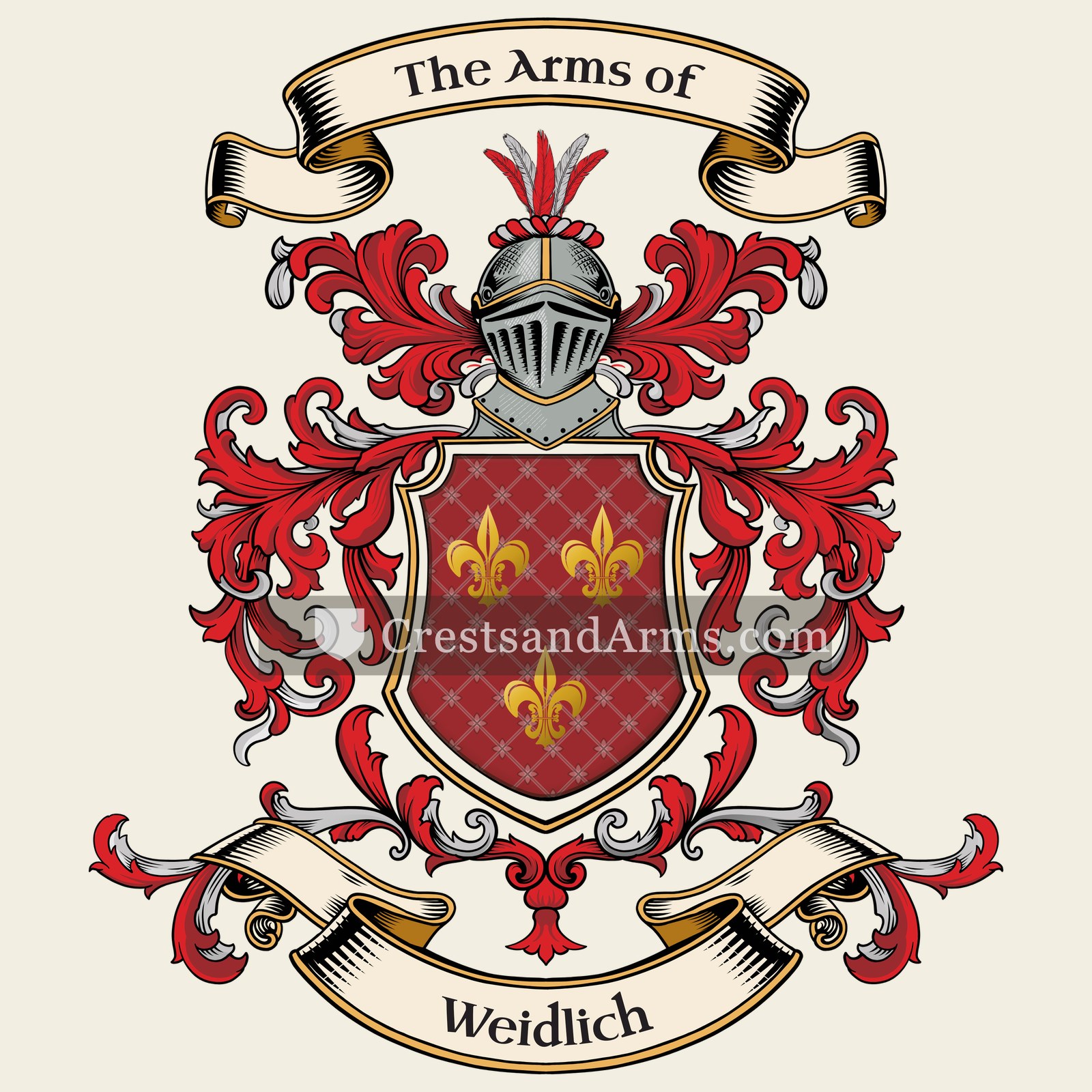


 fessThe military belt, and readiness to serve
 roseThe seventh son, and beauty with grace