Map of Scotland showing where the Whyte arms are recorded
The Whyte arms were recorded in Fife, c. 1676.
Fife was farming country between two firths, with royal palaces and old burghs along its coast. Its landed families were numerous and close to the court, and closeness to the court brought arms.
This is where the arms were entered in the register. Families often moved to other parts of the country, so the same name can turn up in more than one region.
The body that granted and recorded arms in Scotland in this period.
Charles II of England
Sovereign of the period
Charles II of England
1660–1685
Reigning in Scotland when the Whyte arms are first recorded.
How Arms Worked in Scotland
Scottish heraldry is unique because it treats a coat of arms as a piece of personal property protected by law. Only one person can own a specific design at any given time. When a family grows, the head keeps the original shield while other relatives must apply for their own distinct version with slight changes to prove their specific identity.
Granting authority
The Court of the Lord Lyon acts as the official body that regulates and controls all heraldic matters throughout Scotland.
How they got arms
Individuals obtain a legal right to their arms through a formal petition process that confirms their identity and family connection.
Where arms were recorded
All valid coats of arms are officially entered into the Public Register of All Arms and Bearings starting from 1672.
The family's standing
Recorded among the armigerous families of Fife.
Origin & History of the Whyte Family in Scotland
The surname Whyte is a descriptive name that originated from the Old English word "hwit," meaning white. In Scotland, this name was often given to people with fair hair or a pale complexion. By the late 17th century, the family had established a clear presence in the region of Fife. Records from 1676 confirm that members of the Whyte family were living and working in this area during a time of significant social and religious change in Scotland. Because Fife was a central hub for trade and agriculture, families like the Whytes were often integrated into the local parish systems. They lived through a period where Scotland was transitioning toward a more unified national identity, and their presence in the historical records of Fife suggests they were settled members of the community who participated in the daily life of the Scottish Lowlands.
Coat of Arms & Family Crest Details
Symbols on this shield
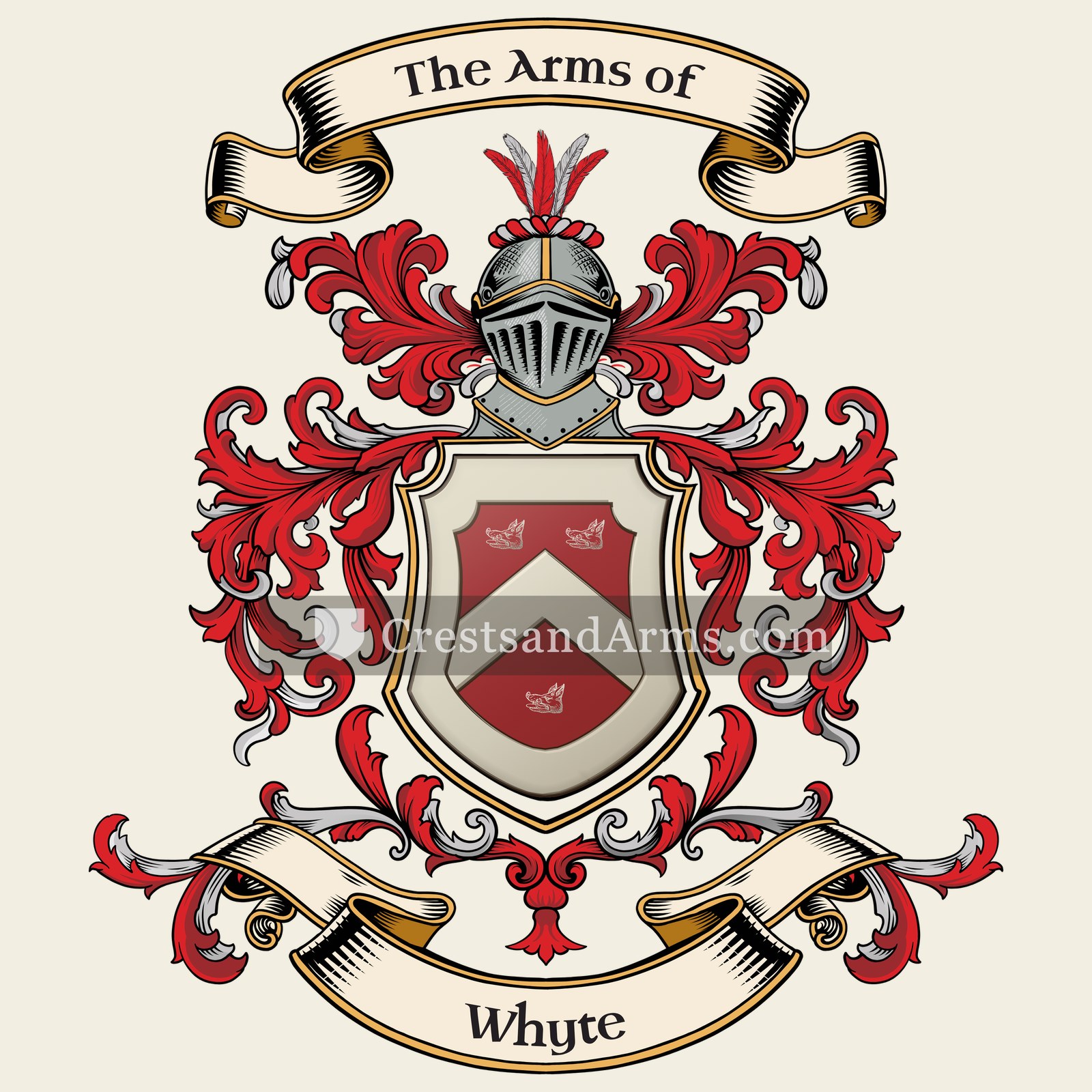
chevronProtection, and faithful service completed
bordureA difference between branches of one family
boars headA fierce fighter who battles to the end
Colours
Red (Gules)Means: Military strength
Silver (Argent)Means: Peace and sincerity
Historical info
Source
Sir Bernard Burke, The General Armory of England, Scotland, Ireland and Wales, London: Harrison & Sons, 1884
Blazon (the actual original written record)
“Gu. a chev. betw. three boars' heads couped ar. a border engr. of the last”
NorfolkShottisham · Norfolk, c. 1620
Digital archive packCoat of arms PNG, gold border print PDF, vector SVG and the certificate of authenticity. Sent to your email in minutes.
Map of England showing where the Whyte arms are recorded
The Whyte arms were recorded in Norfolk, c. 1620.
Norfolk grew rich on wool and grain, and its wealth was spread among many middling families rather than a few great ones. Households of that kind bought land and took arms, and the county holds a large share of English names.
This is where the arms were entered in the register. Families often moved to other parts of the country, so the same name can turn up in more than one region.
The body that granted and recorded arms in England in this period.
James VI and I
Sovereign of the period
James VI and I
1603–1625
Reigning in Scotland when the Whyte arms are first recorded.
How Arms Worked in England
English heraldry allowed arms to be shared by all legitimate descendants of the original owner. These symbols were treated as personal property that moved through the generations to all children. While the eldest son kept the original design, other family members could use the same shield without needing to change it or register their own unique versions.
Granting authority
The College of Arms in London has regulated the use of coats of arms throughout England and Wales since 1484.
How they got arms
Families typically obtained their coats of arms through a formal grant from the Crown or by proving their ancient right to them.
Where arms were recorded
All official coats of arms are recorded in the registers kept at the College of Arms, which date back to the fifteenth century.
The family's standing
Recorded among the armigerous families of Norfolk.
Origin & History of the Whyte Family in England
The surname Whyte originated as a descriptive nickname in medieval England, likely used to identify an individual with very fair hair or a pale complexion. By the early 17th century, the family had established a notable presence in the county of Norfolk. Records from 1620 confirm that members of the family were living in this region during a time of significant social and economic transition. Life in Norfolk during this era was defined by the thriving wool trade and the agricultural output of the East Anglian landscape. Families like the Whytes were often integrated into the local parish systems, which served as the primary method for tracking births, marriages, and deaths. As the family settled into their community, they contributed to the local labor force and the development of the rural economy that characterized this part of England before the widespread migration to the American colonies.
Related Branches & Arms
Root word
hwit
Old English word meaning white or bright in color.
This name
WhyteA descriptive nickname for a person with a fair complexion or very light hair.
also spelled
White
Whytie
Whit
Whitte
Related arms
Whitesame arms
Whightvariant spelling
Whitvariant spelling
Whittevariant spelling
Documented Sources
Sir Bernard Burke, The General Armory of England, Scotland, Ireland and Wales, London: Harrison & Sons, 1884
Black, George Fraser. The Surnames of Scotland: Their Origin, Meaning, and History. 1946
National Records of Scotland. Kirk Session Records of Fife, CH2 series
Digital archive packCoat of arms PNG, gold border print PDF, vector SVG and the certificate of authenticity. Sent to your email in minutes.


 chiefAuthority, wisdom and dominion
 martletA younger son, who must win his own land
 plant quatrefoilGood fortune and the fourfold gospel
 chiefAuthority, wisdom and dominion
 martletA younger son, who must win his own land
 plant quatrefoilGood fortune and the fourfold gospel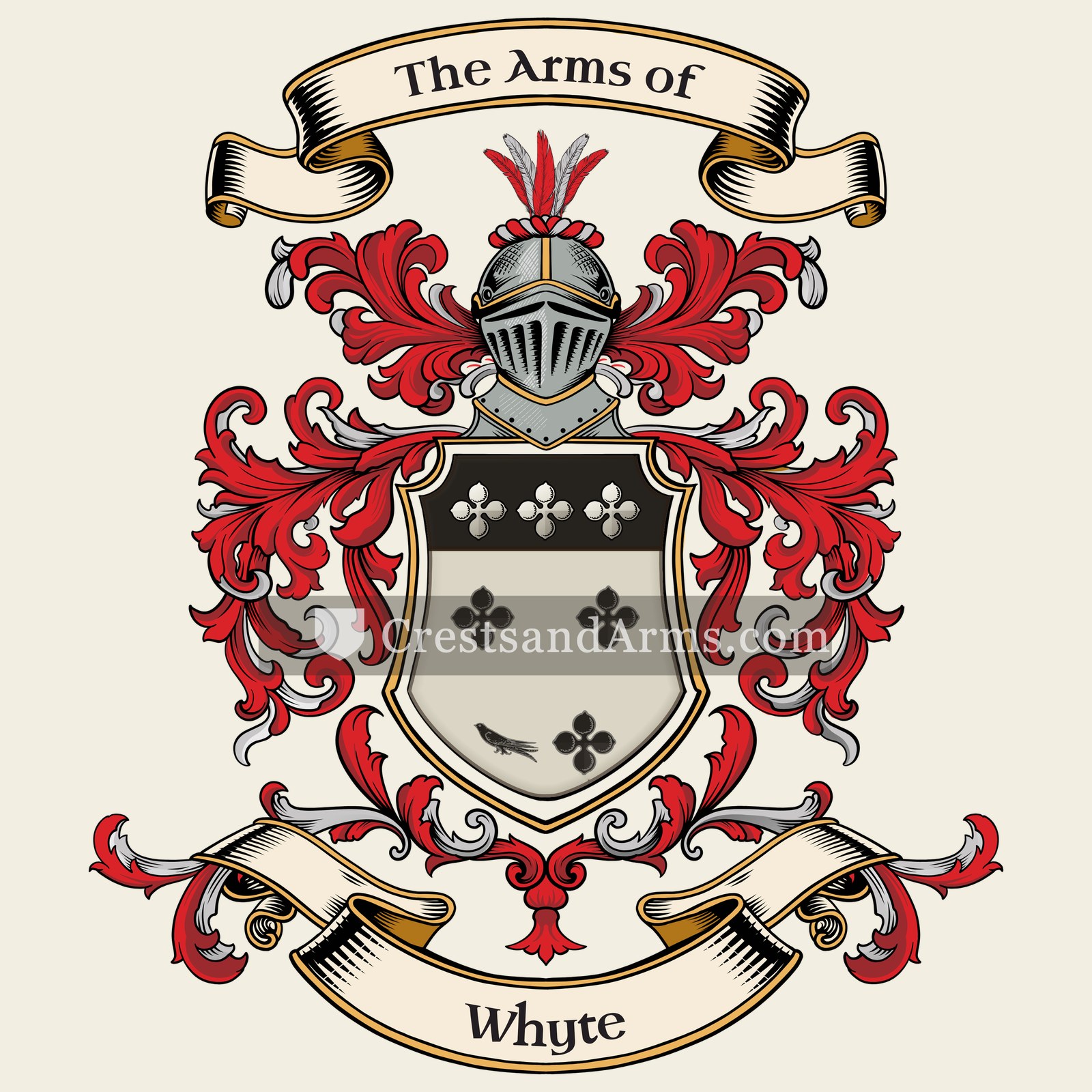


 chevronProtection, and faithful service completed
 bordureA difference between branches of one family
 boars headA fierce fighter who battles to the end