Map of France showing where the Wickwar arms are recorded
The Wickwar arms were recorded in Strasbourg, c. 1663.
This is where the arms were entered in the register. Families often moved to other parts of the country, so the same name can turn up in more than one region.
The body that granted and recorded arms in France in this period.
Louis XIV of France
Sovereign of the period
Louis XIV of France
1643–1715
Reigning in France when the Wickwar arms are first recorded.
How Arms Worked in France
In France, a coat of arms was a mark of honor that passed down through the male line to all legitimate descendants. Families often used the same shield without changes to show their shared heritage. If a branch wanted to stand out, they could add a small mark to their shield to show their specific place in the family tree.
Granting authority
The Juge d'armes de France acted as the official authority that regulated and verified coats of arms across the country.
How they got arms
Families typically inherited their arms from ancestors, though they could also receive them through royal grants or by proving their noble status.
Where arms were recorded
Coats of arms were officially recorded in the Armorial Général de France, which began its main collection in the year 1696.
The family's standing
Recorded among the armigerous families of France.
Origin & History of the Wickwar Family in France
The family name Wickwar traces its roots to the crossroads of culture and conflict in the Alsace region of France. By 1663, records confirm the family was established in the city of Strasbourg, a location that served as a vital bridge between French and Germanic influences during the seventeenth century. At this time, Strasbourg was a free imperial city that eventually came under the control of King Louis XIV. Families living in this area often navigated a complex landscape of shifting borders, religious transitions, and urban trade. The name likely evolved as the family integrated into the local community, reflecting the linguistic blending common among residents of the Rhine Valley. Living in such a strategic urban center suggests that early members of the family were likely involved in the professional or artisanal life of the city, contributing to the development of a region defined by its unique position in European history.
Meaning of the Wickwar family crest colors & symbols
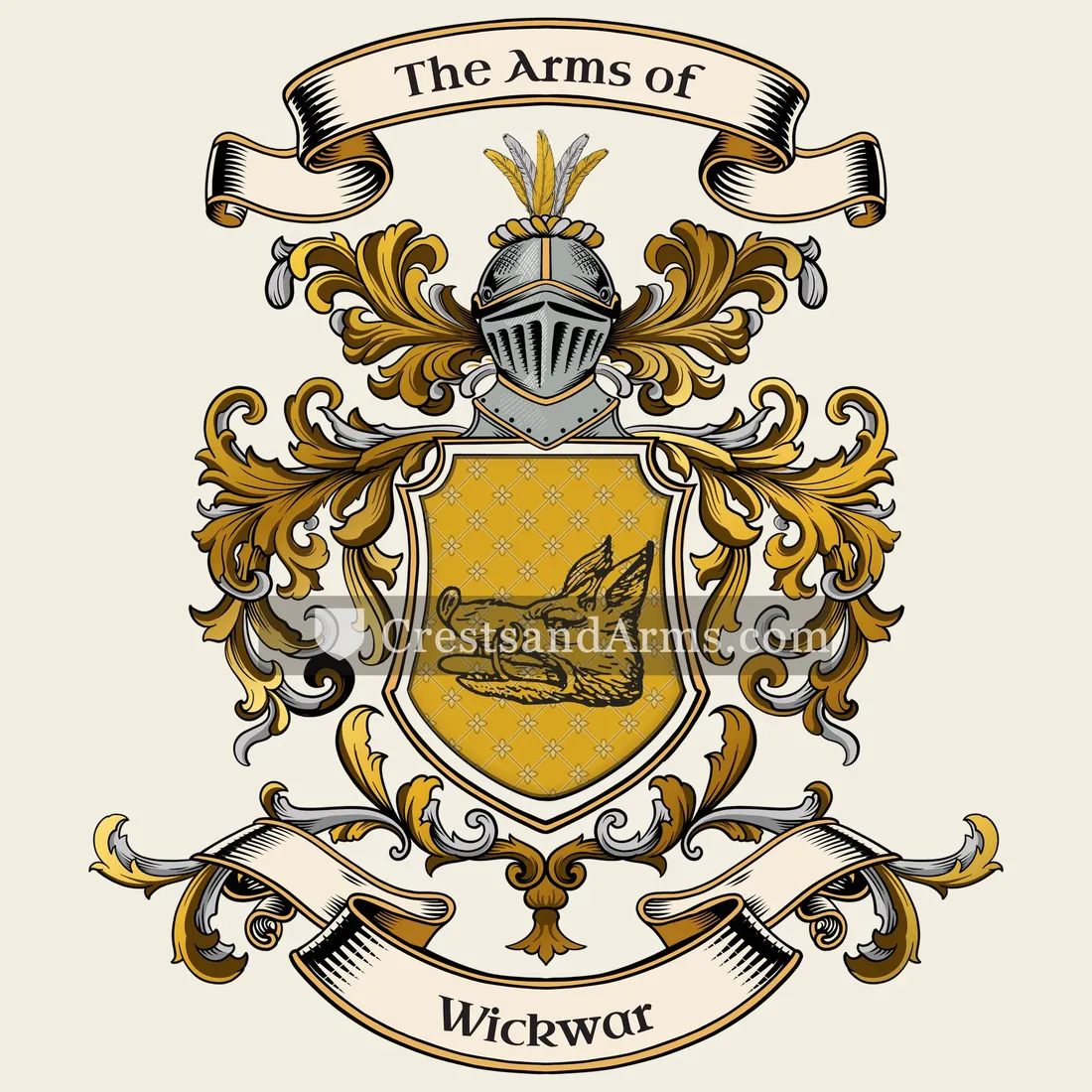
Symbols on this shield
boars headA fierce fighter who battles to the end
Colours
Gold (Or)Means: Generosity
Black (Sable)Means: Constancy
Historical info
Source
J. B. Rietstap, Armorial Général, Gouda: G. B. van Goor Zonen, 1884–87
Blazon (the actual original written record)
“D'or à une hure de sanglier de sa., défendue d'arg., la machoire inférieure garnie d'un rang de grelots du même.”
Austriac. 1772
Digital archive packCoat of arms PNG, gold border print PDF, vector SVG and the certificate of authenticity. Sent to your email in minutes.
Map of Austria showing where the Wickwar arms are recorded
The Wickwar arms were recorded in Austria, c. 1772.
Arms such as these were typically recorded in Tyrol.
Tyrol was mountain country in western Austria, where the valleys were held by families who had been there a very long time. Old tenure counted for more than money, and old families carried arms.
This is where the arms were entered in the register. Families often moved to other parts of the country, so the same name can turn up in more than one region.
Region
Tyrol
First recorded
1772
Granting Authority for the Wickwar Arms
Imperial and Royal chancery
Sodacan · CC BY-SA 3.0
The body that granted and recorded arms in Austria in this period.
Joseph II, Holy Roman Emperor
Sovereign of the period
Joseph II, Holy Roman Emperor
1765–1790
Reigning in France when the Wickwar arms are first recorded.
How Arms Worked in Austria
Austrian coats of arms were often linked directly to noble titles granted by the Emperor. These symbols belonged to the entire family line rather than just one individual. When a family grew, new branches kept the original design without needing to change it. This system allowed all members of a noble house to share the same identity across many generations.
Granting authority
The Imperial and Royal chancery managed all heraldic matters and controlled the official granting of arms throughout the Austrian lands.
How they got arms
Families typically received their arms through a formal imperial decree that often accompanied the elevation of a person to noble status.
Where arms were recorded
Official records of these grants were kept in the Imperial Register of Nobility which began its formal documentation process in 1453.
The family's standing
Recorded among the armigerous families of Austria.
Origin & History of the Wickwar Family in Austria
The history of the Wickwar family in Austria is deeply rooted in the rugged landscape of the Tyrol region. By the year 1772, records confirm that family members were already established residents in this mountainous area. During this period, Tyrol served as a vital crossroads for trade and travel between the Italian peninsula and the German lands. Families living in these alpine valleys often worked as skilled craftsmen or farmers who adapted to the challenging terrain. The name itself suggests a connection to specific local geography, as many surnames from this era were derived from the unique landmarks or small settlements where a family first settled. Living in Tyrol meant that the early Wickwar ancestors were part of a distinct cultural tradition that valued community ties and resilience against the harsh mountain winters. As they navigated the social and economic changes of the late 18th century, these early family members helped shape the local history of their alpine home.
Wickwar Meaning & Related Branches
Root word
Vic-Guer
Derived from the Old French words for village and war or guard.
This name
WickwarRefers to a person who lived near a fortified village or a defensive settlement.
also spelled
Wickar
Wickerr
Wickere
Vicker
Documented Sources
J. B. Rietstap, Armorial Général, Gouda: G. B. van Goor Zonen, 1884–87
Archives de la Ville et de l'Eurométropole de Strasbourg, Registres paroissiaux et d'état civil
Livet, Georges, L'intendance d'Alsace sous Louis XIV, 1648-1715, 1956
Rapp, Francis, Le Strasbourg des notables, 1991
Digital archive packCoat of arms PNG, gold border print PDF, vector SVG and the certificate of authenticity. Sent to your email in minutes.


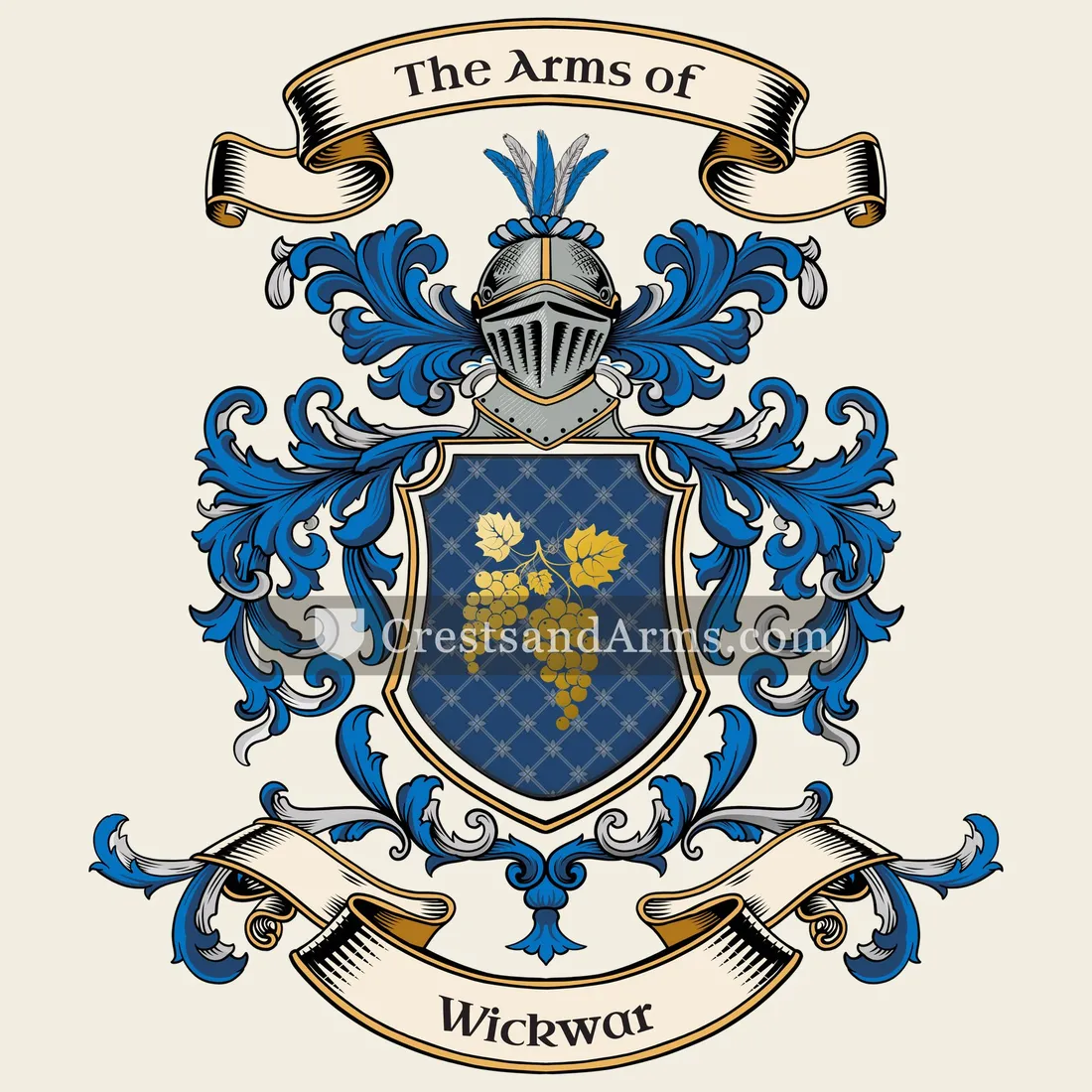
 grapesPlenty, and the labour of the vine
 grapesPlenty, and the labour of the vine


 boars headA fierce fighter who battles to the end