Map of Belgium showing where the Wieman arms are recorded
The Wieman arms were recorded in Flandre, c. 1663.
Flandre grew rich on cloth, and its towns were among the busiest in Europe. Merchant families bought land with their profits and took arms to go with it, so trade put as many names in the registers here as land did.
This is where the arms were entered in the register. Families often moved to other parts of the country, so the same name can turn up in more than one region.
The body that granted and recorded arms in Belgium in this period.
Philip IV of Spain
Sovereign of the period
Philip IV of Spain
1621–1665
Reigning in Belgium when the Wieman arms are first recorded.
How Arms Worked in Belgium
In Belgium, a coat of arms is considered personal property that is passed down through the male line to legitimate descendants. Families often use the same shield design across generations to show their shared heritage. If a branch of the family wants to change the design, they must apply for an official update to their specific version of the arms.
Granting authority
The Conseil héraldique is the official body that regulates and approves all coats of arms in Belgium.
How they got arms
Families obtain their coats of arms through formal royal grants or by confirming their historical right to use existing designs.
Where arms were recorded
All approved coats of arms are officially recorded in the public registers of the Conseil héraldique since 1844.
The family's standing
Recorded among the armigerous families of Flandre.
Origin & History of the Wieman Family in Belgium
The history of the Wieman family in Belgium is deeply rooted in the cultural landscape of the Flanders region during the seventeenth century. By 1663, records confirm that members of the family were already established within this area, living during a time when the region was transitioning through complex political shifts under Spanish rule. The name itself likely evolved from Germanic linguistic roots, reflecting the common naming patterns of the Low Countries where names often described a person's character or their role in the local community. As residents of Flanders, these early ancestors were part of a society defined by strong trade networks and a deep connection to the land. They lived through a period of significant social change, contributing to the agricultural and local economic life that defined the Flemish provinces. Over time, the family name became a permanent fixture in the region, marking their long-standing presence in the history of the Belgian people.
Meaning of the Wieman family crest colors & symbols
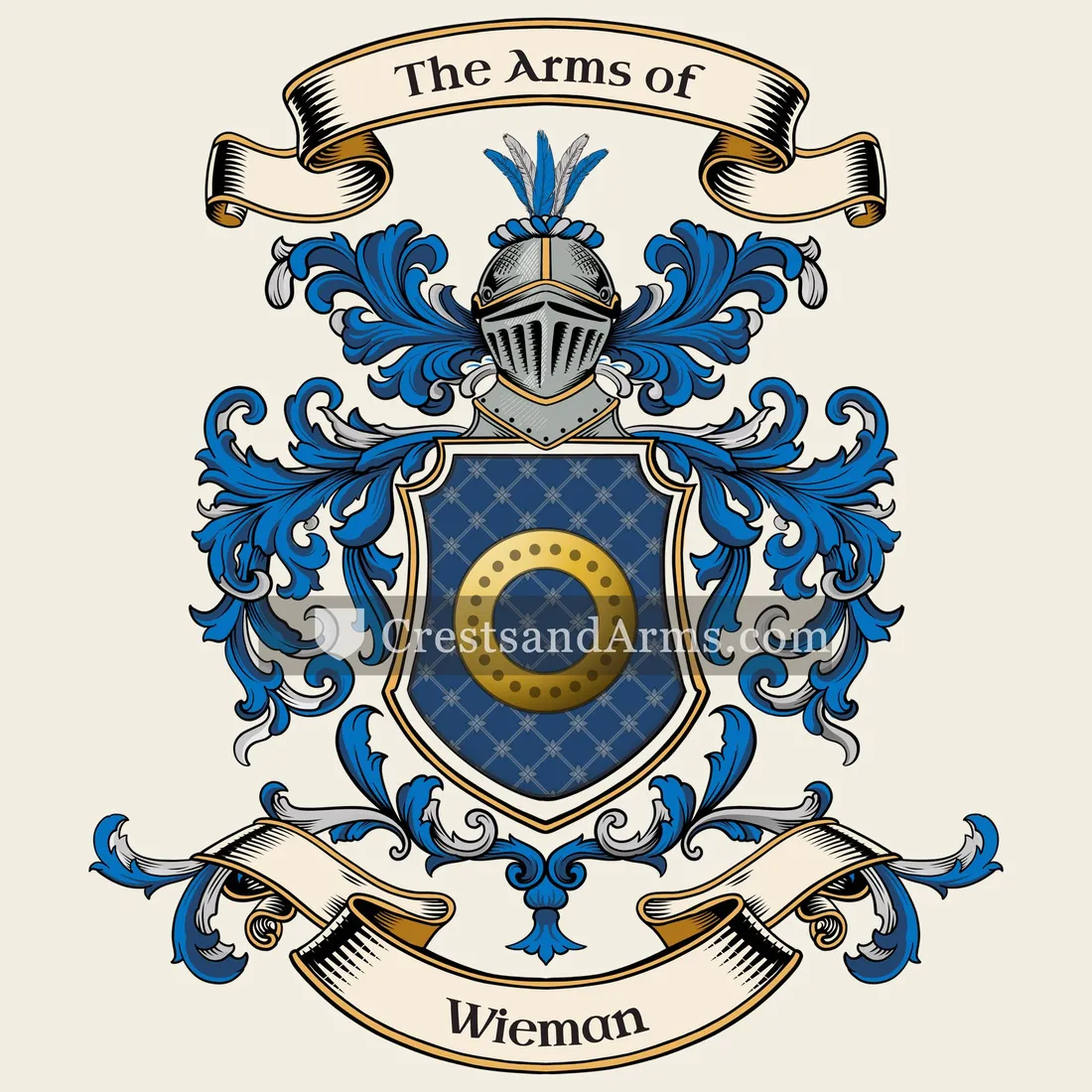
Symbols on this shield
ringFidelity, and a promise kept
Colours
Blue (Azure)Means: Loyalty and truth
Gold (Or)Means: Generosity
Historical info
Source
J. B. Rietstap, Armorial Général, Gouda: G. B. van Goor Zonen, 1884–87
Blazon (the actual original written record)
“D'azur à une bague d'or, châtonnée d'un saphir entouré de rubis, la bague couchée et le châton à sen. C.: un cep de vigne fruité, accolé à son échalas; entre un vol d'azur.”
Germanyc. 1765
Digital archive packCoat of arms PNG, gold border print PDF, vector SVG and the certificate of authenticity. Sent to your email in minutes.
Map of Germany showing where the Wieman arms are recorded
The Wieman arms were recorded in Germany, c. 1765.
Arms such as these were typically recorded in Bavaria.
Bavaria was a country of old landed families and walled market towns. Estates passed down the same line for centuries, and both the landowners and the leading townsmen kept arms, which is why so many Bavarian names sit in the registers.
This is where the arms were entered in the register. Families often moved to other parts of the country, so the same name can turn up in more than one region.
The body that granted and recorded arms in Germany in this period.
Francis I, Holy Roman Emperor
Sovereign of the period
Francis I, Holy Roman Emperor
1745–1765
Reigning in Belgium when the Wieman arms are first recorded.
How Arms Worked in Germany
In the Holy Roman Empire, coats of arms were often granted to individuals by the Emperor or his representatives. These arms were then passed down through the generations to all legitimate descendants of the original holder. Younger branches of a family usually kept the same shield design without needing to change it, as the arms belonged to the entire lineage.
Granting authority
The Holy Roman Emperor held the sole power to grant new coats of arms throughout his vast imperial territories.
How they got arms
Families typically obtained their coats of arms through a formal imperial grant or by proving their noble status to the authorities.
Where arms were recorded
These grants were officially recorded in the Imperial Chancery registers, which began keeping formal records of such honors during the Middle Ages.
The family's standing
Recorded among the armigerous families of Germany.
Origin & History of the Wieman Family in Germany
The surname Wieman finds its roots in the Germanic linguistic tradition, likely originating as a descriptive name for a person who lived near a specific landmark or held a particular role in their community. The prefix "Wie" is often linked to the Old High German word for a village or a holy place, while the suffix suggests a connection to a man or a dweller. By the mid-18th century, families bearing this name were well-established in the southern regions of Germany, specifically within the Kingdom of Bavaria. Records from 1765 confirm that the Wieman family was integrated into the local social fabric of this area, likely working as farmers or tradespeople during a time of significant agricultural transition. As members of the rural population, they were subject to the strict administrative record-keeping of the Bavarian state, which tracked births, marriages, and land ownership to ensure tax compliance and social order. This history reflects the broader experience of many families in the Holy Roman Empire who maintained deep ties to their regional landscapes for generations.
Wieman Meaning & Related Branches
Root word
Wigman
Derived from the Germanic elements for war or battle and man.
This name
WiemanA topographic or occupational name referring to a warrior or a man of battle.
also spelled
Weymann
Weymane
Weymanns
Wyman
Wayman
Documented Sources
J. B. Rietstap, Armorial Général, Gouda: G. B. van Goor Zonen, 1884–87
Rijksarchief te Gent, Parochieregisters (Dopen, Huwelijken, Begrafenissen)
Stadsarchief Brugge, Registers van de Burgerlijke Stand en Parochieregisters
Debrabandere, Frans, Woordenboek van de familienamen in België en Noord-Frankrijk, 2003
Vannieuwenhuyze, Brecht, De sociaal-economische geschiedenis van het Vlaamse platteland in de 17e eeuw, 2012
Digital archive packCoat of arms PNG, gold border print PDF, vector SVG and the certificate of authenticity. Sent to your email in minutes.


 grapesPlenty, and the labour of the vine
 grapesPlenty, and the labour of the vine
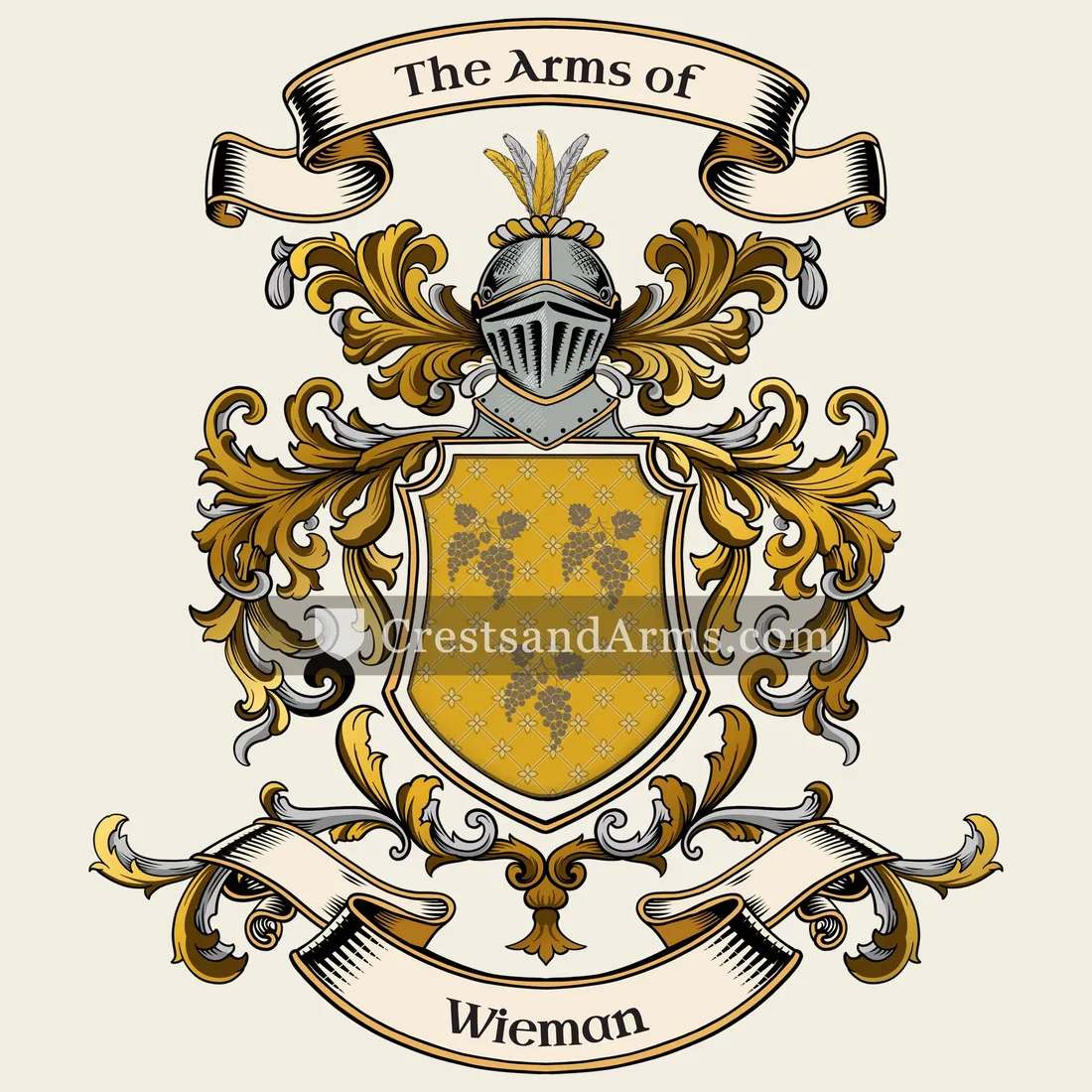


 ringFidelity, and a promise kept