A record of documented arms, meaning and origin, researched for the Wilde family lines. Documented in 3 countries.
Reg. 5783 · Dutch, W–Z
Coat of Arms & Family Crest Details
Symbols on this shield
mountThe ground held, and steadfastness upon it
goatOne who wins by diplomacy rather than force
Colours
Black (Sable)Means: Constancy
Silver (Argent)Means: Peace and sincerity
Green (Vert)Means: Hope
Historical info
Source
J. B. Rietstap, Armorial Général, Gouda: G. B. van Goor Zonen, 1884–87
Blazon (the actual original written record)
“de sa., mouv. d'une couronne d'or. Sur le tout de Koziel. qui est de gu. à un bouquetin ramp. d'arg., soutenu d'une terrasse de sin., les reins environnés d'une ceinture de sa. bordée et bouclée d'or et ornée de trois turquoises enchâssées d'or. Trois cq. cour. C.: 1º l'aigle; 2º le bouquetin iss.; 3º les cornes du 2. L.: à dextre d'or et de sa., à sen. d'arg. et de gu. S.: deux bouquetins pareils à celui du surtout. D.: AEQUAM SERVARE MENTEM.”
Netherlandsc. 1815
Digital archive packCoat of arms PNG, gold border print PDF, vector SVG and the certificate of authenticity. Sent to your email in minutes.
Map of Netherlands showing where the Wilde arms are recorded
The Wilde arms were recorded in Netherlands, c. 1815.
Arms such as these were typically recorded in Friesland.
Friesland was low, wet country on the northern coast of the Netherlands, farmed by families who had held the same land for centuries. Free landholders were unusually common there, and a free landholder could carry arms.
This is where the arms were entered in the register. Families often moved to other parts of the country, so the same name can turn up in more than one region.
Region
Friesland
First recorded
1815
Granting Authority for the Wilde Arms
Hoge Raad van Adel
Photograph made by me · CC BY-SA 3.0
The body that granted and recorded arms in Netherlands in this period.
William I of the Netherlands
Sovereign of the period
William I of the Netherlands
1815–1840
Reigning in Netherlands when the Wilde arms are first recorded.
How Arms Worked in Netherlands
In the Netherlands, coats of arms were often used by noble families and those who held specific public offices. These arms were passed down through the generations to legitimate descendants. Younger branches of a family usually kept the original design without needing to add special marks. This system ensured that the family identity remained clear and consistent over many years.
Granting authority
The Hoge Raad van Adel is the official body that regulates and manages noble titles and coats of arms in the Netherlands.
How they got arms
Families typically obtained their coats of arms through official royal grants or by proving their long-standing historical use of the symbols.
Where arms were recorded
Coats of arms are officially recorded in the registers held by the Hoge Raad van Adel, which began its work in 1814.
The family's standing
Recorded among the armigerous families of Netherlands.
Origin & History of the Wilde Family in Netherlands
The surname Wilde has deep roots in the northern regions of the Netherlands, particularly within the province of Friesland. By the early 19th century, records confirm that families bearing this name were well-established members of the local community. The name itself likely originated as a descriptive nickname, often used in the Middle Ages to identify someone who lived in an uncultivated area or possessed a spirited, untamed personality. In the context of Friesland, which was historically known for its independent spirit and unique legal customs, families with this name were often integrated into the agricultural and maritime life of the coastal landscape. By 1815, when the modern civil registration system was being solidified across the Netherlands, the Wilde family was already a recognized part of the Frisian population, contributing to the social and economic development of the region during a time of great political transition.
Coat of Arms & Family Crest Details
Symbols on this shield
cross symbolChristian faith and service
chiefAuthority, wisdom and dominion
roundelA coin, and one who has been to the crusades
martletA younger son, who must win his own land
Colours
ErmineMeans: Dignity
Black (Sable)Means: Constancy
Silver (Argent)Means: Peace and sincerity
Historical info
Source
Sir Bernard Burke, The General Armory of England, Scotland, Ireland and Wales, London: Harrison & Sons, 1884
Blazon (the actual original written record)
“Erm. on a cross sa. a plate, a chief of the second charged with three martlets ar”
Englandc. 1620
Digital archive packCoat of arms PNG, gold border print PDF, vector SVG and the certificate of authenticity. Sent to your email in minutes.
Map of England showing where the Wilde arms are recorded
The Wilde arms were recorded in England, c. 1620.
Arms such as these were typically recorded in York.
Yorkshire is the largest of the English counties, and it held more gentry families than any other. Land there was split among a great many households rather than a few, so a great many of them carried arms.
This is where the arms were entered in the register. Families often moved to other parts of the country, so the same name can turn up in more than one region.
The body that granted and recorded arms in England in this period.
James VI and I
Sovereign of the period
James VI and I
1603–1625
Reigning in Netherlands when the Wilde arms are first recorded.
How Arms Worked in England
English heraldry allowed arms to be shared by all legitimate descendants of the original owner. These symbols were treated as personal property that moved through the generations to all children. While the eldest son kept the original design, other family members could use the same shield without needing to change it or register their own unique versions.
Granting authority
The College of Arms in London has regulated the use of coats of arms throughout England and Wales since 1484.
How they got arms
Families typically obtained their coats of arms through a formal grant from the Crown or by proving their ancient right to them.
Where arms were recorded
All official coats of arms are recorded in the registers kept at the College of Arms, which date back to the fifteenth century.
The family's standing
Recorded among the armigerous families of England.
Origin & History of the Wilde Family in England
The surname Wilde originated in England as a descriptive nickname for a person who possessed an untamed or spirited personality. During the Middle Ages, names were often assigned based on individual traits, and someone known for their fierce or adventurous nature would be called "the wild one." By the early seventeenth century, the family had established a notable presence in the city of York. Records from 1620 confirm that members of the Wilde family were active participants in the social and economic life of this northern hub. At that time, York was a center for trade and religious administration, and families like the Wildes often worked as skilled craftsmen or merchants. This period marked a time of transition for the name as it moved from being a simple description of character to a permanent family identifier passed down through generations.
Coat of Arms & Family Crest Details
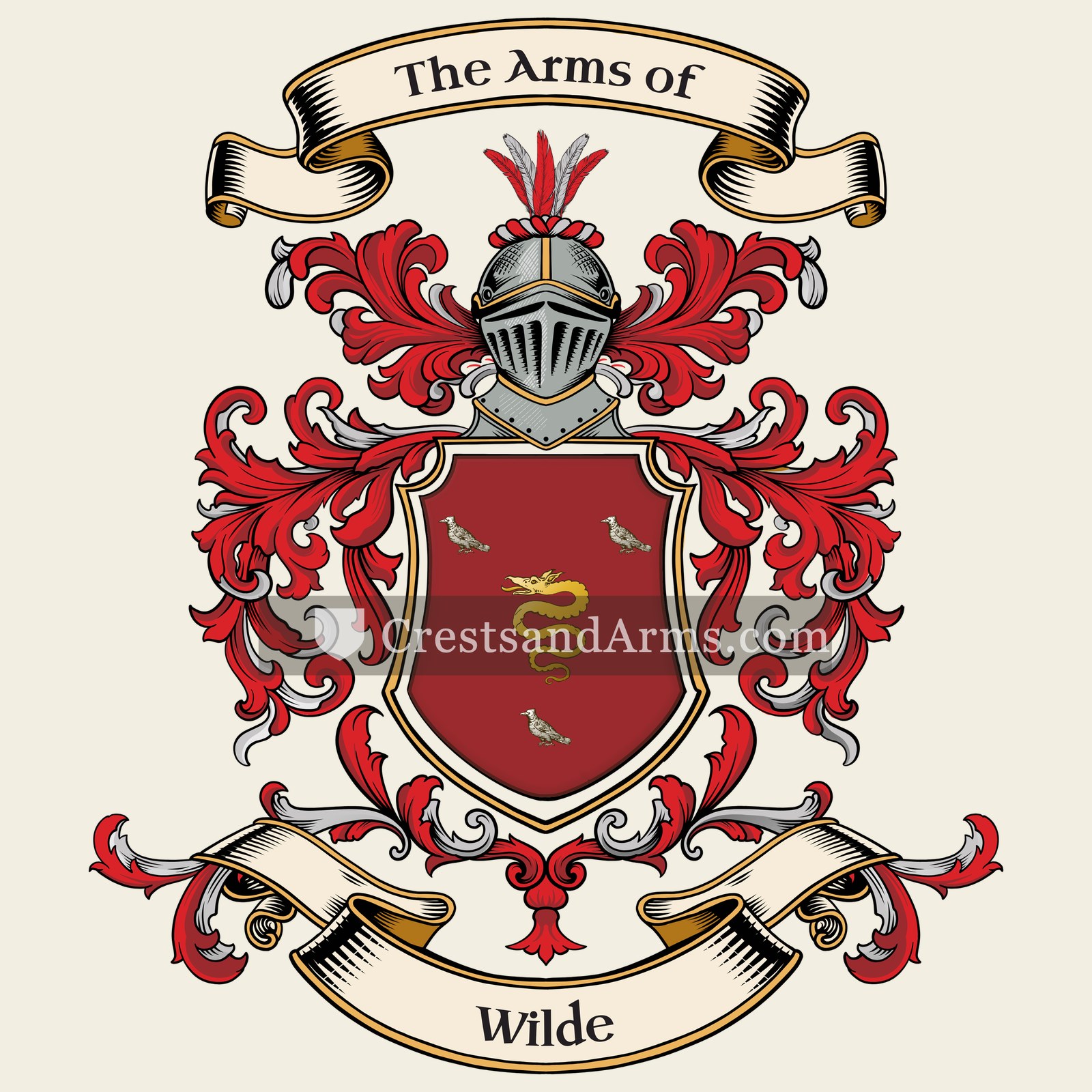
Symbols on this shield
serpentWisdom, healing and prudence
dovePeace, love and the Holy Spirit
Colours
Red (Gules)Means: Military strength
Gold (Or)Means: Generosity
Silver (Argent)Means: Peace and sincerity
Historical info
Source
Sir Bernard Burke, The General Armory of England, Scotland, Ireland and Wales, London: Harrison & Sons, 1884
Blazon (the actual original written record)
“Gu. a snake nowed or, betw. three doves volant ar”
DerryGeorge Wilde · Derry, c. 1661
Digital archive packCoat of arms PNG, gold border print PDF, vector SVG and the certificate of authenticity. Sent to your email in minutes.
Map of Ireland showing where the Wilde arms are recorded
The Wilde arms were recorded in Derry, c. 1661.
This is where the arms were entered in the register. Families often moved to other parts of the country, so the same name can turn up in more than one region.
The body that granted and recorded arms in Ireland in this period.
Charles II of England
Sovereign of the period
Charles II of England
1660–1685
Reigning in Netherlands when the Wilde arms are first recorded.
How Arms Worked in Ireland
The Ulster King of Arms granted coats of arms to individuals who proved their social standing and good character. These symbols were typically inherited by all legitimate descendants of the original holder. If a family branch wanted a unique look, they could apply for a specific change to their design through the office to ensure their identity remained distinct.
Granting authority
The Ulster King of Arms acted as the official body that regulated and issued all coats of arms throughout Ireland.
How they got arms
Families obtained their arms through formal grants issued by the office after proving their eligibility and paying the required fees.
Where arms were recorded
All official grants were recorded in the registers held by the Ulster King of Arms starting from the year 1552.
The family's standing
Recorded among the armigerous families of Derry.
Origin & History of the Wilde Family in Ireland
The Wilde family name in Ireland has deep roots that connect to the complex history of the seventeenth century. By 1661, historical records confirm that members of the family were established in Derry, a city that served as a major focal point for settlement and trade during that era. The name itself is thought to have originated as a descriptive nickname, likely used to identify someone who lived in an uncultivated area or possessed a spirited personality. As the family settled in the northern regions of Ireland, they became part of the shifting social landscape that defined the post-plantation period. Over time, the family integrated into the local community, moving from their early presence in the city of Derry to become a recognized part of the regional population. This transition reflects the broader movement of families who helped shape the cultural and historical development of the Irish landscape during the late seventeenth century.
Related Branches & Arms
Root word
wild
untamed, uncultivated, or living in a state of nature
This name
Wildea descriptive nickname for someone who was untamed, fierce, or lived in the wilderness
also spelled
Wylde
Wilda
Wild
Wyld
Related arms
de Wildvariant spelling
Wyldvariant spelling
Wyldevariant spelling
Documented Sources
J. B. Rietstap, Armorial Général, Gouda: G. B. van Goor Zonen, 1884–87
Tresoar (Fries Historisch en Letterkundig Centrum), Burgerlijke Stand van Friesland
Netherlands Nationaal Archief, Registers van de Burgerlijke Stand
Meertens Instituut, Nederlandse Familienamenbank
Digital archive packCoat of arms PNG, gold border print PDF, vector SVG and the certificate of authenticity. Sent to your email in minutes.


 mountThe ground held, and steadfastness upon it
 goatOne who wins by diplomacy rather than force
 mountThe ground held, and steadfastness upon it
 goatOne who wins by diplomacy rather than force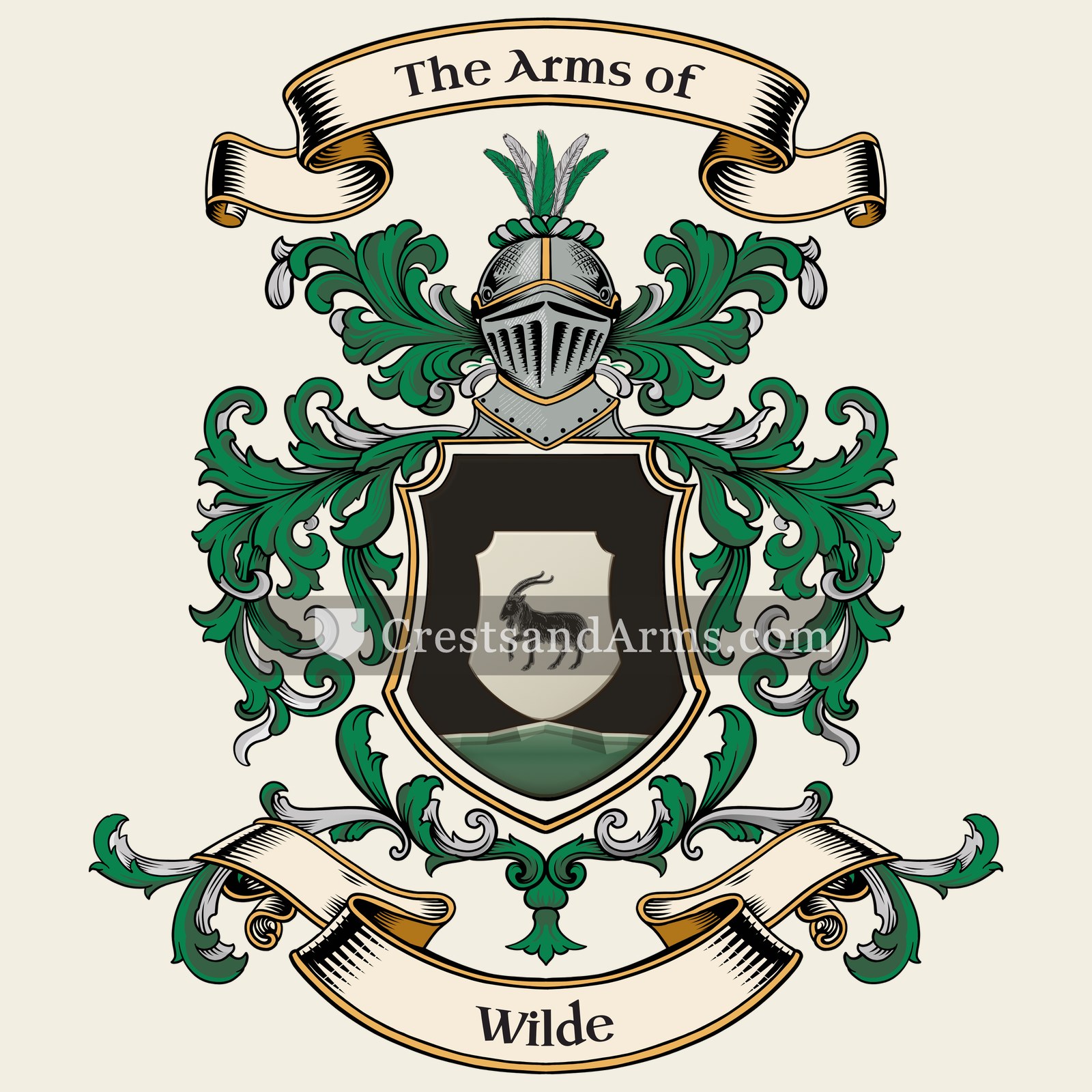


 cross symbolChristian faith and service
 chiefAuthority, wisdom and dominion
 roundelA coin, and one who has been to the crusades
 martletA younger son, who must win his own land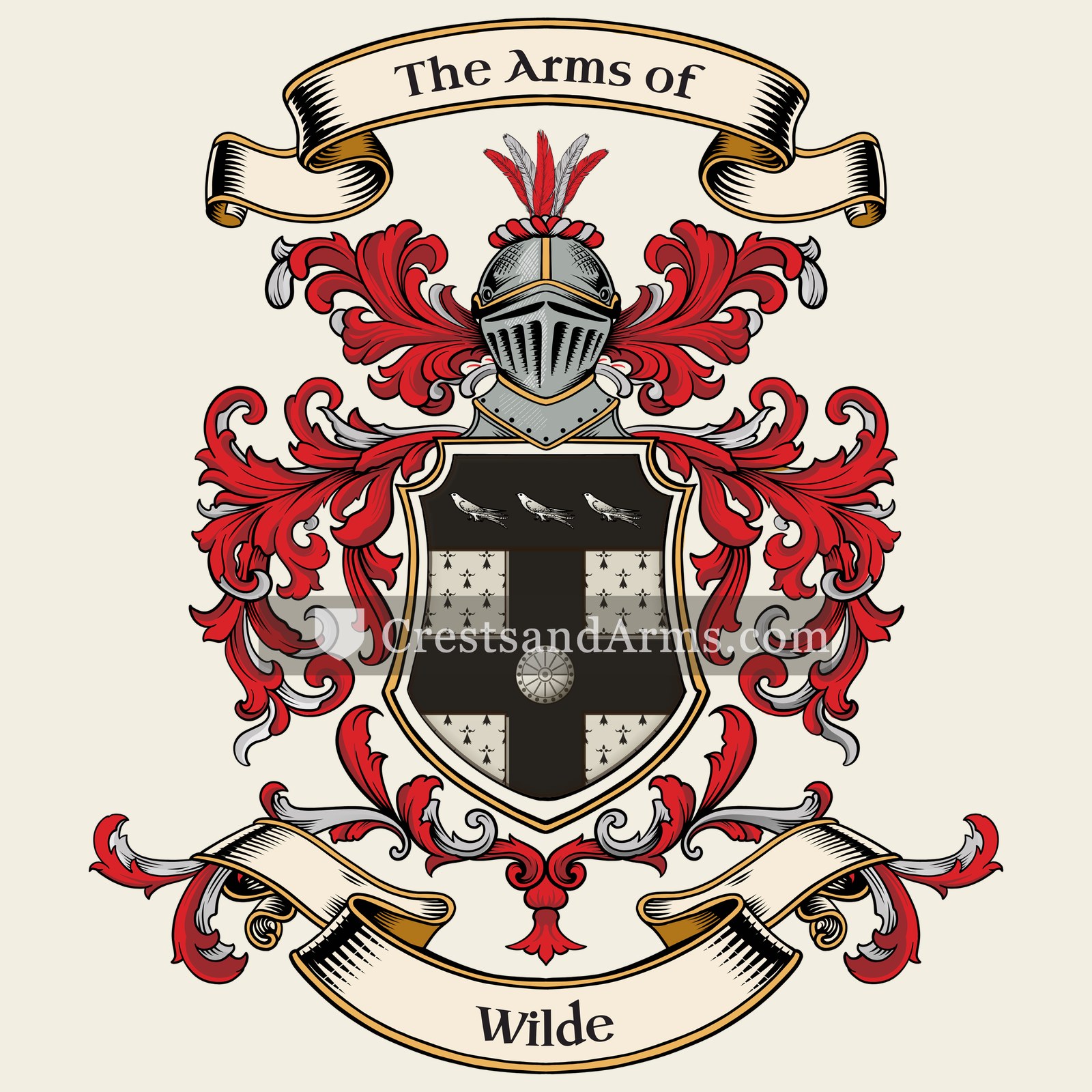


 serpentWisdom, healing and prudence
 dovePeace, love and the Holy Spirit