Map of Germany showing where the Wilder arms are recorded
The Wilder arms were recorded in Munich, c. 1725.
This is where the arms were entered in the register. Families often moved to other parts of the country, so the same name can turn up in more than one region.
The body that granted and recorded arms in Germany in this period.
Charles VI, Holy Roman Emperor
Sovereign of the period
Charles VI, Holy Roman Emperor
1711–1740
Reigning in Germany when the Wilder arms are first recorded.
How Arms Worked in Germany
In the Holy Roman Empire, coats of arms were often granted to individuals by the Emperor or his representatives. These arms were then passed down through the generations to all legitimate descendants of the original holder. Younger branches of a family usually kept the same shield design without needing to change it, as the arms belonged to the entire lineage.
Granting authority
The Holy Roman Emperor held the sole power to grant new coats of arms throughout his vast imperial territories.
How they got arms
Families typically obtained their coats of arms through a formal imperial grant or by proving their noble status to the authorities.
Where arms were recorded
These grants were officially recorded in the Imperial Chancery registers, which began keeping formal records of such honors during the Middle Ages.
The family's standing
Recorded among the armigerous families of Germany.
Origin & History of the Wilder Family in Germany
The surname Wilder is rooted in the German language, where it serves as a descriptive term for someone who lived in or near a wild, untamed forest. In the early eighteenth century, the name was already well-established in the region of Bavaria, with documented members of the family residing in Munich by 1725. During this period, Munich was a growing center of trade and culture under the rule of the Wittelsbach dynasty. Families like the Wilders often integrated into the urban fabric of the city as craftsmen, merchants, or local officials. Because the name originated as a nickname for a person with a rugged or spirited personality, or perhaps someone who lived in a remote area, it reflects the deep connection between early German surnames and the natural landscape of the countryside. By the time the family appeared in the 1725 Munich records, they were part of a society that was transitioning from traditional rural life into the more structured environment of a major German city.
Coat of Arms & Family Crest Details
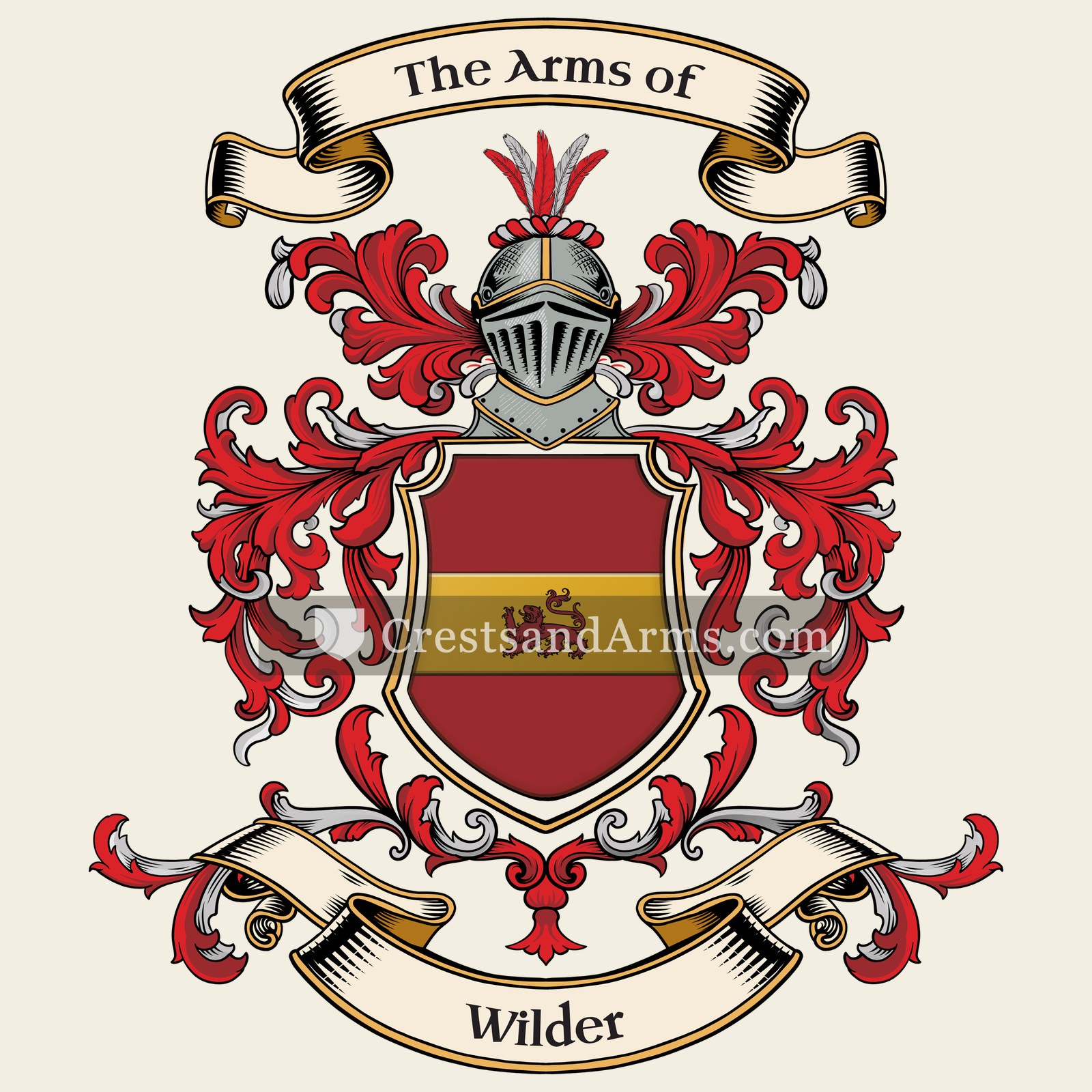
Symbols on this shield
fessThe military belt, and readiness to serve
lionCourage, strength and royalty
Colours
Red (Gules)Means: Military strength
Gold (Or)Means: Generosity
Historical info
Source
Sir Bernard Burke, The General Armory of England, Scotland, Ireland and Wales, London: Harrison & Sons, 1884
Blazon (the actual original written record)
“Gu. from a fess or, charged with two barrulets az. a demi lion ramp. issuant of the second”
BerksNunhide · Berks, c. 1620
Digital archive packCoat of arms PNG, gold border print PDF, vector SVG and the certificate of authenticity. Sent to your email in minutes.
Map of England showing where the Wilder arms are recorded
The Wilder arms were recorded in Berks, c. 1620.
Berkshire sat on the road west from London with the royal castle at Windsor in the middle of it. Court families bought estates within reach, and an estate near the court almost always came with a coat of arms.
This is where the arms were entered in the register. Families often moved to other parts of the country, so the same name can turn up in more than one region.
The body that granted and recorded arms in England in this period.
James VI and I
Sovereign of the period
James VI and I
1603–1625
Reigning in Germany when the Wilder arms are first recorded.
How Arms Worked in England
English heraldry allowed arms to be shared by all legitimate descendants of the original owner. These symbols were treated as personal property that moved through the generations to all children. While the eldest son kept the original design, other family members could use the same shield without needing to change it or register their own unique versions.
Granting authority
The College of Arms in London has regulated the use of coats of arms throughout England and Wales since 1484.
How they got arms
Families typically obtained their coats of arms through a formal grant from the Crown or by proving their ancient right to them.
Where arms were recorded
All official coats of arms are recorded in the registers kept at the College of Arms, which date back to the fifteenth century.
The family's standing
Recorded among the armigerous families of Berks.
Origin & History of the Wilder Family in England
The surname Wilder is a descriptive name that originated in medieval England to identify people who lived in or near wild, uncultivated lands. During the Middle Ages, the term was often used to describe someone who lived in the forest or a person with a fierce or untamed temperament. By the time the family established a notable presence in Berkshire in the early 1600s, the name had become a stable hereditary surname passed down through generations. These early family members in Berkshire were often involved in local agriculture and trade, which allowed them to become well-integrated into the social fabric of the English countryside. As the family grew, they moved beyond their original rural roots and began to play active roles in the local governance and religious life of their parishes. This transition from a descriptive nickname to a recognized family name reflects the broader patterns of how English surnames evolved during the transition from the medieval period to the early modern era.
Wilder Meaning & Related Branches
Root word
wild
untamed, uncontrolled, or living in a natural state
This name
Wilderrefers to a person who lived in the wilderness or possessed an untamed, fierce personality
also spelled
Wylder
Wilderr
Wildere
Documented Sources
J. B. Rietstap, Armorial Général, Gouda: G. B. van Goor Zonen, 1884–87
Bahlow, Hans. Deutsches Namenlexikon: Familien- und Vornamen nach Ursprung und Sinn erklärt. 1967
Gottschald, Max. Deutsche Namenkunde: Unsere Familiennamen nach ihrer Entstehung und Bedeutung. 1971
Stadtarchiv München. Bürgerrechtsverzeichnisse und Einwohnerlisten der Stadt München. 1725
Digital archive packCoat of arms PNG, gold border print PDF, vector SVG and the certificate of authenticity. Sent to your email in minutes.


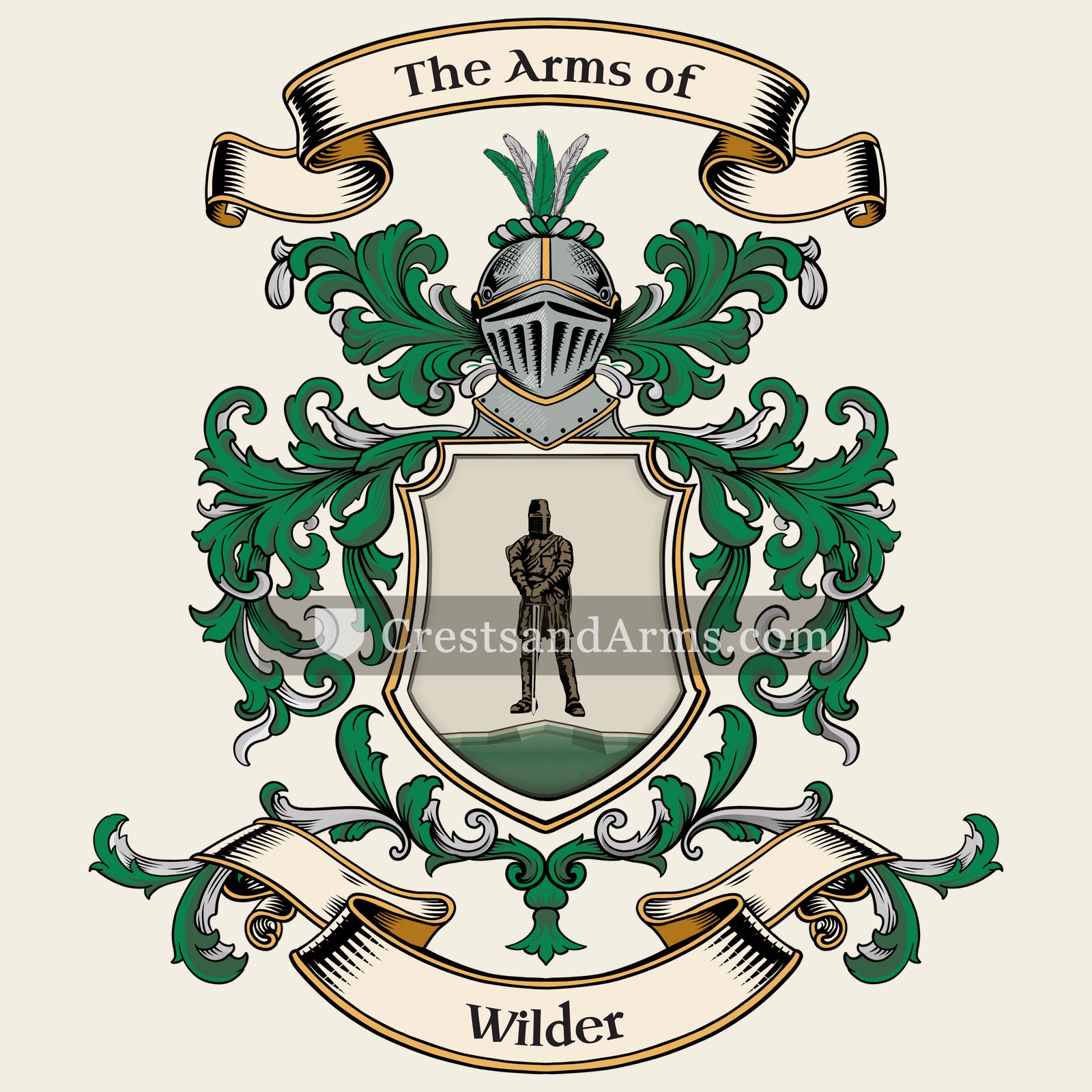
 mountThe ground held, and steadfastness upon it
 knightChivalry and service in arms
 mountThe ground held, and steadfastness upon it
 knightChivalry and service in arms


 fessThe military belt, and readiness to serve
 lionCourage, strength and royalty