Map of Netherlands showing where the Willms arms are recorded
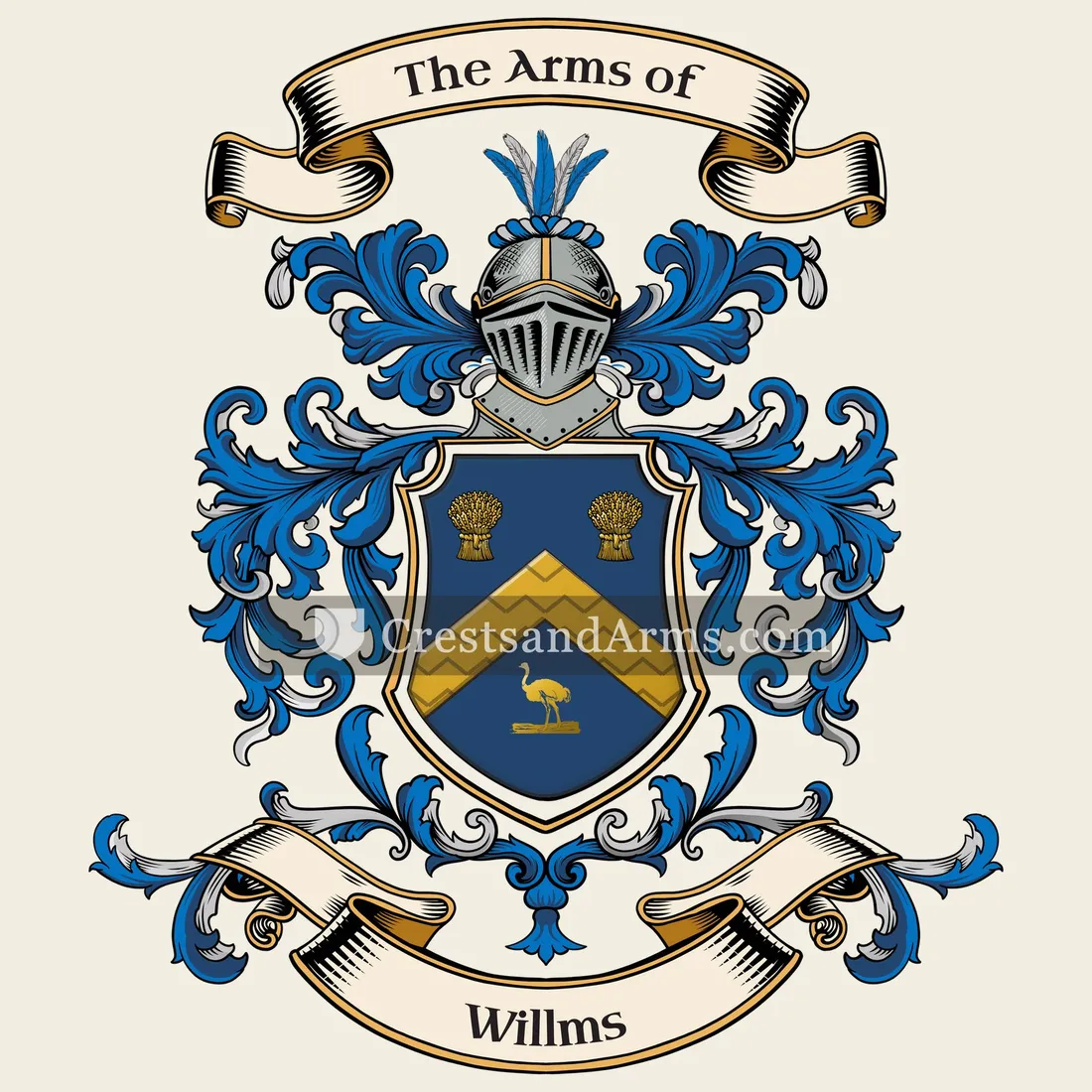
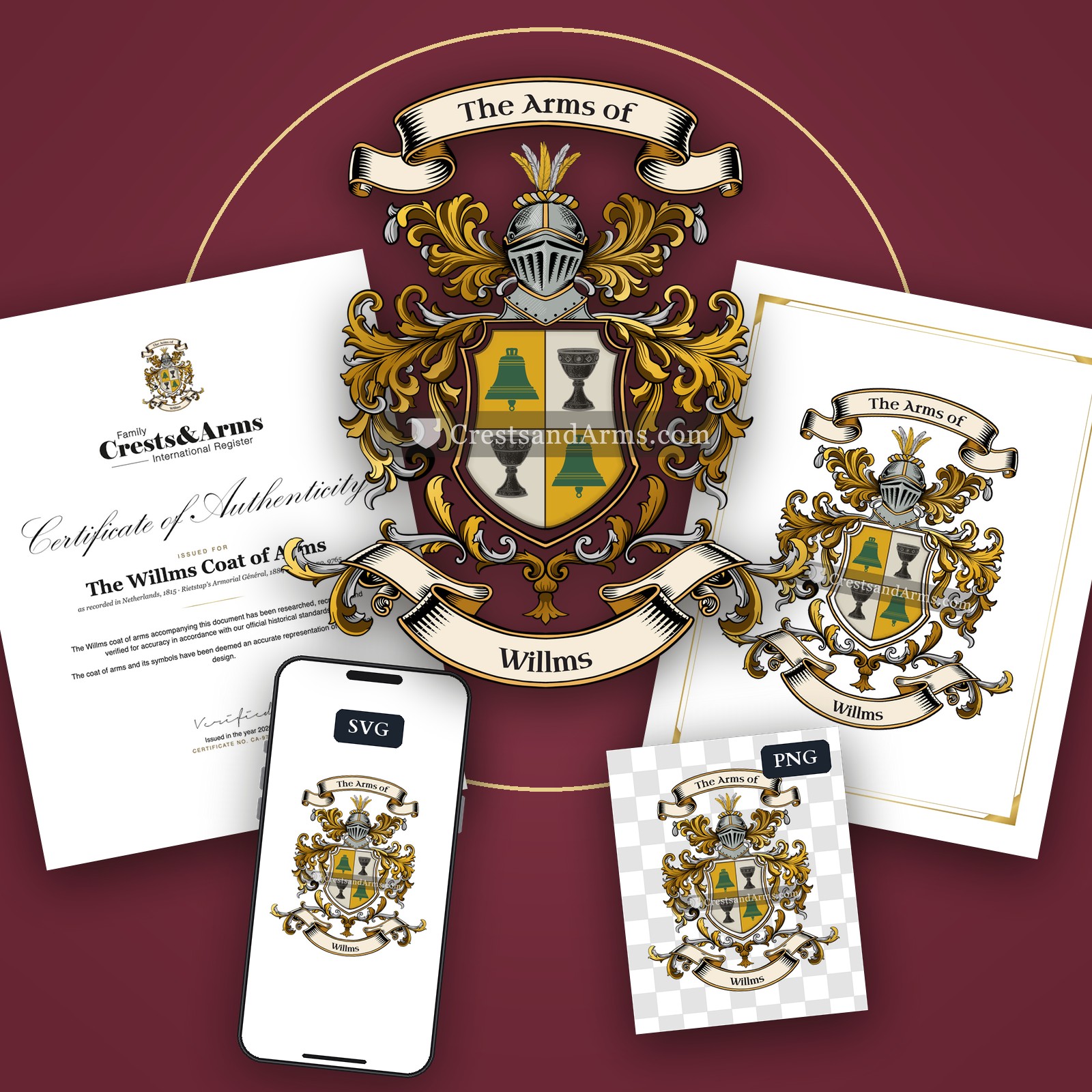
The Willms arms were recorded in Middelbourg, c. 1815.
This is where the arms were entered in the register. Families often moved to other parts of the country, so the same name can turn up in more than one region.
Region
Middelbourg
Town
Middelbourg
First recorded
1815
Granting Authority for the Willms Arms
Hoge Raad van Adel
Photograph made by me · CC BY-SA 3.0
The body that granted and recorded arms in Netherlands in this period.
William I of the Netherlands
Sovereign of the period
William I of the Netherlands
1815–1840
Reigning in Netherlands when the Willms arms are first recorded.
How Arms Worked in Netherlands
In the Netherlands, coats of arms were often used by noble families and those who held specific public offices. These arms were passed down through the generations to legitimate descendants. Younger branches of a family usually kept the original design without needing to add special marks. This system ensured that the family identity remained clear and consistent over many years.
Granting authority
The Hoge Raad van Adel is the official body that regulates and manages noble titles and coats of arms in the Netherlands.
How they got arms
Families typically obtained their coats of arms through official royal grants or by proving their long-standing historical use of the symbols.
Where arms were recorded
Coats of arms are officially recorded in the registers held by the Hoge Raad van Adel, which began its work in 1814.
The family's standing
Recorded among the armigerous families of Netherlands.
Origin & History of the Willms Family in Netherlands
The surname Willms traces its roots to the Germanic naming tradition, serving as a patronymic that identifies a person as the son of Willem. In the Netherlands, this name became established as families moved through the provinces, eventually finding a home in the historic city of Middelburg by 1815. During this period, Middelburg was a vital center for trade and maritime activity, which likely drew families seeking new economic opportunities following the end of the Napoleonic Wars. As the family settled into this coastal environment, the name was recorded in local civil registries, which were becoming standardized across the country at the time. These early records suggest a family integrated into the social fabric of Zeeland, where they participated in the daily life and administrative growth of a city recovering from years of political upheaval. By maintaining this name through generations, the family preserved a direct linguistic link to the medieval roots of the Low Countries.
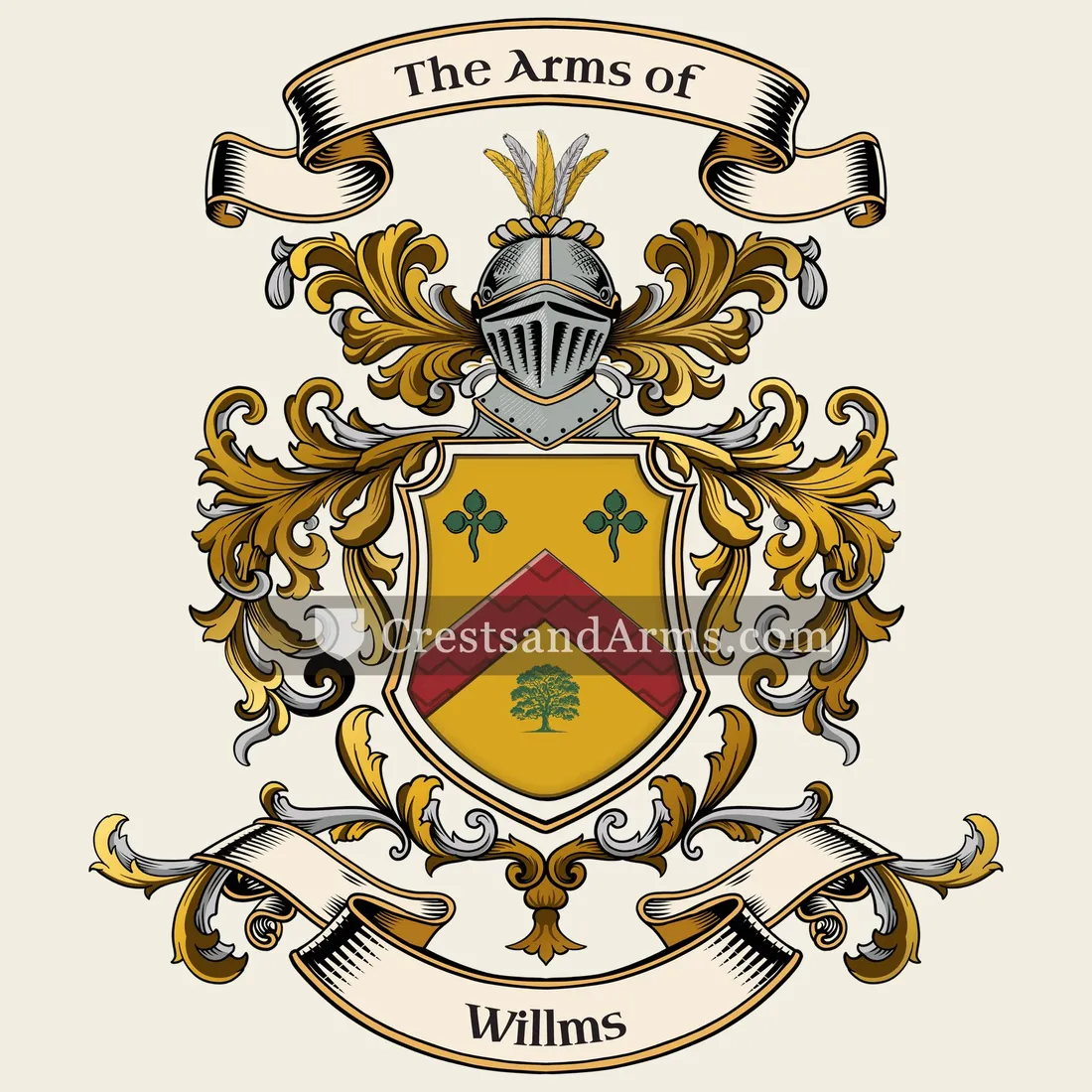
Meaning of the Willms family crest colors & symbols
Symbols on this shield
chevronProtection, and faithful service completed
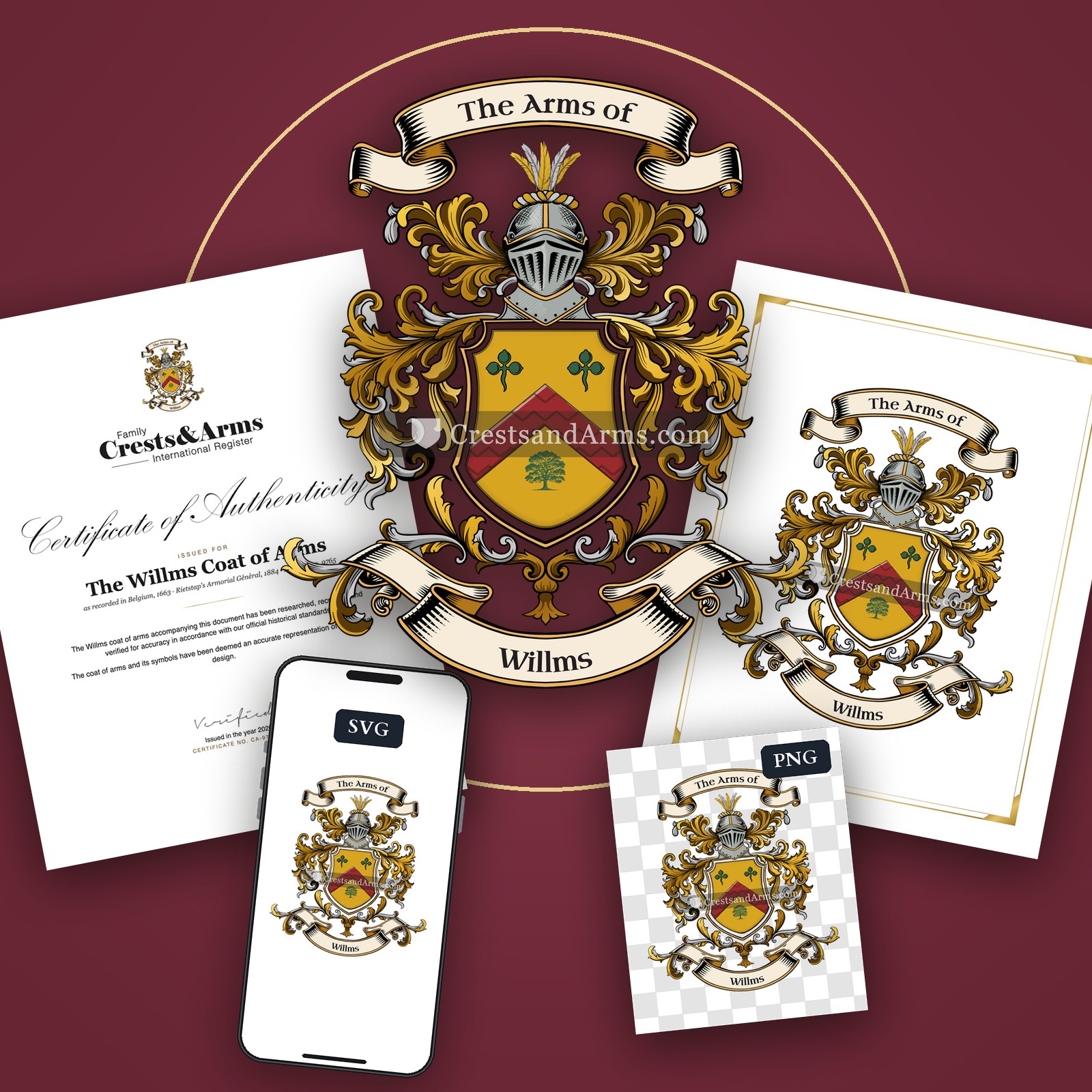
trefoilPerpetuity, and the Trinity
treeLife, endurance and deep roots
Colours
Gold (Or)Means: Generosity
Red (Gules)Means: Military strength
Green (Vert)Means: Hope
Historical info
Source
J. B. Rietstap, Armorial Général, Gouda: G. B. van Goor Zonen, 1884–87
Blazon (the actual original written record)
“D'or au chev. de gu., acc. en chef de deux trèfles de sin. et en p. d'un arbre du même.”
FlandreFlandre, c. 1663
Digital archive packCoat of arms PNG, gold border print PDF, vector SVG and the certificate of authenticity. Sent to your email in minutes.
Map of Belgium showing where the Willms arms are recorded
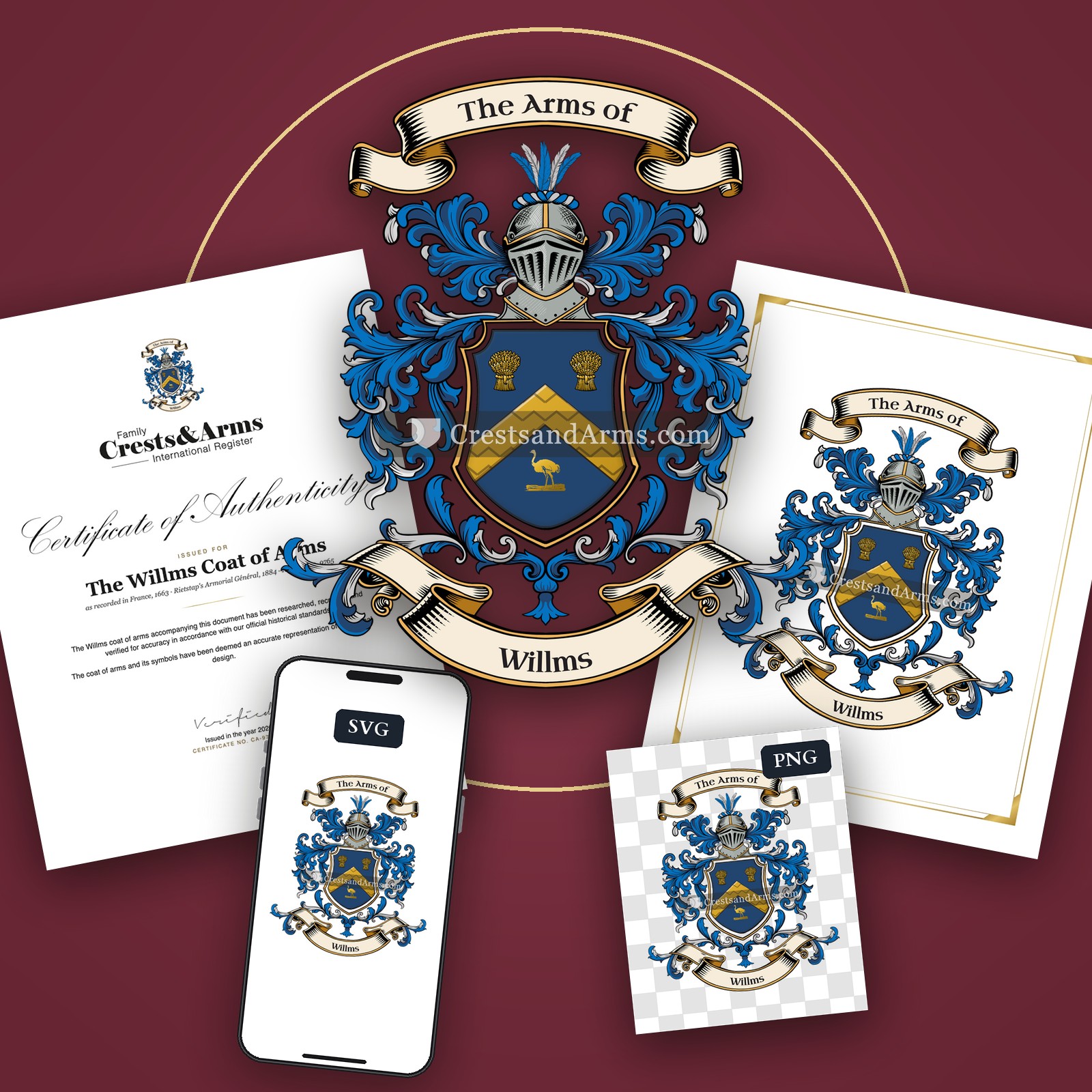
The Willms arms were recorded in Flandre, c. 1663.
Flandre grew rich on cloth, and its towns were among the busiest in Europe. Merchant families bought land with their profits and took arms to go with it, so trade put as many names in the registers here as land did.
This is where the arms were entered in the register. Families often moved to other parts of the country, so the same name can turn up in more than one region.
The body that granted and recorded arms in Belgium in this period.
Philip IV of Spain
Sovereign of the period
Philip IV of Spain
1621–1665
Reigning in Netherlands when the Willms arms are first recorded.
How Arms Worked in Belgium
In Belgium, a coat of arms is considered personal property that is passed down through the male line to legitimate descendants. Families often use the same shield design across generations to show their shared heritage. If a branch of the family wants to change the design, they must apply for an official update to their specific version of the arms.
Granting authority
The Conseil héraldique is the official body that regulates and approves all coats of arms in Belgium.
How they got arms
Families obtain their coats of arms through formal royal grants or by confirming their historical right to use existing designs.
Where arms were recorded
All approved coats of arms are officially recorded in the public registers of the Conseil héraldique since 1844.
The family's standing
Recorded among the armigerous families of Flandre.
Origin & History of the Willms Family in Belgium
The surname Willms traces its roots to the Germanic naming tradition, serving as a patronymic derived from the personal name Wilhelm, which means resolute protector. By the mid-seventeenth century, members of the Willms family were firmly established within the region of Flanders. During this era, the area was a bustling center of trade and agriculture under the influence of the Spanish Netherlands. Families like the Willms often lived in rural parishes or growing market towns, where they contributed to the local economy through farming or skilled craftsmanship. Because the name was tied to a popular given name, it evolved naturally over generations as a way to identify specific households within their communities. By 1663, the presence of the family in Flanders reflects the broader social stability of the time, as families began to solidify their surnames in official church registers and local tax documents to distinguish themselves in an increasingly organized society.
Meaning of the Willms family crest colors & symbols
Symbols on this shield
chevronProtection, and faithful service completed
wheatsheafPlenty, and the harvest of one's own labour
ostrichWilling obedience and serious thought
Colours
Blue (Azure)Means: Loyalty and truth
Gold (Or)Means: Generosity
Historical info
Source
J. B. Rietstap, Armorial Général, Gouda: G. B. van Goor Zonen, 1884–87
Blazon (the actual original written record)
“D'azur au chev., acc. en chef de deux gerbes et en p. d'une tête d'autruche, tenant en son bec un fer-à-cheval, le tout d'or.”
FranceEecloo Flandre, c. 1663
Digital archive packCoat of arms PNG, gold border print PDF, vector SVG and the certificate of authenticity. Sent to your email in minutes.
Map of France showing where the Willms arms are recorded
The Willms arms were recorded in Eecloo Flandre, c. 1663.
This is where the arms were entered in the register. Families often moved to other parts of the country, so the same name can turn up in more than one region.
The body that granted and recorded arms in France in this period.
Louis XIV of France
Sovereign of the period
Louis XIV of France
1643–1715
Reigning in Netherlands when the Willms arms are first recorded.
How Arms Worked in France
In France, a coat of arms was a mark of honor that passed down through the male line to all legitimate descendants. Families often used the same shield without changes to show their shared heritage. If a branch wanted to stand out, they could add a small mark to their shield to show their specific place in the family tree.
Granting authority
The Juge d'armes de France acted as the official authority that regulated and verified coats of arms across the country.
How they got arms
Families typically inherited their arms from ancestors, though they could also receive them through royal grants or by proving their noble status.
Where arms were recorded
Coats of arms were officially recorded in the Armorial Général de France, which began its main collection in the year 1696.
The family's standing
Recorded among the armigerous families of France.
Origin & History of the Willms Family in France
The surname Willms traces its roots to the Germanic regions of Europe, eventually establishing a notable presence in the borderlands between France and the Low Countries. By the mid-seventeenth century, members of the family were firmly settled in Eecloo, located in the historical region of Flanders. During this era, the border between France and the Spanish Netherlands was frequently shifting due to ongoing military conflicts and territorial treaties. As a result, families living in this area often navigated a complex cultural landscape where French influence blended with local Flemish traditions. The name itself is a patronymic variation of William, reflecting a long-standing tradition of naming children after ancestors to preserve the family legacy. By 1663, the Willms family had become integrated into the social fabric of Eecloo, participating in the local economy and community life that defined this volatile yet prosperous region of historical France and its neighbors.
Willms Meaning & Related Branches
Root word
Wilhelm
Derived from Germanic elements meaning will or desire and helmet or protection.
This name
WillmsA patronymic surname meaning son of William, signifying a resolute protector.
also spelled
Wyllems
Williams
Documented Sources
J. B. Rietstap, Armorial Général, Gouda: G. B. van Goor Zonen, 1884–87
Zeeuws Archief, Burgerlijke Stand Zeeland (1796–1950)
Nationaal Archief, Bevolkingsregisters van Middelburg
Van der Schaar, J., Woordenboek van voornamen, 1964
Meertens, P.J., De betekenis van de Nederlandse familienamen, 1948
Digital archive packCoat of arms PNG, gold border print PDF, vector SVG and the certificate of authenticity. Sent to your email in minutes.


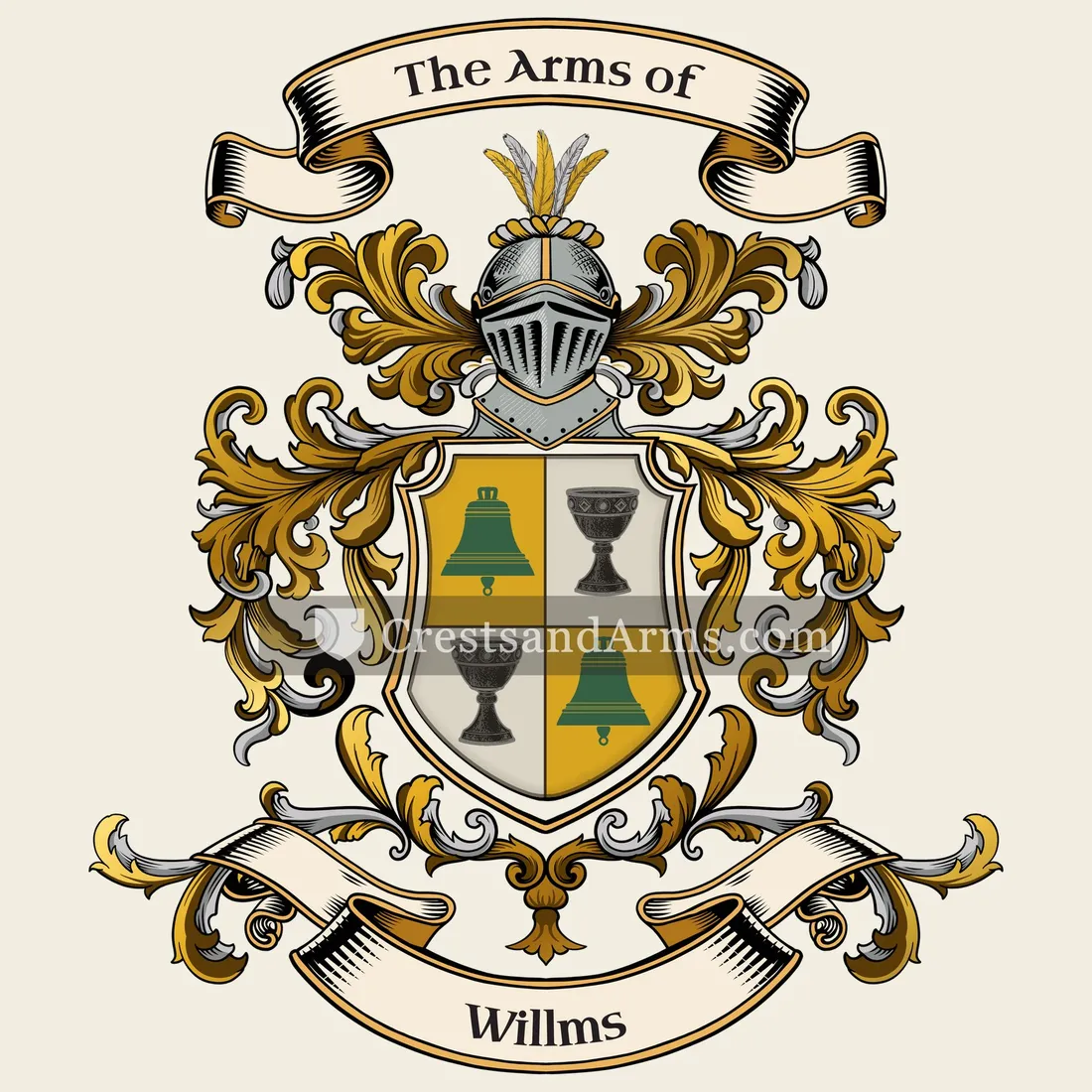
 bellA call to prayer, and a warning given
 cupFaith, office, and a trust discharged
 bellA call to prayer, and a warning given
 cupFaith, office, and a trust discharged


 chevronProtection, and faithful service completed
 trefoilPerpetuity, and the Trinity
 treeLife, endurance and deep roots


 wheatsheafPlenty, and the harvest of one's own labour
 ostrichWilling obedience and serious thought