A record of documented arms, meaning and origin, researched for the Winder family lines. Documented in 3 countries.
Reg. 5619 · German, W–Z
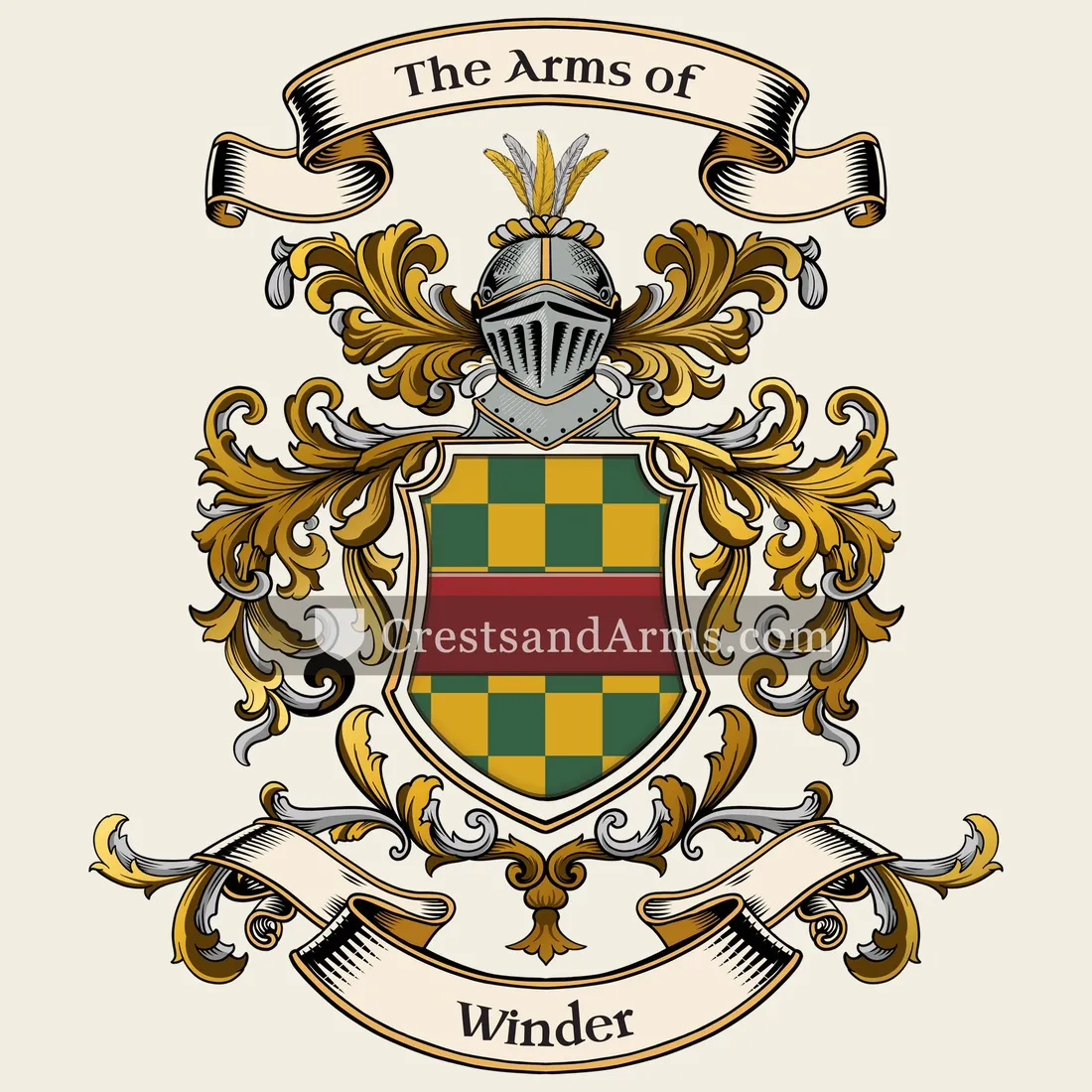
Meaning of the Winder family crest colors & symbols
Symbols on this shield
bendDefence, and the scarf of a commander
roseThe seventh son, and beauty with grace
Colours
Gold (Or)Means: Generosity
Black (Sable)Means: Constancy
Silver (Argent)Means: Peace and sincerity
Historical info
Source
J. B. Rietstap, Armorial Général, Gouda: G. B. van Goor Zonen, 1884–87
Blazon (the actual original written record)
“D'or à la bande de sa., ch. de trois roses d'arg. Cq. cour. C.: un vol de sa., l'aile dextre ch. d'une barre et l'aile sen. d'une bande d'or, surch. chacune de trois roses d'arg. L.: à dextre d'or et de sa., à sen. d'arg. et de sa.”
Germanyc. 1765
Digital archive packCoat of arms PNG, gold border print PDF, vector SVG and the certificate of authenticity. Sent to your email in minutes.
Map of Germany showing where the Winder arms are recorded
The Winder arms were recorded in Germany, c. 1765.
Arms such as these were typically recorded in Bavaria.
Bavaria was a country of old landed families and walled market towns. Estates passed down the same line for centuries, and both the landowners and the leading townsmen kept arms, which is why so many Bavarian names sit in the registers.
This is where the arms were entered in the register. Families often moved to other parts of the country, so the same name can turn up in more than one region.
The body that granted and recorded arms in Germany in this period.
Francis I, Holy Roman Emperor
Sovereign of the period
Francis I, Holy Roman Emperor
1745–1765
Reigning in Germany when the Winder arms are first recorded.
How Arms Worked in Germany
In the Holy Roman Empire, coats of arms were often granted to individuals by the Emperor or his representatives. These arms were then passed down through the generations to all legitimate descendants of the original holder. Younger branches of a family usually kept the same shield design without needing to change it, as the arms belonged to the entire lineage.
Granting authority
The Holy Roman Emperor held the sole power to grant new coats of arms throughout his vast imperial territories.
How they got arms
Families typically obtained their coats of arms through a formal imperial grant or by proving their noble status to the authorities.
Where arms were recorded
These grants were officially recorded in the Imperial Chancery registers, which began keeping formal records of such honors during the Middle Ages.
The family's standing
Recorded among the armigerous families of Germany.
Origin & History of the Winder Family in Germany
The family name Winder finds its historical roots in the southern regions of Germany, particularly within the diverse landscape of Bavaria. During the eighteenth century, the name was closely tied to the agrarian traditions and local craftsmanship that defined life in the Bavarian countryside. By 1765, records confirm that members of the Winder family were well-established residents in this region, likely working as skilled tradespeople or farmers who contributed to the local economy. The name itself is thought to be descriptive, possibly originating from a nickname for someone who worked with winding tools or lived near a winding path or stream. As these families navigated the social and political changes of the Holy Roman Empire, they remained rooted in their local communities, helping to shape the cultural identity of their villages through generations of steady labor and community involvement.
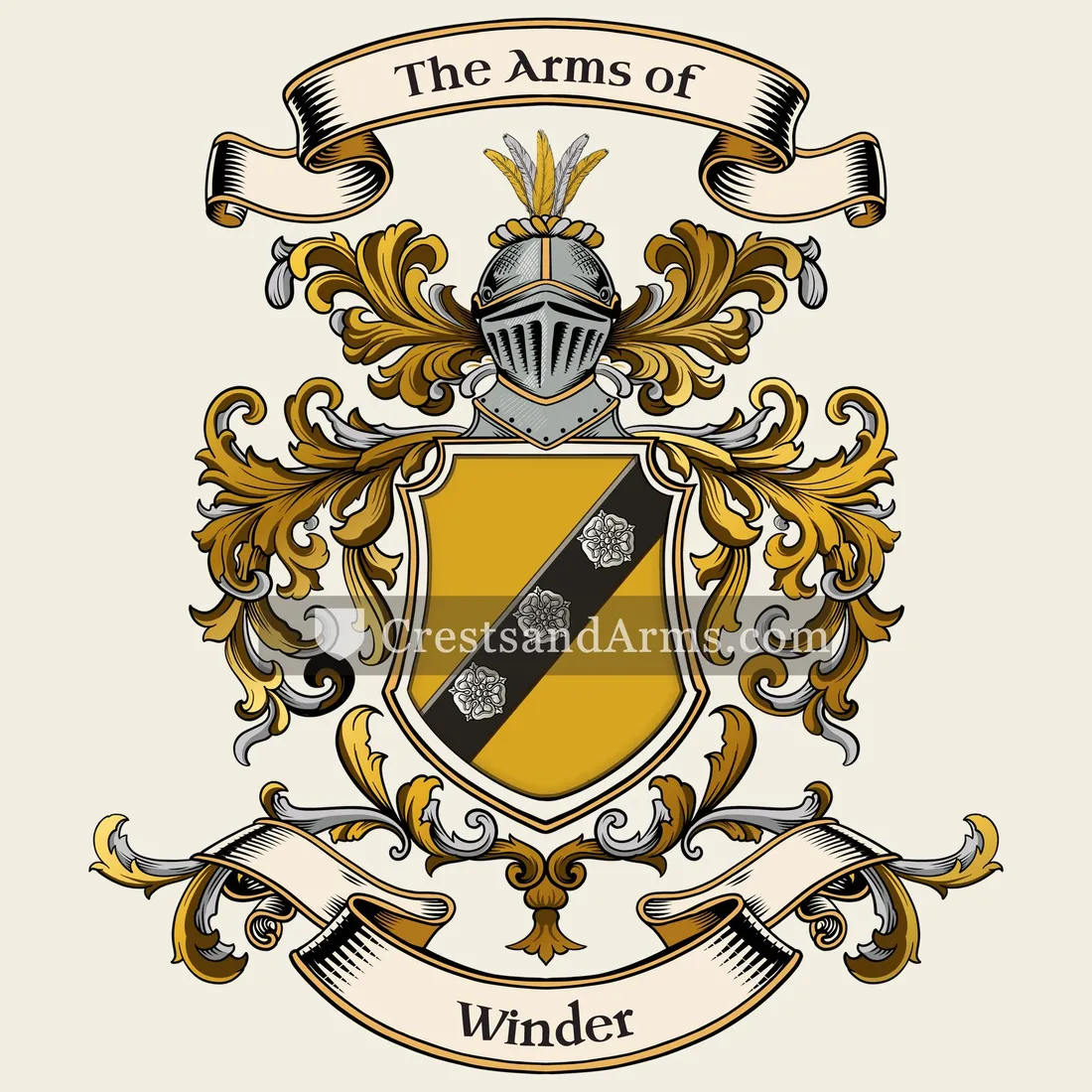
Meaning of the Winder family crest colors & symbols
Symbols on this shield
wolfReward from long service and hard work
Colours
Black (Sable)Means: Constancy
Gold (Or)Means: Generosity
Silver (Argent)Means: Peace and sincerity
Historical info
Source
J. B. Rietstap, Armorial Général, Gouda: G. B. van Goor Zonen, 1884–87
Blazon (the actual original written record)
“Coupé de sa. sur or; le sa. ch. d'un loup naiss. d'arg., coll. d'un ruban flottant du même. C.: le loup, iss. L. d'or et de sa.”
Austriac. 1772
Digital archive packCoat of arms PNG, gold border print PDF, vector SVG and the certificate of authenticity. Sent to your email in minutes.
Map of Austria showing where the Winder arms are recorded
The Winder arms were recorded in Austria, c. 1772.
Arms such as these were typically recorded in Tyrol.
Tyrol was mountain country in western Austria, where the valleys were held by families who had been there a very long time. Old tenure counted for more than money, and old families carried arms.
This is where the arms were entered in the register. Families often moved to other parts of the country, so the same name can turn up in more than one region.
Region
Tyrol
First recorded
1772
Granting Authority for the Winder Arms
Imperial and Royal chancery
Sodacan · CC BY-SA 3.0
The body that granted and recorded arms in Austria in this period.
Joseph II, Holy Roman Emperor
Sovereign of the period
Joseph II, Holy Roman Emperor
1765–1790
Reigning in Germany when the Winder arms are first recorded.
How Arms Worked in Austria
Austrian coats of arms were often linked directly to noble titles granted by the Emperor. These symbols belonged to the entire family line rather than just one individual. When a family grew, new branches kept the original design without needing to change it. This system allowed all members of a noble house to share the same identity across many generations.
Granting authority
The Imperial and Royal chancery managed all heraldic matters and controlled the official granting of arms throughout the Austrian lands.
How they got arms
Families typically received their arms through a formal imperial decree that often accompanied the elevation of a person to noble status.
Where arms were recorded
Official records of these grants were kept in the Imperial Register of Nobility which began its formal documentation process in 1453.
The family's standing
Recorded among the armigerous families of Austria.
Origin & History of the Winder Family in Austria
The Winder family name has deep roots in the rugged landscape of the Austrian Tyrol, where members of the family were documented as early as 1772. The name itself is likely derived from the Middle High German word "wint," which refers to the wind, or it may have served as a descriptive nickname for a person who lived in a particularly breezy or exposed location. In the mountainous terrain of the Tyrol, families often settled in high valleys where the weather played a major role in daily life. By the late 18th century, the Winders were established members of these alpine communities, likely working as farmers or craftsmen who adapted to the harsh climate of the Alps. This period was a time of significant social change in the region, and the family name persisted through generations as they integrated into the local parish systems and agricultural economy of the Austrian Empire.
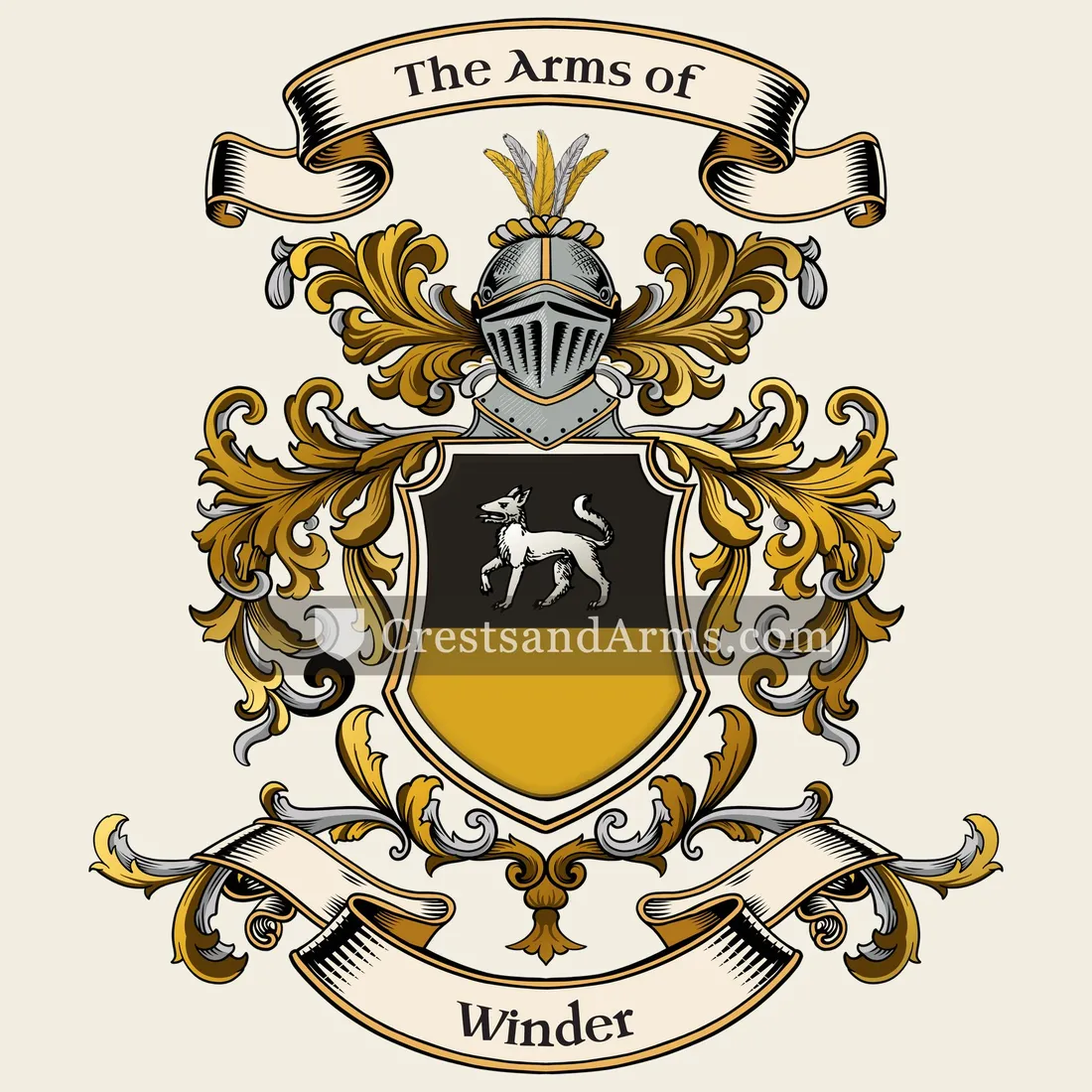
Meaning of the Winder family crest colors & symbols
Symbols on this shield
chequyConstancy, and the counting-board
fessThe military belt, and readiness to serve
Colours
Gold (Or)Means: Generosity
Red (Gules)Means: Military strength
Green (Vert)Means: Hope
Historical info
Source
Sir Bernard Burke, The General Armory of England, Scotland, Ireland and Wales, London: Harrison & Sons, 1884
Blazon (the actual original written record)
“Chequy or and vert a fess gu”
CumberlandCumberland, c. 1620
Digital archive packCoat of arms PNG, gold border print PDF, vector SVG and the certificate of authenticity. Sent to your email in minutes.
Map of England showing where the Winder arms are recorded
The Winder arms were recorded in Cumberland, c. 1620.
Cumberland was rough border country in the north-west, facing Scotland across a disputed line. Its families held land in return for keeping it defended, and men who fought carried shields of their own.
This is where the arms were entered in the register. Families often moved to other parts of the country, so the same name can turn up in more than one region.
The body that granted and recorded arms in England in this period.
James VI and I
Sovereign of the period
James VI and I
1603–1625
Reigning in Germany when the Winder arms are first recorded.
How Arms Worked in England
English heraldry allowed arms to be shared by all legitimate descendants of the original owner. These symbols were treated as personal property that moved through the generations to all children. While the eldest son kept the original design, other family members could use the same shield without needing to change it or register their own unique versions.
Granting authority
The College of Arms in London has regulated the use of coats of arms throughout England and Wales since 1484.
How they got arms
Families typically obtained their coats of arms through a formal grant from the Crown or by proving their ancient right to them.
Where arms were recorded
All official coats of arms are recorded in the registers kept at the College of Arms, which date back to the fifteenth century.
The family's standing
Recorded among the armigerous families of Cumberland.
Origin & History of the Winder Family in England
The surname Winder is a locative name, meaning it originated from individuals living near a specific geographical feature or place. In the historical records of Northern England, the name is deeply connected to the rugged landscape of Cumberland, where the family was well-established by the early 17th century. The name is likely derived from the Old English word "wind," referring to a windy hill or a place exposed to strong gusts. By 1620, families bearing this name were integrated into the local community, likely working as farmers or tradespeople in the challenging terrain near the Lake District. Because the region was historically isolated and prone to border conflicts, the Winder family developed strong local roots that allowed them to persist in the area for generations. Their presence in Cumberland reflects a long history of families who took their identity directly from the hills and valleys they called home.
Winder Meaning & Related Branches
Root word
Wind
Old High German term referring to the wind or air currents.
This name
WinderAn occupational surname for a person who worked in a windy location or a nickname for a swift individual.
also spelled
Wynder
Wyndere
Documented Sources
J. B. Rietstap, Armorial Général, Gouda: G. B. van Goor Zonen, 1884–87


 bendDefence, and the scarf of a commander
 roseThe seventh son, and beauty with grace
 bendDefence, and the scarf of a commander
 roseThe seventh son, and beauty with grace


 wolfReward from long service and hard work


 chequyConstancy, and the counting-board
 fessThe military belt, and readiness to serve