A record of documented arms, meaning and origin, researched for the Winter family lines. Documented in 3 countries.
Reg. 1270 · French, W–Z
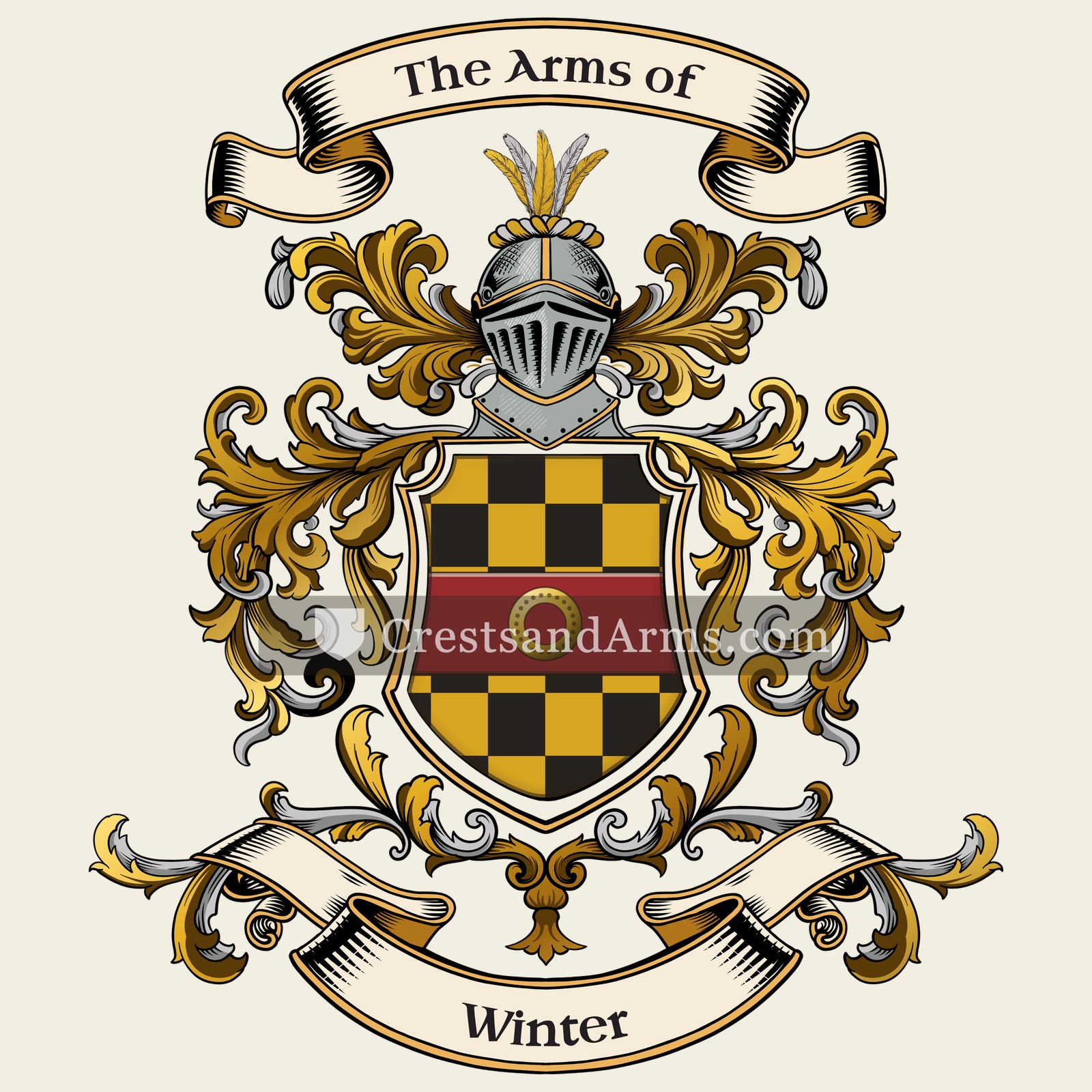
Coat of Arms & Family Crest Details
Symbols on this shield
bendDefence, and the scarf of a commander
chequyConstancy, and the counting-board
Colours
Silver (Argent)Means: Peace and sincerity
Gold (Or)Means: Generosity
Red (Gules)Means: Military strength
Blue (Azure)Means: Loyalty and truth
Historical info
Source
J. B. Rietstap, Armorial Général, Gouda: G. B. van Goor Zonen, 1884–87
Blazon (the actual original written record)
“D'arg. à la bande échiq. d'or et de gu., à la bord. engr. d'azur. C.: un chapeau de tournoi de sa., retr. d'arg., supp. un coeur d'arg. sommé d'un panache de plumes de coq de sa. L. d'or et de gu.”
Francec. 1663
Digital archive packCoat of arms PNG, gold border print PDF, vector SVG and the certificate of authenticity. Sent to your email in minutes.
Map of France showing where the Winter arms are recorded
The Winter arms were recorded in France, c. 1663.
Arms such as these were typically recorded in Bretagne.
More families held coats of arms in Bretagne than anywhere else in France. The land was divided into many small estates rather than a few large ones, so far more households counted as gentry, and each needed a shield of its own to be told apart.
This is where the arms were entered in the register. Families often moved to other parts of the country, so the same name can turn up in more than one region.
The body that granted and recorded arms in France in this period.
Louis XIV of France
Sovereign of the period
Louis XIV of France
1643–1715
Reigning in France when the Winter arms are first recorded.
How Arms Worked in France
In France, a coat of arms was a mark of honor that passed down through the male line to all legitimate descendants. Families often used the same shield without changes to show their shared heritage. If a branch wanted to stand out, they could add a small mark to their shield to show their specific place in the family tree.
Granting authority
The Juge d'armes de France acted as the official authority that regulated and verified coats of arms across the country.
How they got arms
Families typically inherited their arms from ancestors, though they could also receive them through royal grants or by proving their noble status.
Where arms were recorded
Coats of arms were officially recorded in the Armorial Général de France, which began its main collection in the year 1696.
The family's standing
Recorded among the armigerous families of France.
Origin & History of the Winter Family in France
The history of the Winter family in France is deeply tied to the rugged landscape and distinct cultural identity of the Brittany region. By the year 1663, records confirm that members of the family were already established within this northwestern province, a time when Brittany functioned with a high degree of autonomy under the French crown. The name itself likely originated as a descriptive nickname, perhaps given to someone who possessed a cold or stoic temperament or who had a notable connection to the winter season. During the seventeenth century, families in Brittany often lived in tight-knit rural communities where they worked the land or engaged in maritime trade. As the Winter family settled into this environment, they became part of the local social fabric, navigating the linguistic shifts between the Breton language and French. Their presence in the region during this era suggests a history rooted in the resilience and traditions of the Breton people, reflecting a life shaped by the Atlantic climate and the historical independence of their home province.
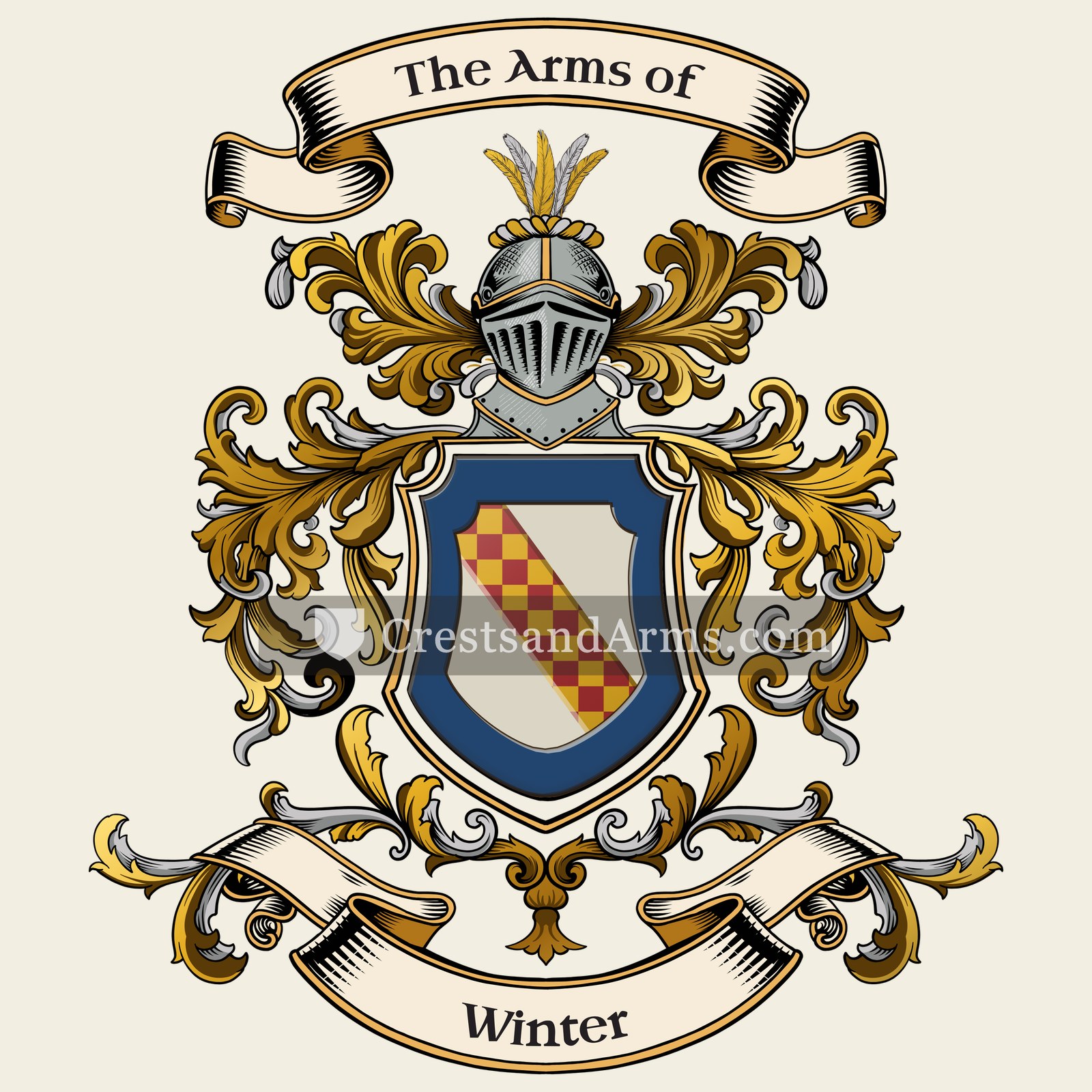
Coat of Arms & Family Crest Details
Symbols on this shield
mountThe ground held, and steadfastness upon it
greyhoundCourage, vigilance and loyalty
Colours
Red (Gules)Means: Military strength
Green (Vert)Means: Hope
Black (Sable)Means: Constancy
Historical info
Source
J. B. Rietstap, Armorial Général, Gouda: G. B. van Goor Zonen, 1884–87
Blazon (the actual original written record)
“De gu. à un lévrier de sa., pass. sur une terrasse de sin.”
Germanyc. 1765
Digital archive packCoat of arms PNG, gold border print PDF, vector SVG and the certificate of authenticity. Sent to your email in minutes.
Map of Germany showing where the Winter arms are recorded
The Winter arms were recorded in Germany, c. 1765.
Arms such as these were typically recorded in Bavaria.
Bavaria was a country of old landed families and walled market towns. Estates passed down the same line for centuries, and both the landowners and the leading townsmen kept arms, which is why so many Bavarian names sit in the registers.
This is where the arms were entered in the register. Families often moved to other parts of the country, so the same name can turn up in more than one region.
The body that granted and recorded arms in Germany in this period.
Francis I, Holy Roman Emperor
Sovereign of the period
Francis I, Holy Roman Emperor
1745–1765
Reigning in France when the Winter arms are first recorded.
How Arms Worked in Germany
In the Holy Roman Empire, coats of arms were often granted to individuals by the Emperor or his representatives. These arms were then passed down through the generations to all legitimate descendants of the original holder. Younger branches of a family usually kept the same shield design without needing to change it, as the arms belonged to the entire lineage.
Granting authority
The Holy Roman Emperor held the sole power to grant new coats of arms throughout his vast imperial territories.
How they got arms
Families typically obtained their coats of arms through a formal imperial grant or by proving their noble status to the authorities.
Where arms were recorded
These grants were officially recorded in the Imperial Chancery registers, which began keeping formal records of such honors during the Middle Ages.
The family's standing
Recorded among the armigerous families of Germany.
Origin & History of the Winter Family in Germany
The surname Winter originated as a descriptive nickname in medieval Germany, likely identifying individuals who were born during the winter months or perhaps those who possessed a cold and stoic temperament. By the mid-eighteenth century, the family had established a notable presence in the southern region of Bavaria. During this era, life in Bavaria was deeply connected to the agricultural cycles of the land, and families often lived in small, tight-knit village communities. Records from 1765 confirm that members of the Winter family were active participants in these local societies, where they likely worked as farmers, craftsmen, or tradespeople. As the family grew, they integrated into the social and religious structures of the Bavarian countryside, contributing to the local culture and economy of the Holy Roman Empire. This period marked a time of stability for the family, allowing them to root their identity firmly within the traditions and geography of southern Germany.
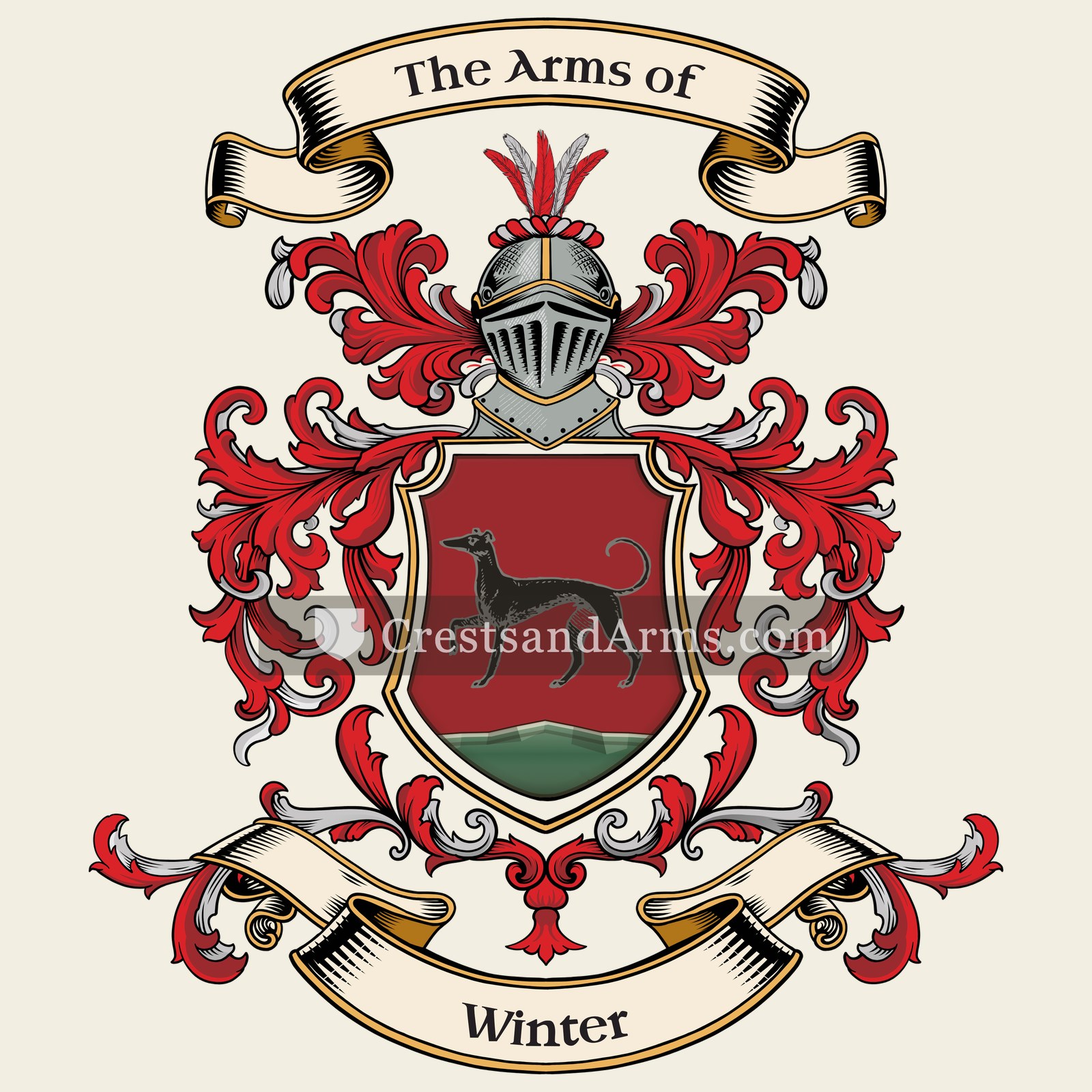
Coat of Arms & Family Crest Details
Symbols on this shield
chequyConstancy, and the counting-board
fessThe military belt, and readiness to serve
ringFidelity, and a promise kept
Colours
Gold (Or)Means: Generosity
Red (Gules)Means: Military strength
Black (Sable)Means: Constancy
Historical info
Source
Sir Bernard Burke, The General Armory of England, Scotland, Ireland and Wales, London: Harrison & Sons, 1884
Blazon (the actual original written record)
“Chequy or and sa. on a fess gu. an annulet of the first”
KentCanterbury · Kent, c. 1610
Digital archive packCoat of arms PNG, gold border print PDF, vector SVG and the certificate of authenticity. Sent to your email in minutes.
Map of England showing where the Winter arms are recorded
The Winter arms were recorded in Kent, c. 1610.
Kent sits between London and the short crossing to Europe, and the trade passing through made it wealthy. Merchant families bought land with that money, and it was landowners who took coats of arms.
This is where the arms were entered in the register. Families often moved to other parts of the country, so the same name can turn up in more than one region.
The body that granted and recorded arms in England in this period.
James VI and I
Sovereign of the period
James VI and I
1603–1625
Reigning in France when the Winter arms are first recorded.
How Arms Worked in England
English heraldry allowed arms to be shared by all legitimate descendants of the original owner. These symbols were treated as personal property that moved through the generations to all children. While the eldest son kept the original design, other family members could use the same shield without needing to change it or register their own unique versions.
Granting authority
The College of Arms in London has regulated the use of coats of arms throughout England and Wales since 1484.
How they got arms
Families typically obtained their coats of arms through a formal grant from the Crown or by proving their ancient right to them.
Where arms were recorded
All official coats of arms are recorded in the registers kept at the College of Arms, which date back to the fifteenth century.
The family's standing
Recorded among the armigerous families of Kent.
Origin & History of the Winter Family in England
The surname Winter is an ancient English name that likely began as a descriptive nickname for a person with a cold personality or someone who was born or baptized during the winter months. By the early 17th century, the family had established a notable presence in the county of Kent. Records from 1610 show members of the family living in this region, which was a hub for trade and agriculture at the time. During this period, families often lived in the same parish for generations, working as farmers or skilled tradespeople. As the family grew, they became part of the local social fabric of Kent, contributing to the development of their community through their daily work and local interactions. This long history in the region suggests that the family was well-integrated into the rural life of southern England long before the modern era.
Winter Meaning & Related Branches
Root word
hiems
The Latin word for the coldest season of the year.
This name
WinterA topographic or occupational name for someone associated with the winter season or cold weather.
also spelled
Wynter
Wyntre
Wintre
Related arms
Hedesheimsame arms
Wyntersame arms
Seelingsimilar arms
de Wintrevariant spelling
Documented Sources
J. B. Rietstap, Armorial Général, Gouda: G. B. van Goor Zonen, 1884–87
Archives départementales d'Ille-et-Vilaine, Série B (Cours et juridictions)
Archives départementales du Finistère, Série E (Familles et seigneuries)
Le Moyne de La Borderie, Arthur, Histoire de Bretagne, 1896
Meyer, Jean, La noblesse bretonne au XVIIIe siècle, 1966
Digital archive packCoat of arms PNG, gold border print PDF, vector SVG and the certificate of authenticity. Sent to your email in minutes.


 bendDefence, and the scarf of a commander
 chequyConstancy, and the counting-board
 bendDefence, and the scarf of a commander
 chequyConstancy, and the counting-board


 mountThe ground held, and steadfastness upon it
 greyhoundCourage, vigilance and loyalty


 fessThe military belt, and readiness to serve
 ringFidelity, and a promise kept