Map of Germany showing where the Wise arms are recorded
The Wise arms were recorded in Hambourg, c. 1765.
This is where the arms were entered in the register. Families often moved to other parts of the country, so the same name can turn up in more than one region.
The body that granted and recorded arms in Germany in this period.
Francis I, Holy Roman Emperor
Sovereign of the period
Francis I, Holy Roman Emperor
1745–1765
Reigning in Germany when the Wise arms are first recorded.
How Arms Worked in Germany
In the Holy Roman Empire, coats of arms were often granted to individuals by the Emperor or his representatives. These arms were then passed down through the generations to all legitimate descendants of the original holder. Younger branches of a family usually kept the same shield design without needing to change it, as the arms belonged to the entire lineage.
Granting authority
The Holy Roman Emperor held the sole power to grant new coats of arms throughout his vast imperial territories.
How they got arms
Families typically obtained their coats of arms through a formal imperial grant or by proving their noble status to the authorities.
Where arms were recorded
These grants were officially recorded in the Imperial Chancery registers, which began keeping formal records of such honors during the Middle Ages.
The family's standing
Recorded among the armigerous families of Germany.
Origin & History of the Wise Family in Germany
The surname Wise, often appearing in German records as Weiss or Weise, carries a long history rooted in the descriptive nicknames of the Middle Ages. In the German language, the word "weise" translates to "wise" or "learned," and it was originally used to identify individuals known for their sound judgment, intelligence, or role as a local advisor. By the time the family was firmly established in Hamburg by 1765, the name had evolved from a simple descriptor into a formal hereditary surname. During this period, Hamburg served as a bustling center of international trade and commerce. Families living in the city were often part of a dynamic urban culture that valued education and professional skill. As the Wise family integrated into the social and economic life of Hamburg, they likely participated in the city's thriving merchant guilds and civic organizations, helping to shape the identity of a name that stood for wisdom and reliability in a rapidly growing port city.
Meaning of the Wise family crest colors & symbols
Colours
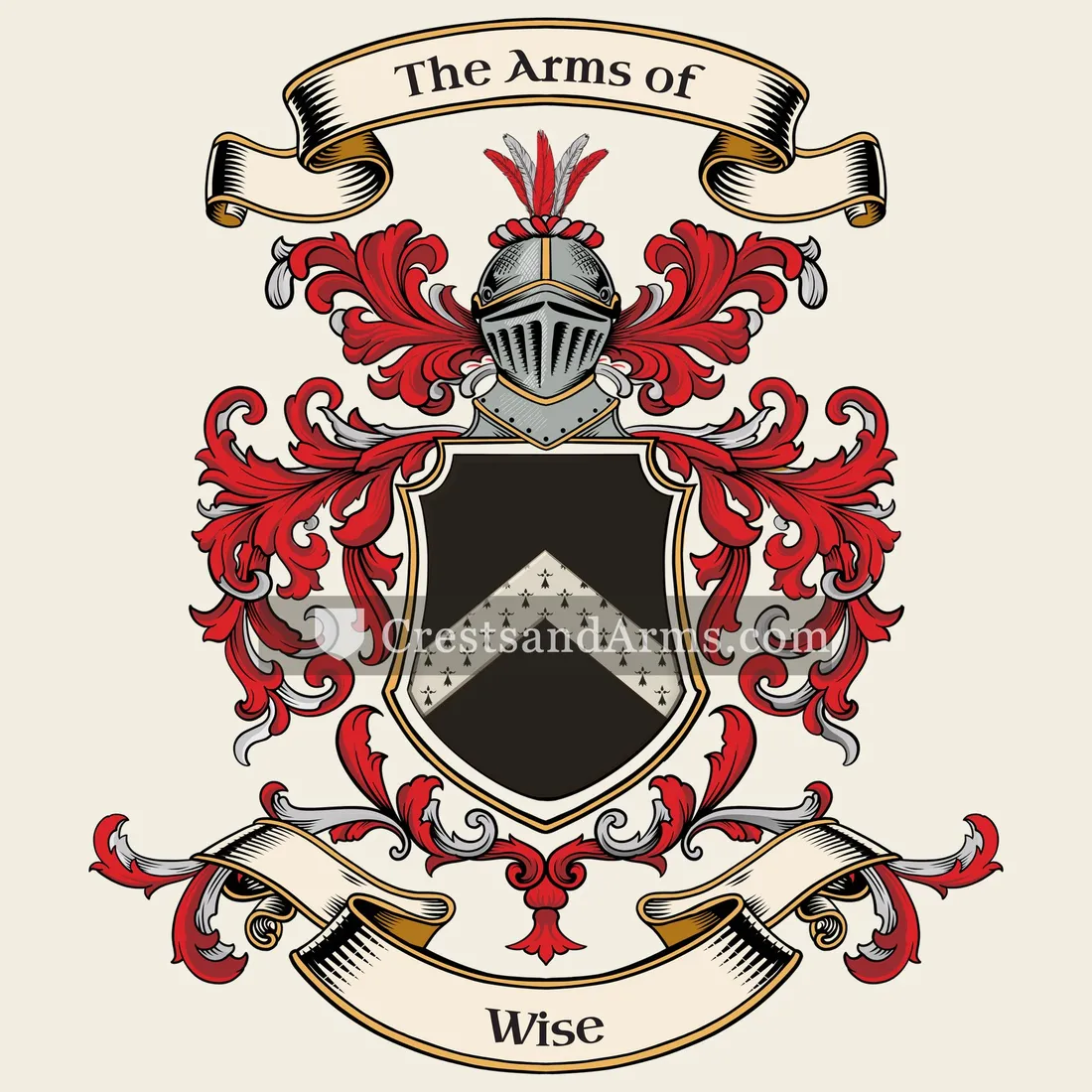
Black (Sable)Means: Constancy
ErmineMeans: Dignity
Historical info
Source
Sir Bernard Burke, The General Armory of England, Scotland, Ireland and Wales, London: Harrison & Sons, 1884
Blazon (the actual original written record)
“Sa. three chevronels erm. Crest (The old crest of the WISES of Sydenham was a mermaid ppr.)—A demi lion ramp. gu. guttée d'eau, holding in the dexter paw a mace or (granted 1400)”
DevonSydenham · Devon, c. 1620
Digital archive packCoat of arms PNG, gold border print PDF, vector SVG and the certificate of authenticity. Sent to your email in minutes.
Map of England showing where the Wise arms are recorded
The Wise arms were recorded in Devon, c. 1620.
Devon was a county of small manors and seafaring families. Its gentry were spread thickly across the countryside, and money made at sea often bought an estate, which in turn brought a coat of arms.
This is where the arms were entered in the register. Families often moved to other parts of the country, so the same name can turn up in more than one region.
The body that granted and recorded arms in England in this period.
James VI and I
Sovereign of the period
James VI and I
1603–1625
Reigning in Germany when the Wise arms are first recorded.
How Arms Worked in England
English heraldry allowed arms to be shared by all legitimate descendants of the original owner. These symbols were treated as personal property that moved through the generations to all children. While the eldest son kept the original design, other family members could use the same shield without needing to change it or register their own unique versions.
Granting authority
The College of Arms in London has regulated the use of coats of arms throughout England and Wales since 1484.
How they got arms
Families typically obtained their coats of arms through a formal grant from the Crown or by proving their ancient right to them.
Where arms were recorded
All official coats of arms are recorded in the registers kept at the College of Arms, which date back to the fifteenth century.
The family's standing
Recorded among the armigerous families of Devon.
Origin & History of the Wise Family in England
The surname Wise is a classic example of a descriptive nickname that evolved into a permanent family name during the Middle Ages in England. It originated from the Middle English word *wis*, which meant learned, sensible, or prudent. People were often given this name by their neighbors to describe their personality or their reputation for good judgment. By the time the family established a strong presence in Devon in the early 17th century, the name had already been in use for several hundred years. In the rural landscape of Devon, families like the Wises were often involved in local agriculture and community leadership. Their presence in the region by 1620 reflects a long history of families settling into specific counties and building deep roots within the local English population.
Meaning of the Wise family crest colors & symbols
Colours
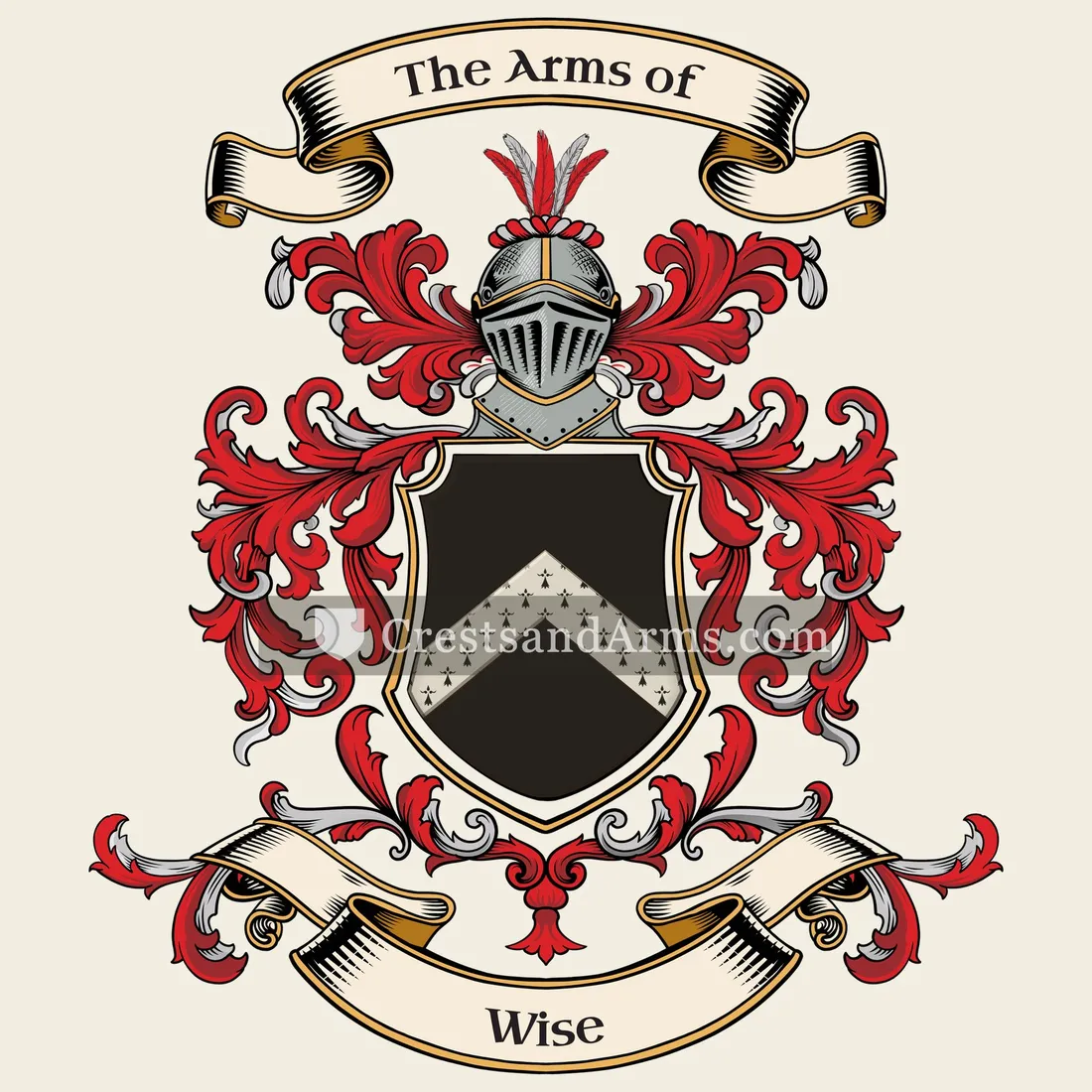
Black (Sable)Means: Constancy
ErmineMeans: Dignity
Historical info
Source
Sir Bernard Burke, The General Armory of England, Scotland, Ireland and Wales, London: Harrison & Sons, 1884
Blazon (the actual original written record)
“Sa. three chevronels erm”
ForfarLudan · Forfar, c. 1807
Digital archive packCoat of arms PNG, gold border print PDF, vector SVG and the certificate of authenticity. Sent to your email in minutes.
Map of Scotland showing where the Wise arms are recorded
The Wise arms were recorded in Forfar, c. 1807.
Forfar, now called Angus, was farming country on Scotland's east coast between the hills and the sea. Its landed families were long-settled, and long settlement is exactly what fills a register of arms.
This is where the arms were entered in the register. Families often moved to other parts of the country, so the same name can turn up in more than one region.
The body that granted and recorded arms in Scotland in this period.
George III of Great Britain
Sovereign of the period
George III of Great Britain
1801–1820
Reigning in Germany when the Wise arms are first recorded.
How Arms Worked in Scotland
Scottish heraldry is unique because it treats a coat of arms as a piece of personal property protected by law. Only one person can own a specific design at any given time. When a family grows, the head keeps the original shield while other relatives must apply for their own distinct version with slight changes to prove their specific identity.
Granting authority
The Court of the Lord Lyon acts as the official body that regulates and controls all heraldic matters throughout Scotland.
How they got arms
Individuals obtain a legal right to their arms through a formal petition process that confirms their identity and family connection.
Where arms were recorded
All valid coats of arms are officially entered into the Public Register of All Arms and Bearings starting from 1672.
The family's standing
Recorded among the armigerous families of Forfar.
Origin & History of the Wise Family in Scotland
The surname Wise has roots that stretch deep into the history of the Scottish Lowlands, where it functioned as a descriptive nickname for a person noted for their sound judgment or intelligence. By the early 19th century, the family had established a firm presence in the royal burgh of Forfar in Angus. During this period, Forfar was a bustling center for the textile industry, and families like the Wises were often integrated into the local trade networks that defined life in the region. Living in a town with such a long administrative history, these early members of the family would have been part of a close-knit community governed by local magistrates and kirk sessions. Records from this era show them participating in the daily rhythms of Scottish town life, contributing to the social and economic fabric of the county long before the industrial shifts of the Victorian age.
Wise Meaning & Related Branches
Root word
wis
Old High German term denoting knowledge, intelligence, or being learned.
This name
WiseA descriptive surname for a person who was considered wise, learned, or sagacious.
also spelled
Wize
Wyse
Wys
Wyes
Related arms
de Wysvariant spelling
Wysevariant spelling
Berkeleyrecorded with Wise, same area
Fawnesrecorded with Wise, same area
Documented Sources
J. B. Rietstap, Armorial Général, Gouda: G. B. van Goor Zonen, 1884–87
Bahlow, Hans, Deutsches Namenlexikon: Familien- und Vornamen nach Ursprung und Sinn erklärt, 1967
Heintze, Albert, Die deutschen Familien-Namen: geschichtlich, geographisch, sprachlich, 1903
Staatsarchiv Hamburg, Hamburger Passagierlisten, 1850–1934 (Note: While these records cover a later period, the archive holds extensive civil registry and church records dating back to the 18th century)
Digital archive packCoat of arms PNG, gold border print PDF, vector SVG and the certificate of authenticity. Sent to your email in minutes.


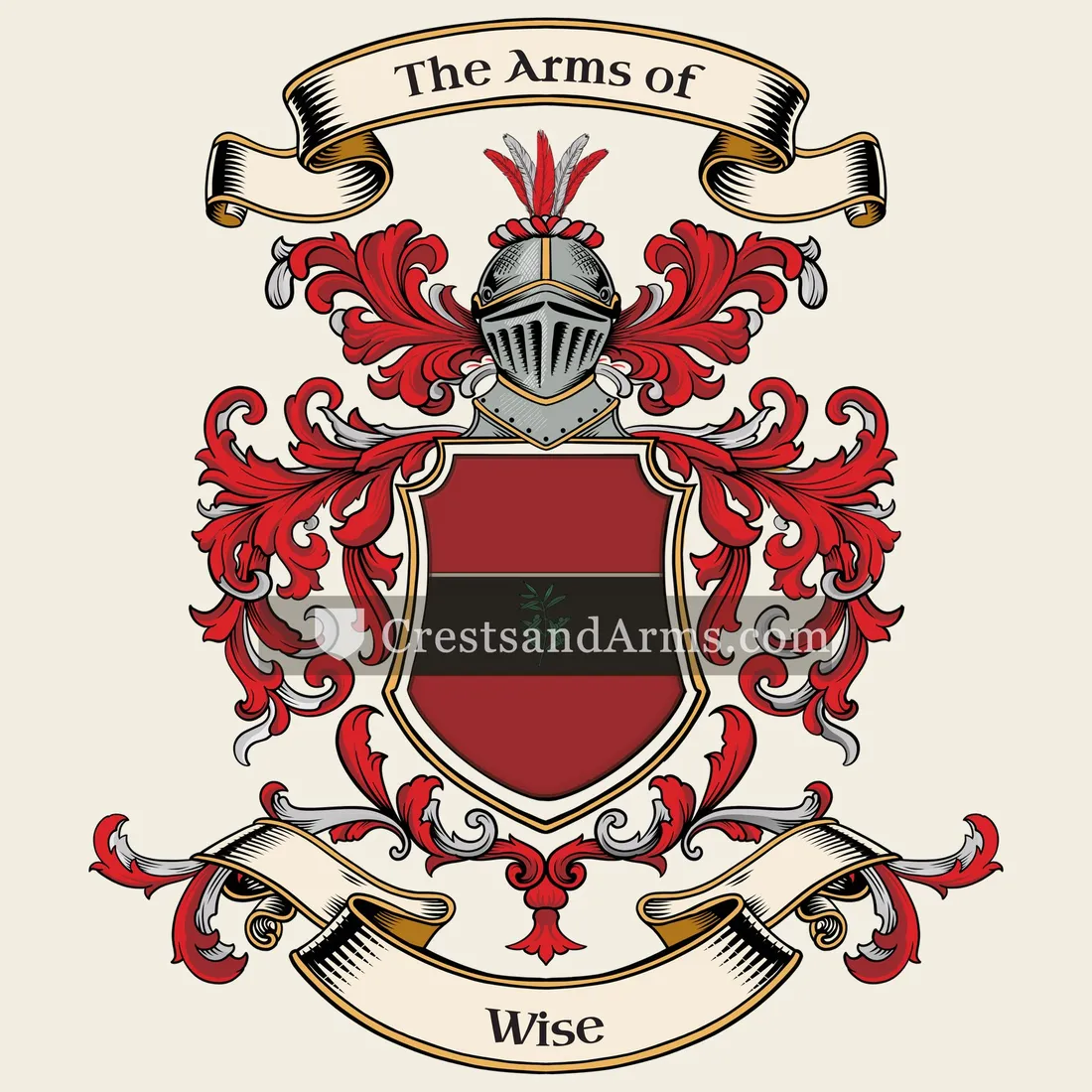
 fessThe military belt, and readiness to serve
 branchPeace, and new growth
 fessThe military belt, and readiness to serve
 branchPeace, and new growth