Map of Austria showing where the Witcher arms are recorded
The Witcher arms were recorded in Austria, c. 1772.
Arms such as these were typically recorded in Tyrol.
Tyrol was mountain country in western Austria, where the valleys were held by families who had been there a very long time. Old tenure counted for more than money, and old families carried arms.
This is where the arms were entered in the register. Families often moved to other parts of the country, so the same name can turn up in more than one region.
Region
Tyrol
First recorded
1772
Granting Authority for the Witcher Arms
Imperial and Royal chancery
Sodacan · CC BY-SA 3.0
The body that granted and recorded arms in Austria in this period.
Joseph II, Holy Roman Emperor
Sovereign of the period
Joseph II, Holy Roman Emperor
1765–1790
Reigning in Austria when the Witcher arms are first recorded.
How Arms Worked in Austria
Austrian coats of arms were often linked directly to noble titles granted by the Emperor. These symbols belonged to the entire family line rather than just one individual. When a family grew, new branches kept the original design without needing to change it. This system allowed all members of a noble house to share the same identity across many generations.
Granting authority
The Imperial and Royal chancery managed all heraldic matters and controlled the official granting of arms throughout the Austrian lands.
How they got arms
Families typically received their arms through a formal imperial decree that often accompanied the elevation of a person to noble status.
Where arms were recorded
Official records of these grants were kept in the Imperial Register of Nobility which began its formal documentation process in 1453.
The family's standing
Recorded among the armigerous families of Austria.
Origin & History of the Witcher Family in Austria
The history of the Witcher family in Austria is deeply rooted in the rugged landscape of the Tyrol region. By the year 1772, records confirm that members of the family were already established residents in this mountainous area. During this period, the Tyrol was a vital crossroads for trade and culture within the Habsburg Empire. Families living in these high-altitude valleys often worked as skilled craftsmen or farmers who adapted to the harsh climate. Because the region was isolated by steep peaks, the Witcher name became closely linked to the local community life and the specific traditions of the Alpine villages. Over time, these early ancestors helped shape the social fabric of the region through their labor and their participation in local parish affairs. Their presence in the historical record during the late 18th century highlights a family that was well-integrated into the daily rhythms of Austrian mountain life.
Coat of Arms & Family Crest Details
Symbols on this shield
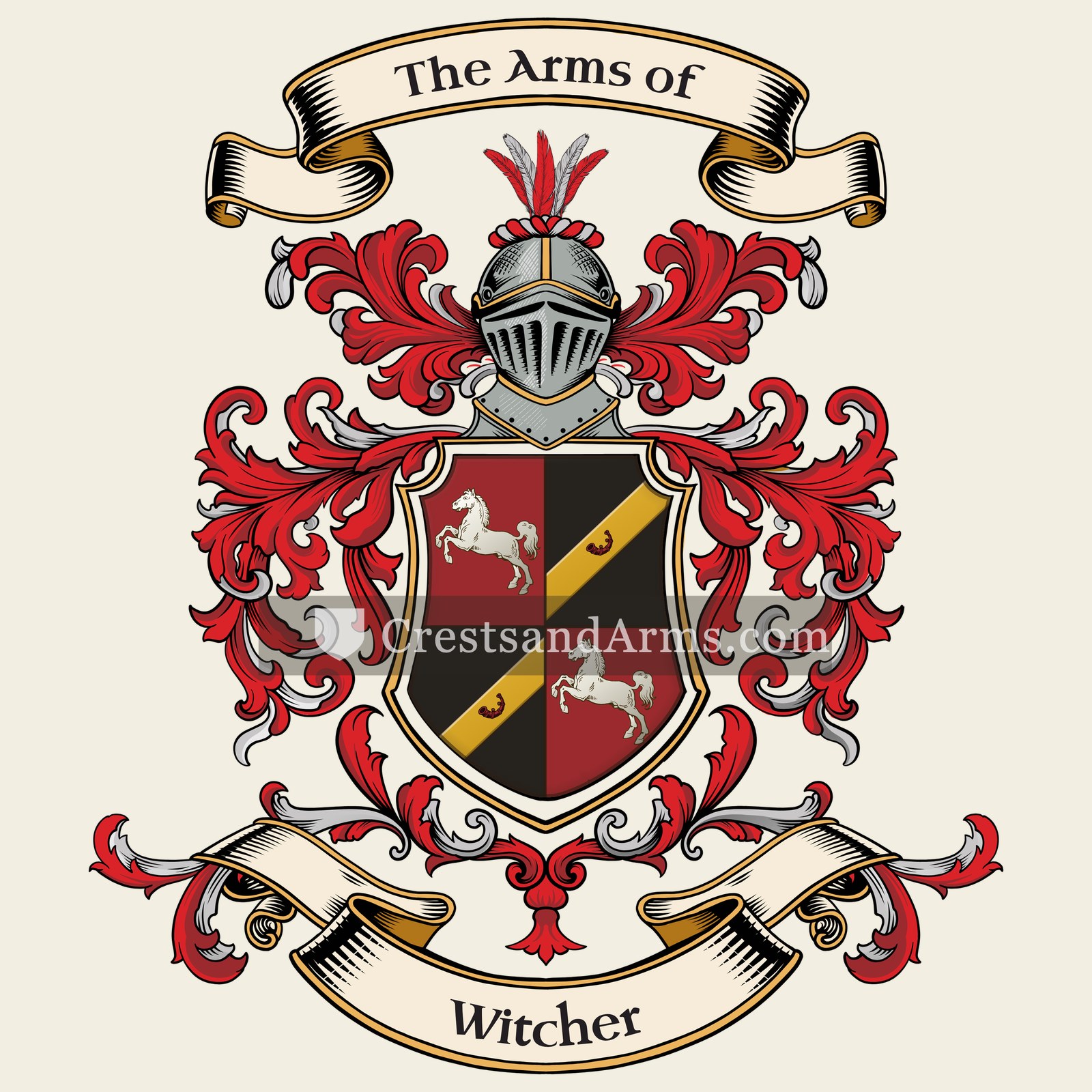
horseReadiness to serve king and country
hunting horn stringedOne who delights in the chase
Colours
Red (Gules)Means: Military strength
Black (Sable)Means: Constancy
Gold (Or)Means: Generosity
Silver (Argent)Means: Peace and sincerity
Historical info
Source
J. B. Rietstap, Armorial Général, Gouda: G. B. van Goor Zonen, 1884–87
Blazon (the actual original written record)
“Ec.: aux 1 et 4 de gu. à un cheval cabré d'arg.; aux 2 et 3 de sa. à la barre d'or, ch. d'un cor-de-chasse du champ, lié et vir. d'or, posé dans le sens de la barre. Deux cq. cour. C.: 1° un dextrochère,”
Germanyc. 1751
Digital archive packCoat of arms PNG, gold border print PDF, vector SVG and the certificate of authenticity. Sent to your email in minutes.
Map of Germany showing where the Witcher arms are recorded
The Witcher arms were recorded in Germany, c. 1751.
Arms such as these were typically recorded in Bavaria.
Bavaria was a country of old landed families and walled market towns. Estates passed down the same line for centuries, and both the landowners and the leading townsmen kept arms, which is why so many Bavarian names sit in the registers.
This is where the arms were entered in the register. Families often moved to other parts of the country, so the same name can turn up in more than one region.
The body that granted and recorded arms in Germany in this period.
Francis I, Holy Roman Emperor
Sovereign of the period
Francis I, Holy Roman Emperor
1745–1765
Reigning in Austria when the Witcher arms are first recorded.
How Arms Worked in Germany
In the Holy Roman Empire, coats of arms were often granted to individuals by the Emperor or his representatives. These arms were then passed down through the generations to all legitimate descendants of the original holder. Younger branches of a family usually kept the same shield design without needing to change it, as the arms belonged to the entire lineage.
Granting authority
The Holy Roman Emperor held the sole power to grant new coats of arms throughout his vast imperial territories.
How they got arms
Families typically obtained their coats of arms through a formal imperial grant or by proving their noble status to the authorities.
Where arms were recorded
These grants were officially recorded in the Imperial Chancery registers, which began keeping formal records of such honors during the Middle Ages.
The family's standing
Recorded among the armigerous families of Germany.
Origin & History of the Witcher Family in Germany
The family name Witcher traces its roots back to the historical landscapes of Bavaria, where records confirm the presence of family members as early as 1751. During this period, the region was part of the Holy Roman Empire and was defined by a complex social structure based on land ownership and local trade. Families with this surname likely lived in rural communities where they were deeply connected to the seasonal rhythms of agriculture and the local village economy. As the name evolved within the German-speaking territories, it was often tied to the specific dialects and naming customs of the Bavarian people. These early ancestors were part of a society that valued community ties and local craftsmanship, which helped shape the identity of the family before many members eventually migrated to other parts of the world in search of new opportunities.
Witcher Meaning & Related Branches
Root word
Wic
Old High German term for a village or a fortified settlement.
This name
WitcherRefers to a person who lived in or originated from a village.
also spelled
Vidaker
Widaker
Documented Sources
J. B. Rietstap, Armorial Général, Gouda: G. B. van Goor Zonen, 1884–87


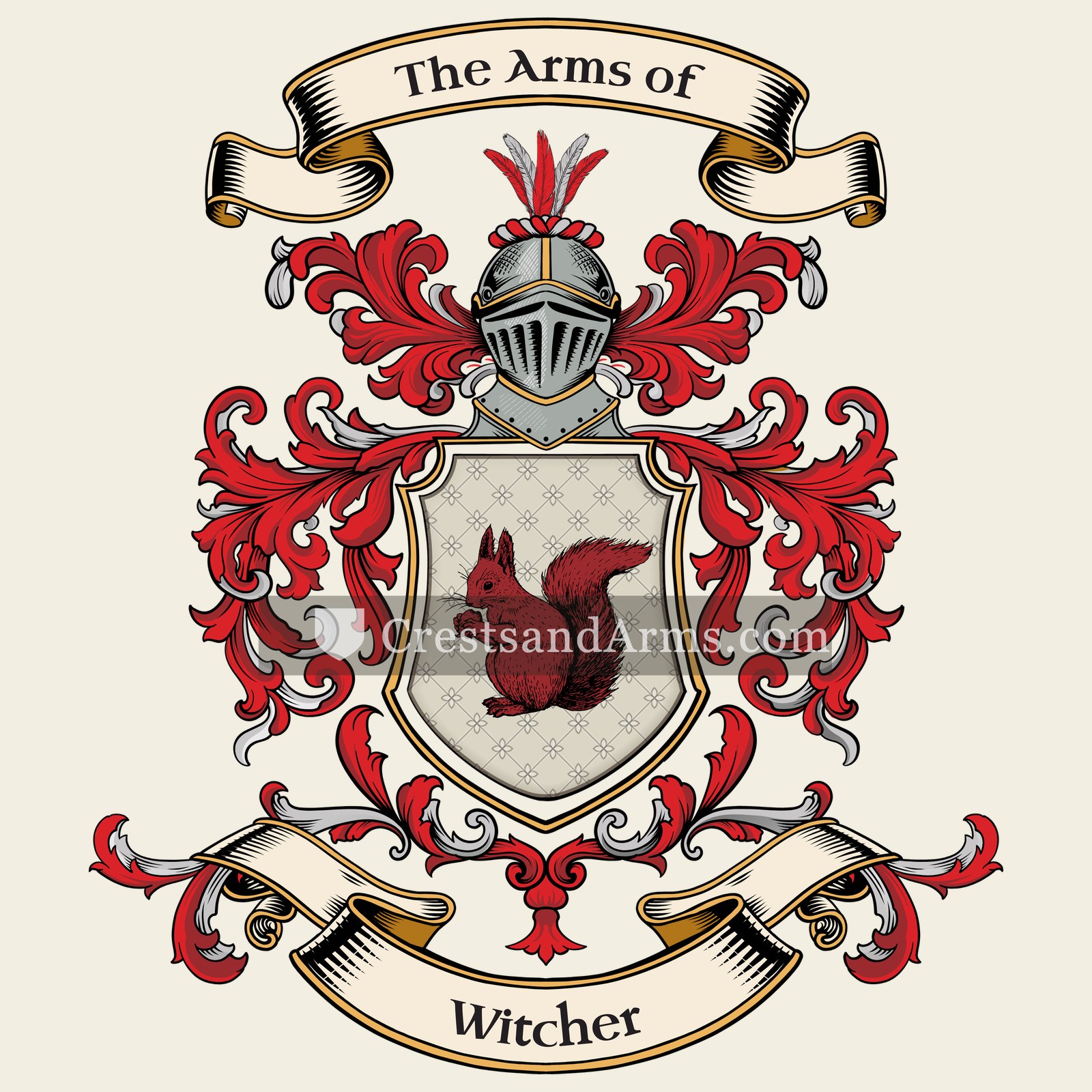
 squirrelPatience and foresight in gathering
 squirrelPatience and foresight in gathering


 horseReadiness to serve king and country
 hunting horn stringedOne who delights in the chase