Map of Belgium showing where the Witten arms are recorded
The Witten arms were recorded in Brabant, c. 1737.
Brabant lay at the heart of the Low Countries, where the trade routes met. Its towns were wealthy and its landowners many, and both kinds of family kept arms, which is why the region is so heavily represented.
This is where the arms were entered in the register. Families often moved to other parts of the country, so the same name can turn up in more than one region.
The body that granted and recorded arms in Belgium in this period.
Charles VI, Holy Roman Emperor
Sovereign of the period
Charles VI, Holy Roman Emperor
1711–1740
Reigning in Belgium when the Witten arms are first recorded.
How Arms Worked in Belgium
In Belgium, a coat of arms is considered personal property that is passed down through the male line to legitimate descendants. Families often use the same shield design across generations to show their shared heritage. If a branch of the family wants to change the design, they must apply for an official update to their specific version of the arms.
Granting authority
The Conseil héraldique is the official body that regulates and approves all coats of arms in Belgium.
How they got arms
Families obtain their coats of arms through formal royal grants or by confirming their historical right to use existing designs.
Where arms were recorded
All approved coats of arms are officially recorded in the public registers of the Conseil héraldique since 1844.
The family's standing
Recorded among the armigerous families of Brabant.
Origin & History of the Witten Family in Belgium
The history of the Witten family in Belgium is deeply rooted in the historical region of Brabant, where records confirm their presence as early as 1737. During the eighteenth century, Brabant was a vibrant center of trade and agriculture under the rule of the Austrian Netherlands. Families like the Wittens often lived in small rural communities or growing market towns where they contributed to the local economy through farming or skilled craftsmanship. The name itself likely originated as a descriptive term, possibly referring to a person with fair hair or a pale complexion, which was a common way to distinguish individuals in small villages before the use of formal surnames became strictly regulated. As the family established themselves in the region, they became part of the social fabric of the Low Countries, navigating the complex political changes and economic shifts that defined life in the heart of Europe during the Enlightenment era.
Meaning of the Witten family crest colors & symbols
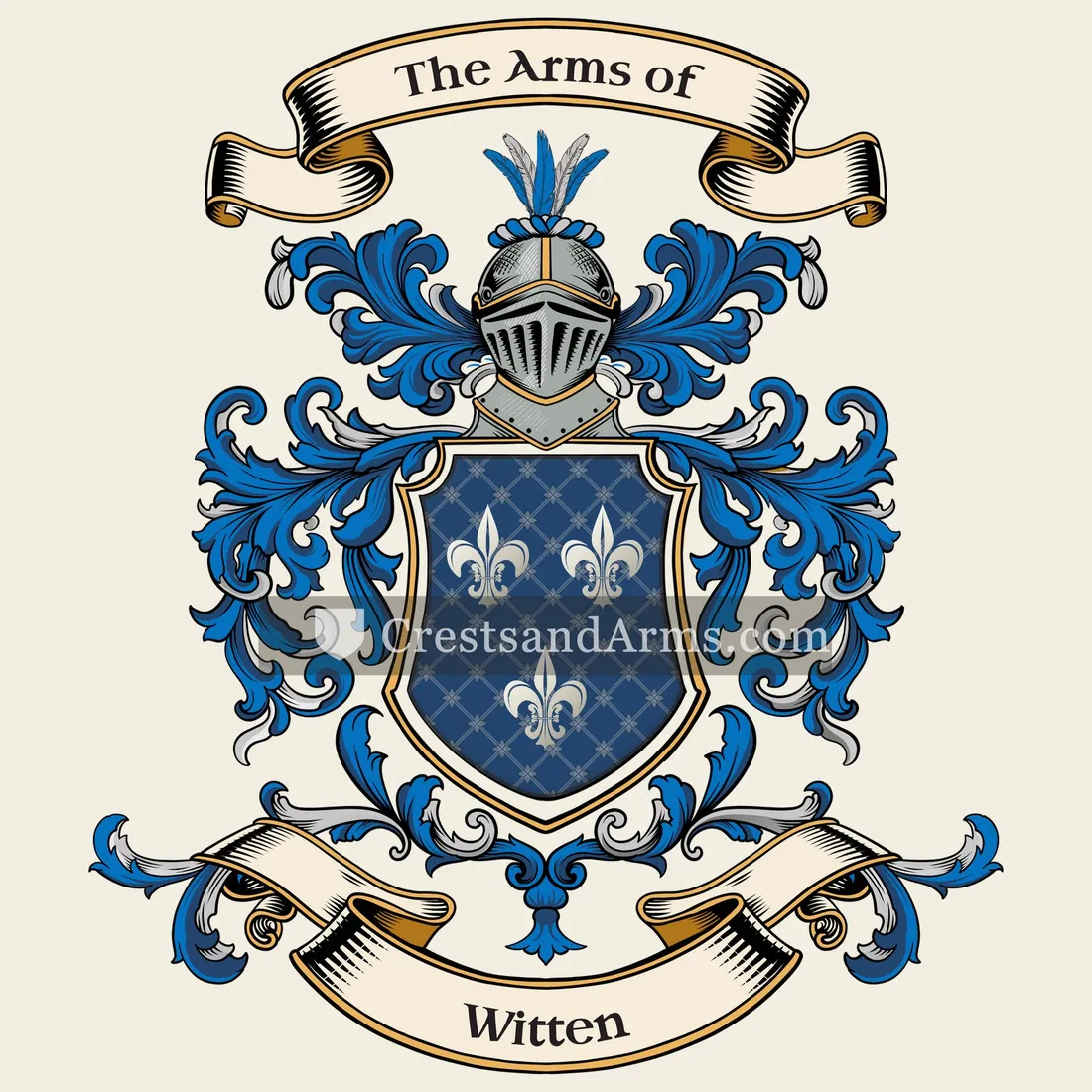
Symbols on this shield
fleur de lisPurity, light, and the sixth son
Colours
Blue (Azure)Means: Loyalty and truth
Silver (Argent)Means: Peace and sincerity
Historical info
Source
J. B. Rietstap, Armorial Général, Gouda: G. B. van Goor Zonen, 1884–87
Blazon (the actual original written record)
“D'azur à trois fleurs-de-lis d'arg. C.: une fleur-de-lis d'arg.”
WestphaliaWestphalia, c. 1765
Digital archive packCoat of arms PNG, gold border print PDF, vector SVG and the certificate of authenticity. Sent to your email in minutes.
Map of Germany showing where the Witten arms are recorded
The Witten arms were recorded in Westphalia, c. 1765.
Westphalia was a land of small estates and fortified farmhouses in western Germany. Its families were numerous and not especially rich, but each held its own ground, and holding ground was what brought arms.
This is where the arms were entered in the register. Families often moved to other parts of the country, so the same name can turn up in more than one region.
The body that granted and recorded arms in Germany in this period.
Francis I, Holy Roman Emperor
Sovereign of the period
Francis I, Holy Roman Emperor
1745–1765
Reigning in Belgium when the Witten arms are first recorded.
How Arms Worked in Germany
In the Holy Roman Empire, coats of arms were often granted to individuals by the Emperor or his representatives. These arms were then passed down through the generations to all legitimate descendants of the original holder. Younger branches of a family usually kept the same shield design without needing to change it, as the arms belonged to the entire lineage.
Granting authority
The Holy Roman Emperor held the sole power to grant new coats of arms throughout his vast imperial territories.
How they got arms
Families typically obtained their coats of arms through a formal imperial grant or by proving their noble status to the authorities.
Where arms were recorded
These grants were officially recorded in the Imperial Chancery registers, which began keeping formal records of such honors during the Middle Ages.
The family's standing
Recorded among the armigerous families of Westphalia.
Origin & History of the Witten Family in Germany
The surname Witten is deeply rooted in the historical landscape of Northern Germany, particularly within the region of Westphalia. Linguistically, the name is derived from the Middle Low German word "witten," which translates to "white." In the medieval period, this name likely served as a descriptive nickname for an individual with light hair or a pale complexion, or it may have identified someone who lived near a prominent white landmark. By the mid-18th century, families carrying this name were well-established in Westphalian agricultural communities, where they lived as tenant farmers or skilled tradespeople. These early ancestors navigated a society defined by local parish records and feudal land obligations, which helped preserve the family identity across generations. As the family grew, their presence became a fixture of the local social fabric, reflecting the broader migration patterns and economic shifts occurring in the German countryside during the 1700s.
Meaning of the Witten family crest colors & symbols
Colours
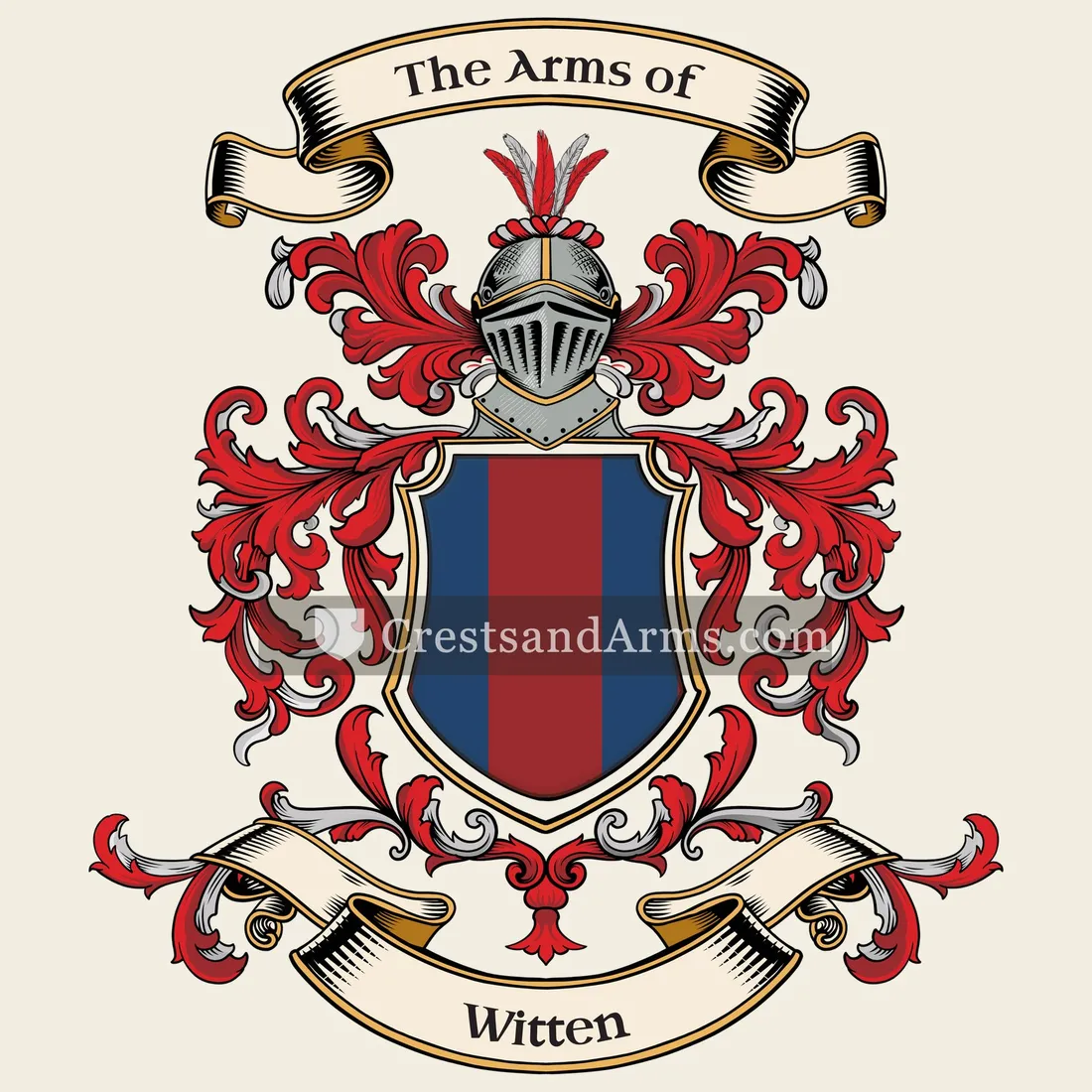
Red (Gules)Means: Military strength
Blue (Azure)Means: Loyalty and truth
Historical info
Source
J. B. Rietstap, Armorial Général, Gouda: G. B. van Goor Zonen, 1884–87
Blazon (the actual original written record)
“une de gu. entre deux d'azur. L.: d'arg. et d'azur.”
Austriac. 1772
Digital archive packCoat of arms PNG, gold border print PDF, vector SVG and the certificate of authenticity. Sent to your email in minutes.
Map of Austria showing where the Witten arms are recorded
The Witten arms were recorded in Austria, c. 1772.
Arms such as these were typically recorded in Tyrol.
Tyrol was mountain country in western Austria, where the valleys were held by families who had been there a very long time. Old tenure counted for more than money, and old families carried arms.
This is where the arms were entered in the register. Families often moved to other parts of the country, so the same name can turn up in more than one region.
Region
Tyrol
First recorded
1772
Granting Authority for the Witten Arms
Imperial and Royal chancery
Sodacan · CC BY-SA 3.0
The body that granted and recorded arms in Austria in this period.
Joseph II, Holy Roman Emperor
Sovereign of the period
Joseph II, Holy Roman Emperor
1765–1790
Reigning in Belgium when the Witten arms are first recorded.
How Arms Worked in Austria
Austrian coats of arms were often linked directly to noble titles granted by the Emperor. These symbols belonged to the entire family line rather than just one individual. When a family grew, new branches kept the original design without needing to change it. This system allowed all members of a noble house to share the same identity across many generations.
Granting authority
The Imperial and Royal chancery managed all heraldic matters and controlled the official granting of arms throughout the Austrian lands.
How they got arms
Families typically received their arms through a formal imperial decree that often accompanied the elevation of a person to noble status.
Where arms were recorded
Official records of these grants were kept in the Imperial Register of Nobility which began its formal documentation process in 1453.
The family's standing
Recorded among the armigerous families of Austria.
Origin & History of the Witten Family in Austria
The surname Witten carries a deep connection to the rugged landscape of the Austrian Tyrol, where members of the family were firmly established by 1772. During this period, the region was part of the Habsburg Monarchy, and families like the Wittens often played essential roles in the local agrarian and mountain economies. The name itself likely evolved from regional dialects, possibly relating to the Old High German word for white or bright, which may have originally described a person’s physical appearance or a specific geographic landmark near their homestead. Life in the Tyrol during the late 18th century was defined by strict social structures and the challenges of high-altitude farming. As the family settled into these mountain valleys, they became part of the tightly knit communities that defined Alpine culture. Their presence in official records from this era suggests they were stable, land-holding residents who contributed to the development of the local villages that still exist in the region today.
Witten Meaning & Related Branches
Root word
wit
A Germanic term referring to the color white or bright.
This name
WittenOriginally a descriptive nickname for someone with white hair or a pale complexion.
also spelled
Wythen
Whitten
Related arms
Groensame arms
Documented Sources
J. B. Rietstap, Armorial Général, Gouda: G. B. van Goor Zonen, 1884–87
State Archives in Belgium (Rijksarchief te Leuven), Parochieregisters van Brabant
State Archives in Belgium (Rijksarchief te Brussel), Burgerlijke Stand van de provincie Brabant
Debrabandere, Frans, Woordenboek van de familienamen in België en Noord-Frankrijk, 2003
Van Driel, Ludo, Geschiedenis van Brabant: van het hertogdom tot heden, 2004
Digital archive packCoat of arms PNG, gold border print PDF, vector SVG and the certificate of authenticity. Sent to your email in minutes.


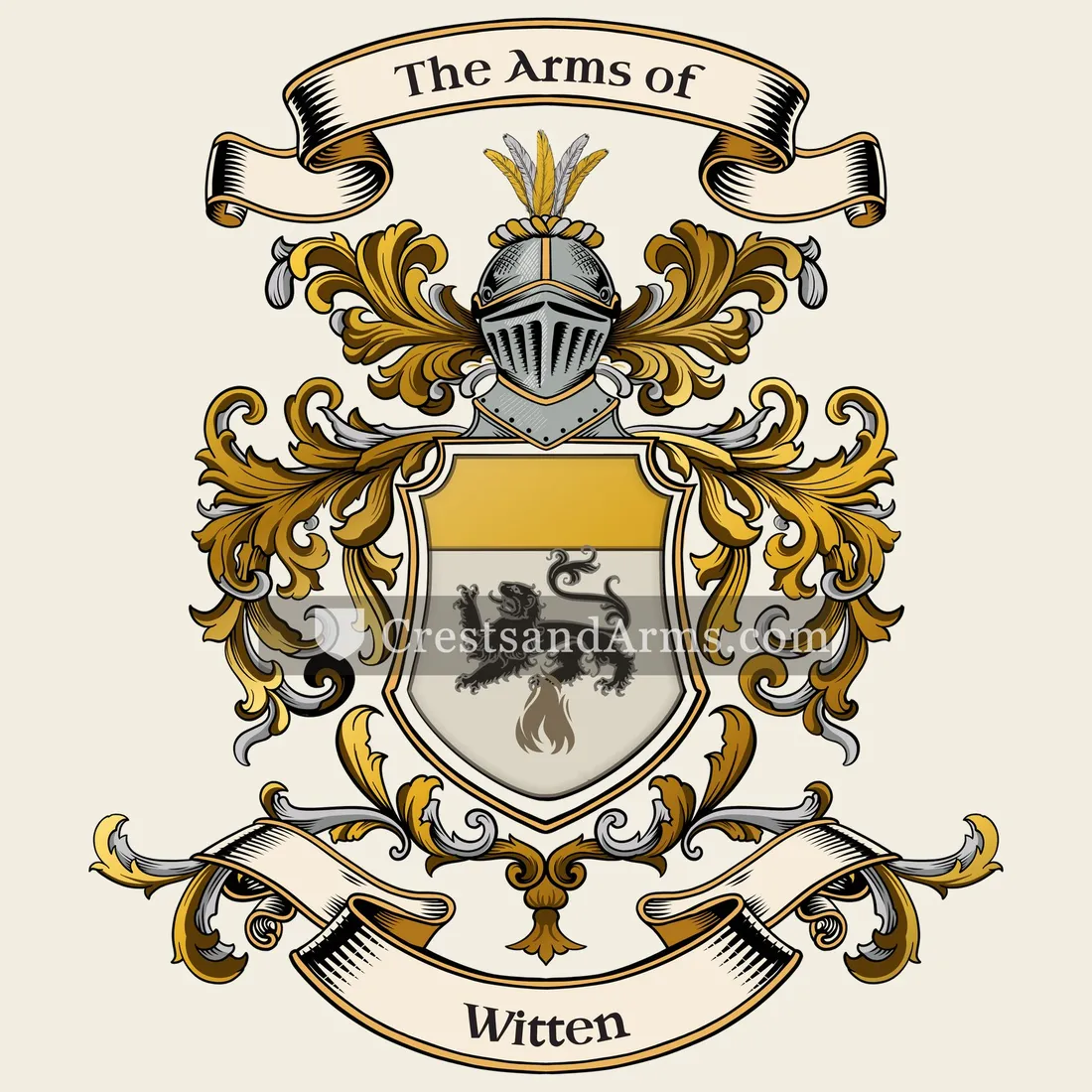
 chiefAuthority, wisdom and dominion
 lionCourage, strength and royalty
 fireZeal and purification
 chiefAuthority, wisdom and dominion
 lionCourage, strength and royalty
 fireZeal and purification


 fleur de lisPurity, light, and the sixth son