Map of Netherlands showing where the Witzki arms are recorded
The Witzki arms were recorded in Guelders, c. 1815.
Guelders was river country in the east of the Netherlands, held by families whose estates sat along the water. Land there stayed in the same hands for generations, and long tenure is what fills a register of arms.
This is where the arms were entered in the register. Families often moved to other parts of the country, so the same name can turn up in more than one region.
Region
Guelders
First recorded
1815
Granting Authority for the Witzki Arms
Hoge Raad van Adel
Photograph made by me · CC BY-SA 3.0
The body that granted and recorded arms in Netherlands in this period.
William I of the Netherlands
Sovereign of the period
William I of the Netherlands
1815–1840
Reigning in Netherlands when the Witzki arms are first recorded.
How Arms Worked in Netherlands
In the Netherlands, coats of arms were often used by noble families and those who held specific public offices. These arms were passed down through the generations to legitimate descendants. Younger branches of a family usually kept the original design without needing to add special marks. This system ensured that the family identity remained clear and consistent over many years.
Granting authority
The Hoge Raad van Adel is the official body that regulates and manages noble titles and coats of arms in the Netherlands.
How they got arms
Families typically obtained their coats of arms through official royal grants or by proving their long-standing historical use of the symbols.
Where arms were recorded
Coats of arms are officially recorded in the registers held by the Hoge Raad van Adel, which began its work in 1814.
The family's standing
Recorded among the armigerous families of Guelders.
Origin & History of the Witzki Family in Netherlands
The family name Witzki carries a history deeply rooted in the shifting landscapes of Northern Europe, with a notable presence in the Dutch province of Guelders by 1815. While the name itself suggests origins further east in Slavic-speaking regions, its appearance in the Netherlands during the early nineteenth century aligns with a period of significant migration and social change following the Napoleonic Wars. During this era, Guelders served as a vital crossroads for travelers and laborers moving between the German states and the newly formed United Kingdom of the Netherlands. Families like the Witzkis often settled in these border regions to take advantage of the growing agricultural and trade opportunities provided by the Rhine river valley. By establishing themselves in Guelders, these early ancestors became part of a diverse local population that helped shape the region's identity during the transition into the modern Dutch state.
Meaning of the Witzki family crest colors & symbols
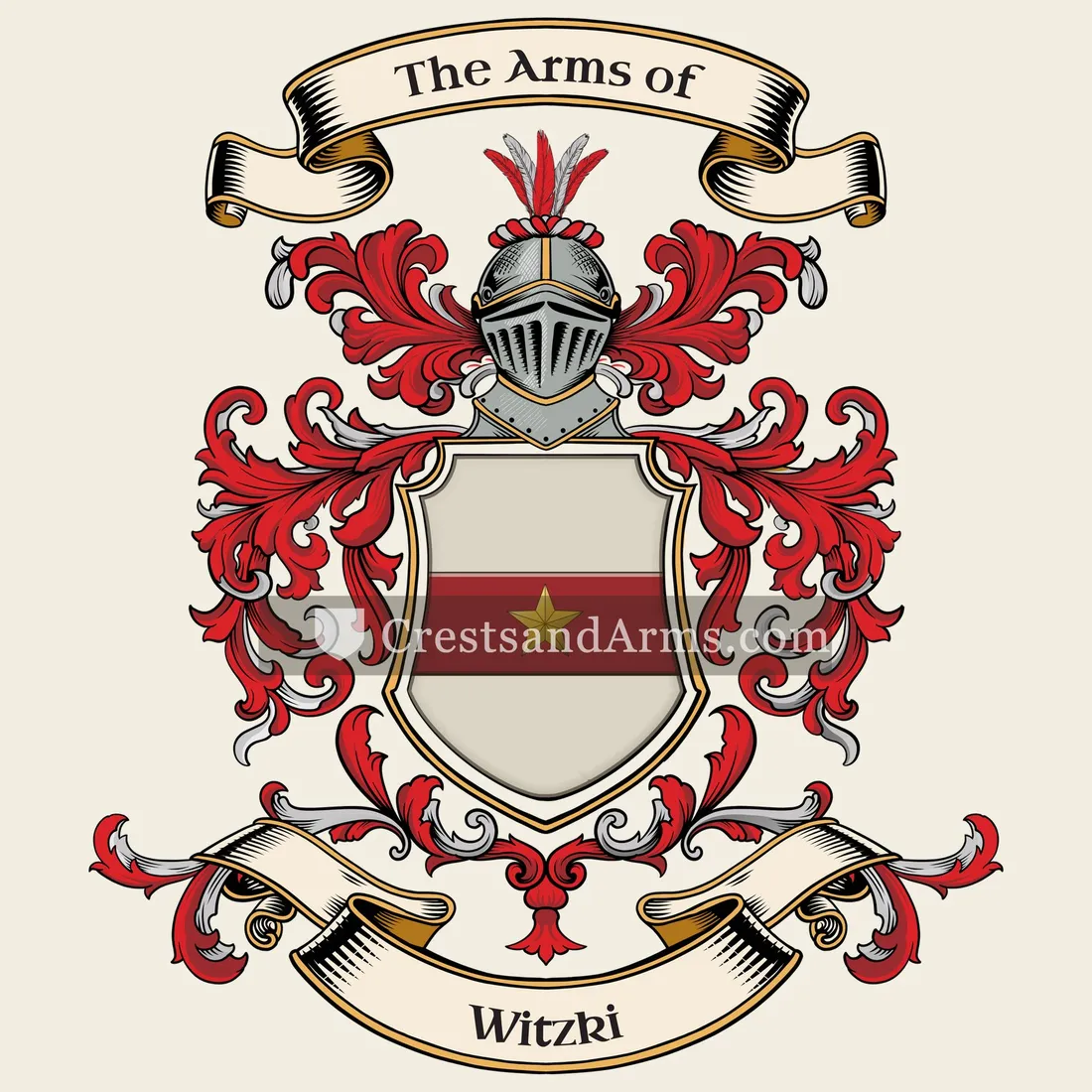
Symbols on this shield
fessThe military belt, and readiness to serve
mulletThe third son, and a divine quality from above
Colours
Silver (Argent)Means: Peace and sincerity
Red (Gules)Means: Military strength
Gold (Or)Means: Generosity
Historical info
Source
J. B. Rietstap, Armorial Général, Gouda: G. B. van Goor Zonen, 1884–87
Blazon (the actual original written record)
“D'arg. à la fasce de gu., ch. d'une étoile d'or.”
BelgiumTournai, c. 1737
Digital archive packCoat of arms PNG, gold border print PDF, vector SVG and the certificate of authenticity. Sent to your email in minutes.
Map of Belgium showing where the Witzki arms are recorded
The Witzki arms were recorded in Tournai, c. 1737.
This is where the arms were entered in the register. Families often moved to other parts of the country, so the same name can turn up in more than one region.
The body that granted and recorded arms in Belgium in this period.
Charles VI, Holy Roman Emperor
Sovereign of the period
Charles VI, Holy Roman Emperor
1711–1740
Reigning in Netherlands when the Witzki arms are first recorded.
How Arms Worked in Belgium
In Belgium, a coat of arms is considered personal property that is passed down through the male line to legitimate descendants. Families often use the same shield design across generations to show their shared heritage. If a branch of the family wants to change the design, they must apply for an official update to their specific version of the arms.
Granting authority
The Conseil héraldique is the official body that regulates and approves all coats of arms in Belgium.
How they got arms
Families obtain their coats of arms through formal royal grants or by confirming their historical right to use existing designs.
Where arms were recorded
All approved coats of arms are officially recorded in the public registers of the Conseil héraldique since 1844.
The family's standing
Recorded among the armigerous families of Belgium.
Origin & History of the Witzki Family in Belgium
The history of the Witzki family in Belgium begins with their documented presence in the city of Tournai by 1737. During this period, Tournai was a bustling center of trade and craftsmanship located in the Southern Netherlands, which was then under Austrian rule. Families with names like Witzki often moved across European borders due to the shifting political landscape and the search for new economic opportunities in the textile and masonry industries that defined the region. Because Tournai served as a vital crossroads between France and the Low Countries, the Witzki family likely integrated into a diverse urban community that valued skilled labor and local commerce. Their early presence in this historic city suggests they were part of the steady movement of people who helped shape the social and cultural fabric of the Walloon region during the eighteenth century.
Witzki Meaning & Related Branches
Root word
Wit
A Germanic term meaning white, fair, or bright.
This name
WitzkiA patronymic or descriptive name referring to someone with a fair complexion or white hair.
also spelled
Wytz
Witzz
Wits
Documented Sources
J. B. Rietstap, Armorial Général, Gouda: G. B. van Goor Zonen, 1884–87
Gelders Archief, Burgerlijke Stand Gelderland, Geboorte-, huwelijks- en overlijdensakten (1811–1950)
Fokkens, A., Gelderland in de negentiende eeuw, 1998
Schutte, O., Repertorium der Nederlandse vertegenwoordigers, residerende in het buitenland 1584-1810, 1976
Digital archive packCoat of arms PNG, gold border print PDF, vector SVG and the certificate of authenticity. Sent to your email in minutes.


 fessThe military belt, and readiness to serve
 hunting horn stringedOne who delights in the chase
 fessThe military belt, and readiness to serve
 hunting horn stringedOne who delights in the chase
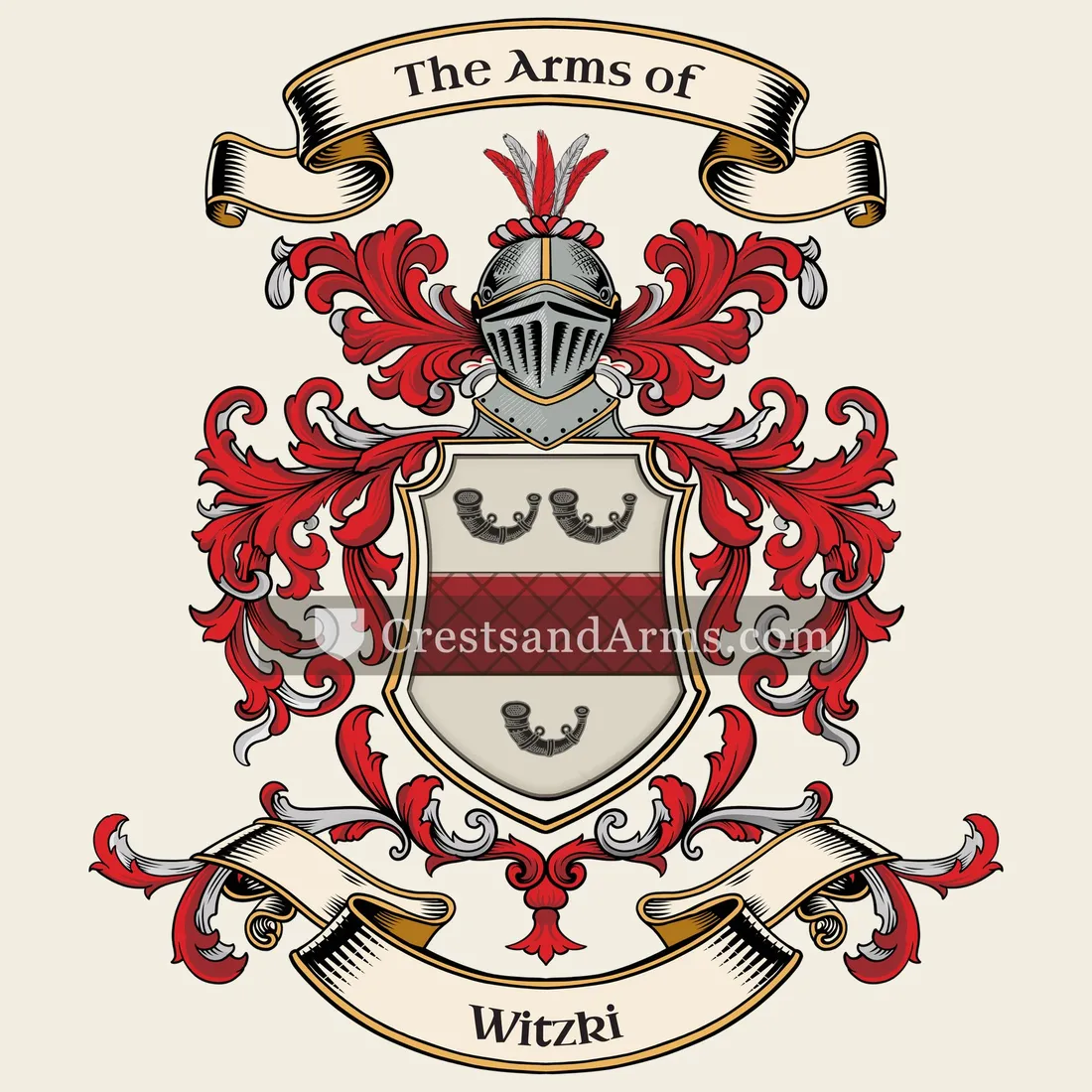


 mulletThe third son, and a divine quality from above