Map of Poland showing where the Wolf arms are recorded
The Wolf arms were recorded in Livonia, c. 1772.
Livonia was Baltic country held by a small number of landed families who kept their estates for centuries. Land there passed down whole rather than being divided, and long unbroken tenure is what fills a register.
This is where the arms were entered in the register. Families often moved to other parts of the country, so the same name can turn up in more than one region.
Region
Livonia
Town
Lithuanie
First recorded
1772
Granting Authority for the Wolf Arms
Ennoblement by the Sejm
Author: Olek Remesz · CC BY-SA 3.0
The body that granted and recorded arms in Poland in this period.
Stanisław August Poniatowski
Sovereign of the period
Stanisław August Poniatowski
1764–1795
Reigning in Poland when the Wolf arms are first recorded.
How Arms Worked in Poland
Polish noble families shared a single coat of arms across many different surnames, creating large clans rather than individual designs. These symbols were held collectively by all members of the clan regardless of their specific family name. When a new family joined the nobility, they were adopted into an existing clan and began using that group's established shield.
Granting authority
The Sejm, which was the Polish parliament, held the power to grant noble status and the right to bear arms.
How they got arms
Families typically received their coat of arms through a formal act of ennoblement granted by the Sejm for distinguished service.
Where arms were recorded
These grants were officially recorded in the Crown Metrica, which served as the central archive for state documents starting in the sixteenth century.
The family's standing
Recorded among the armigerous families of Livonia.
Origin & History of the Wolf Family in Poland
The surname Wolf has deep roots in Central and Eastern Europe, often functioning as a descriptive name that identified an individual by their strength or personality. In the context of the Polish-Lithuanian Commonwealth and the neighboring region of Livonia, the name frequently appeared among families living in diverse, multi-ethnic borderlands. By 1772, when the First Partition of Poland led to significant political shifts in the region, families bearing this name were already established in Livonia. These early ancestors likely navigated a complex social landscape where German, Polish, and Baltic influences overlapped. Because the name was common among both urban merchants and rural settlers, it suggests that the family was part of the mobile population that moved across these territories to trade or manage land. Over time, the name became a permanent fixture in the region, reflecting the long history of families who adapted to the changing borders and shifting loyalties of the Polish and Livonian territories.
Coat of Arms & Family Crest Details
Symbols on this shield
bendDefence, and the scarf of a commander
wolfReward from long service and hard work
Colours
Silver (Argent)Means: Peace and sincerity
Red (Gules)Means: Military strength
Historical info
Source
J. B. Rietstap, Armorial Général, Gouda: G. B. van Goor Zonen, 1884–87
Blazon (the actual original written record)
“Parti: au 1 d'arg. à un loup ramp. au nat.; au 2 bandé de gu. et d'arg. C.: le loup, iss. L.: d'arg. et de gu.”
GermanyNördlingen Bav, c. 1765
Digital archive packCoat of arms PNG, gold border print PDF, vector SVG and the certificate of authenticity. Sent to your email in minutes.
Map of Germany showing where the Wolf arms are recorded
The Wolf arms were recorded in Nördlingen Bav, c. 1765.
This is where the arms were entered in the register. Families often moved to other parts of the country, so the same name can turn up in more than one region.
The body that granted and recorded arms in Germany in this period.
Francis I, Holy Roman Emperor
Sovereign of the period
Francis I, Holy Roman Emperor
1745–1765
Reigning in Poland when the Wolf arms are first recorded.
How Arms Worked in Germany
In the Holy Roman Empire, coats of arms were often granted to individuals by the Emperor or his representatives. These arms were then passed down through the generations to all legitimate descendants of the original holder. Younger branches of a family usually kept the same shield design without needing to change it, as the arms belonged to the entire lineage.
Granting authority
The Holy Roman Emperor held the sole power to grant new coats of arms throughout his vast imperial territories.
How they got arms
Families typically obtained their coats of arms through a formal imperial grant or by proving their noble status to the authorities.
Where arms were recorded
These grants were officially recorded in the Imperial Chancery registers, which began keeping formal records of such honors during the Middle Ages.
The family's standing
Recorded among the armigerous families of Germany.
Origin & History of the Wolf Family in Germany
The surname Wolf is a classic example of a German occupational or descriptive name that emerged during the Middle Ages. In German culture, such names were often adopted to reflect a person’s character, physical traits, or their connection to the natural world. Because the wolf was a powerful and common animal in the dense forests of Central Europe, the name was frequently given to individuals who displayed bravery or strength. By the time your ancestors were documented in the town of Nördlingen in 1765, the name had already been established for centuries as a common identifier across German-speaking regions. Nördlingen was a significant center for trade and craftsmanship during the eighteenth century, and families living there were often part of a structured society governed by local guilds and church records. These early family members likely lived through a period of transition as the town shifted from its medieval roots toward the modern era, contributing to the local economy and the social fabric of the Swabian region.
Coat of Arms & Family Crest Details
Symbols on this shield
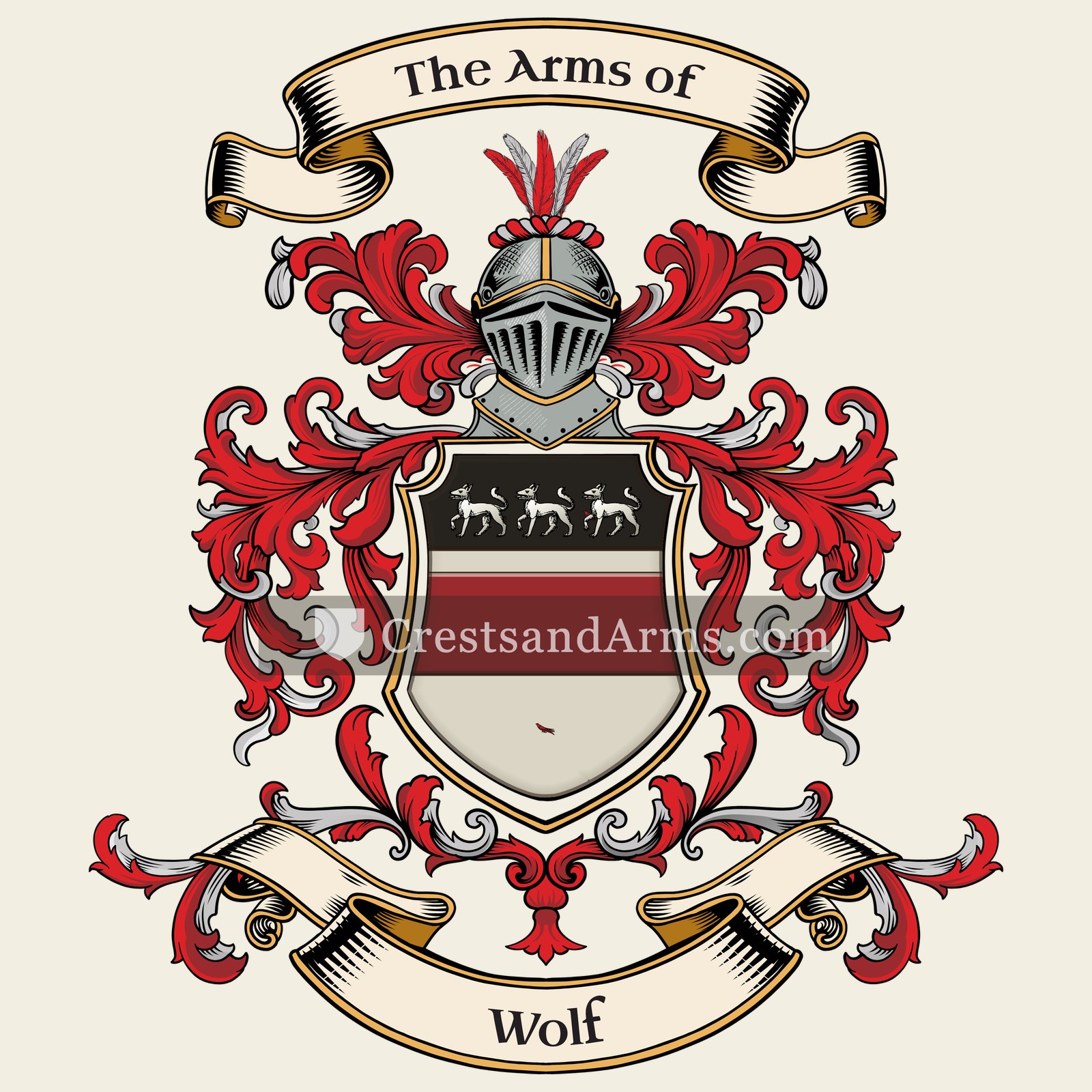
fessThe military belt, and readiness to serve
chiefAuthority, wisdom and dominion
martletA younger son, who must win his own land
wolfReward from long service and hard work
Colours
Silver (Argent)Means: Peace and sincerity
Red (Gules)Means: Military strength
Black (Sable)Means: Constancy
Historical info
Source
Sir Bernard Burke, The General Armory of England, Scotland, Ireland and Wales, London: Harrison & Sons, 1884
Blazon (the actual original written record)
“Ar. a fess betw. three martlets gu. on a chief sa. three wolves' heads erased of the first”
Englandc. 1620
Digital archive packCoat of arms PNG, gold border print PDF, vector SVG and the certificate of authenticity. Sent to your email in minutes.
Map of England showing where the Wolf arms are recorded
The Wolf arms were recorded in England, c. 1620.
Arms such as these were typically recorded in York.
Yorkshire is the largest of the English counties, and it held more gentry families than any other. Land there was split among a great many households rather than a few, so a great many of them carried arms.
This is where the arms were entered in the register. Families often moved to other parts of the country, so the same name can turn up in more than one region.
The body that granted and recorded arms in England in this period.
James VI and I
Sovereign of the period
James VI and I
1603–1625
Reigning in Poland when the Wolf arms are first recorded.
How Arms Worked in England
English heraldry allowed arms to be shared by all legitimate descendants of the original owner. These symbols were treated as personal property that moved through the generations to all children. While the eldest son kept the original design, other family members could use the same shield without needing to change it or register their own unique versions.
Granting authority
The College of Arms in London has regulated the use of coats of arms throughout England and Wales since 1484.
How they got arms
Families typically obtained their coats of arms through a formal grant from the Crown or by proving their ancient right to them.
Where arms were recorded
All official coats of arms are recorded in the registers kept at the College of Arms, which date back to the fifteenth century.
The family's standing
Recorded among the armigerous families of England.
Origin & History of the Wolf Family in England
The surname Wolf is a classic example of a name derived from a nickname, reflecting the cultural importance of animals in medieval naming traditions. In England, such names often began as descriptive labels for individuals who displayed traits associated with the animal, such as bravery, cunning, or a fierce nature. By the time members of the Wolf family were documented in York in 1620, the name had already transitioned from a personal descriptor to a stable hereditary surname passed down through generations. During this period in Northern England, families like the Wolfs were often part of the growing urban middle class, participating in the trade and civic life of historic cities. The presence of the family in York suggests they were well-established within the local community, living through a time of significant social and religious change in seventeenth-century England.
Wolf Meaning & Related Branches
Root word
wulfaz
Proto-Germanic term for a predatory canine animal.
This name
WolfA topographic or habitational name referring to someone who lived near a wolf den or possessed wolf-like traits.
also spelled
Wulf
Wolfe
Wulfe
Woolfe
Related arms
de Wulfvariant spelling
de Wulffvariant spelling
Woolfevariant spelling
Delafieldrecorded with Wolf, same area
Documented Sources
J. B. Rietstap, Armorial Général, Gouda: G. B. van Goor Zonen, 1884–87
Bahlow, Hans, Deutsches Namenlexikon: Familien- und Vornamen nach Ursprung und Sinn erklärt, 1967
Kopczyński, Michał, Ludność i społeczeństwo w dawnej Polsce, 2009
Mühle, Eduard, Livland im Mittelalter: Eine historische Einführung, 2008
Latvian State Historical Archives (Latvijas Valsts vēstures arhīvs), Fond 235: Records of the Livonian nobility and land registers
The Central Archives of Historical Records in Warsaw (Archiwum Główne Akt Dawnych), Zespół 354: Records of the Crown Chancery regarding land grants and citizenship in the eastern territories
Digital archive packCoat of arms PNG, gold border print PDF, vector SVG and the certificate of authenticity. Sent to your email in minutes.


 bendDefence, and the scarf of a commander
 lionCourage, strength and royalty
 bendDefence, and the scarf of a commander
 lionCourage, strength and royalty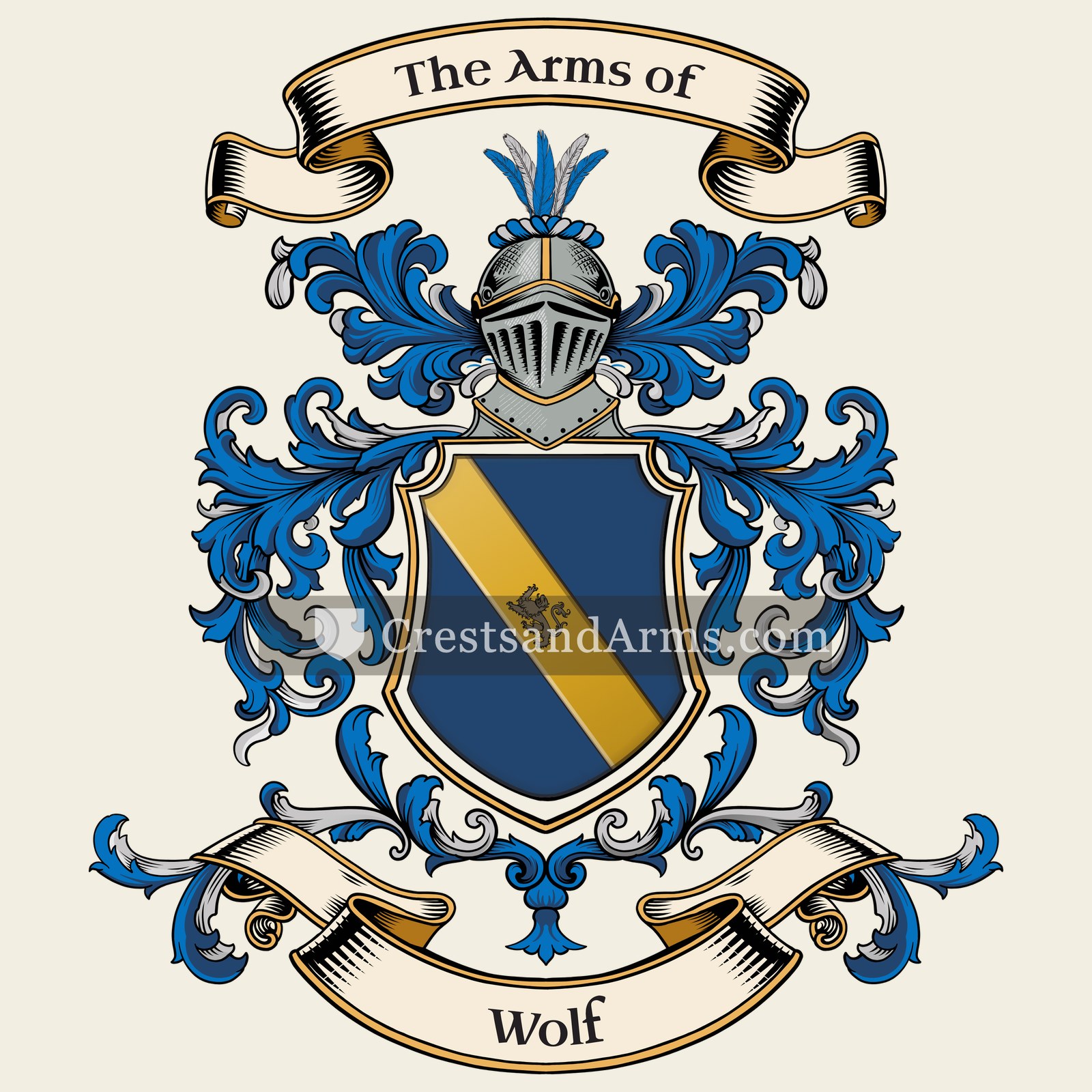


 wolfReward from long service and hard work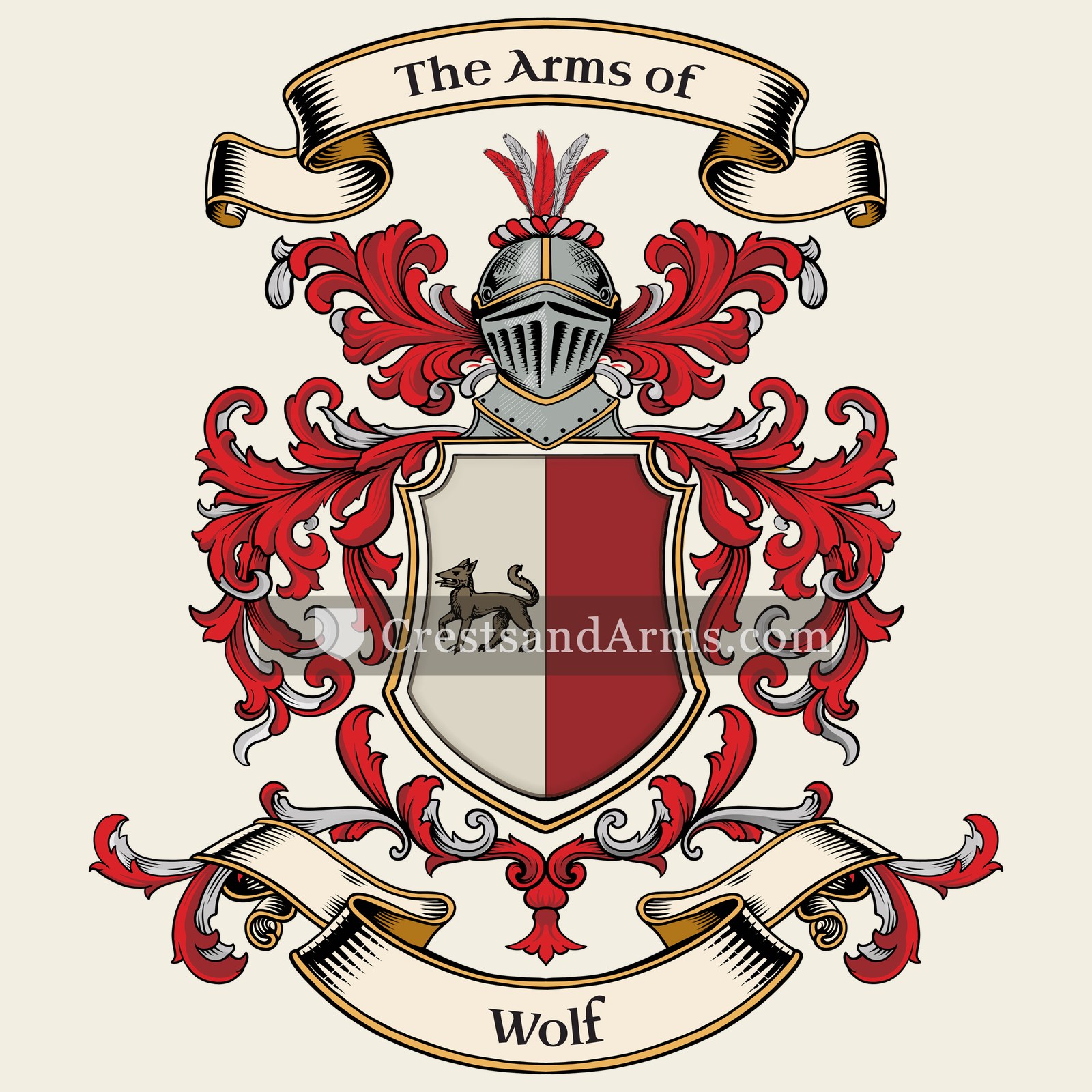


 fessThe military belt, and readiness to serve
 chiefAuthority, wisdom and dominion
 martletA younger son, who must win his own land