Map of Austria showing where the Zaborowski arms are recorded
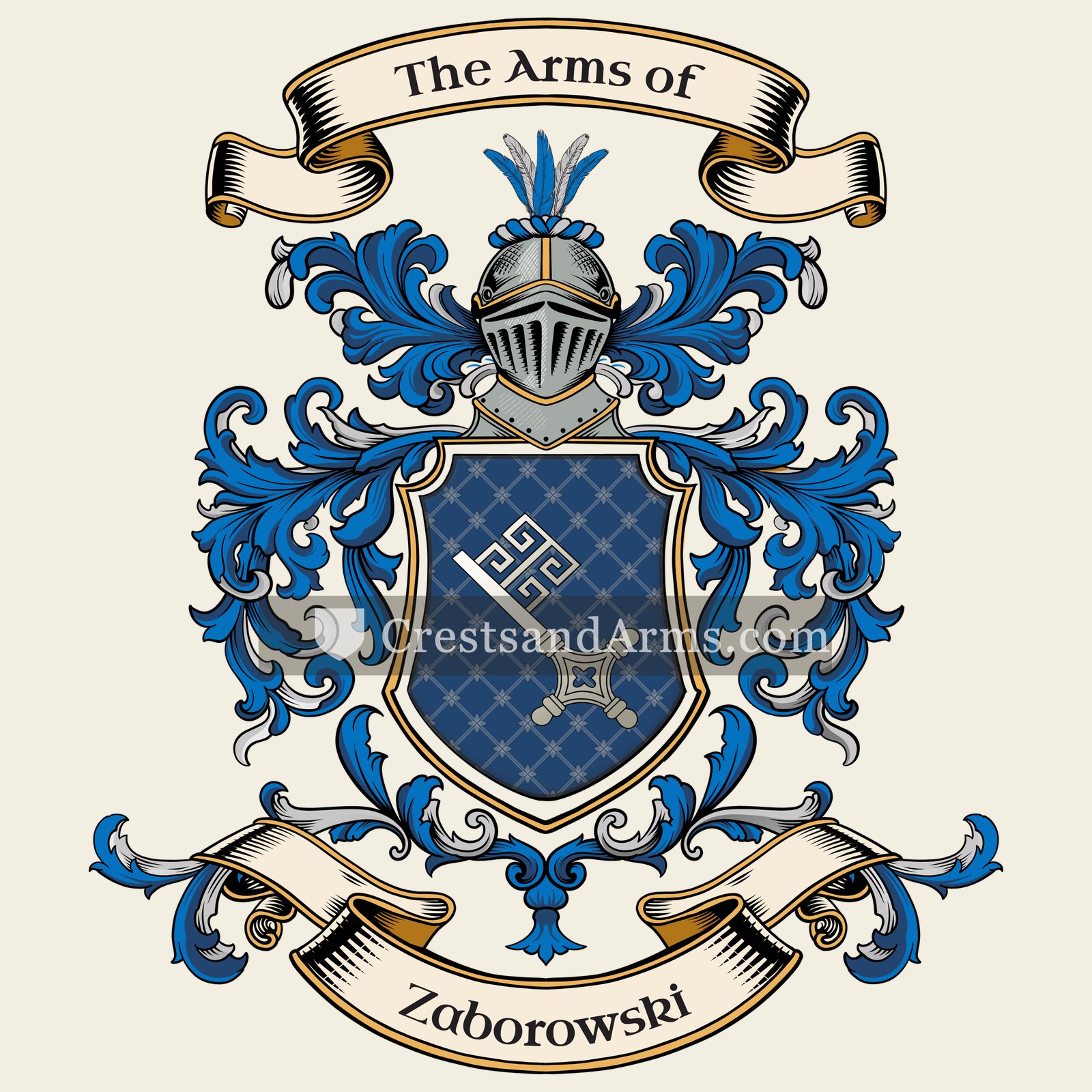
The Zaborowski arms were recorded in Galicia, c. 1772.
Galicia was eastern country of large estates and small farming villages, held by families who had been there for a very long time. Land was what entitled a family to arms, and land there rarely changed hands.
This is where the arms were entered in the register. Families often moved to other parts of the country, so the same name can turn up in more than one region.
Region
Galicia
First recorded
1772
Granting Authority for the Zaborowski Arms
Imperial and Royal chancery
Sodacan · CC BY-SA 3.0
The body that granted and recorded arms in Austria in this period.
Joseph II, Holy Roman Emperor
Sovereign of the period
Joseph II, Holy Roman Emperor
1765–1790
Reigning in Austria when the Zaborowski arms are first recorded.
How Arms Worked in Austria
Austrian coats of arms were often linked directly to noble titles granted by the Emperor. These symbols belonged to the entire family line rather than just one individual. When a family grew, new branches kept the original design without needing to change it. This system allowed all members of a noble house to share the same identity across many generations.
Granting authority
The Imperial and Royal chancery managed all heraldic matters and controlled the official granting of arms throughout the Austrian lands.
How they got arms
Families typically received their arms through a formal imperial decree that often accompanied the elevation of a person to noble status.
Where arms were recorded
Official records of these grants were kept in the Imperial Register of Nobility which began its formal documentation process in 1453.
The family's standing
Recorded among the armigerous families of Galicia.
Origin & History of the Zaborowski Family in Austria
The surname Zaborowski is a locational name that originated in Poland, derived from the Slavic term "za borem," which translates to "beyond the forest." This naming convention suggests that the family’s earliest ancestors likely lived in a settlement situated on the far side of a large wooded area or a dense forest. By 1772, records confirm that members of the Zaborowski family were firmly established in the region of Galicia. This area was a historical province that became part of the Austrian Empire following the First Partition of Poland. During this period, families with this name were often integrated into the local social structure of the Galician countryside, where they adapted to the shifting political borders and administrative changes brought on by the Habsburg monarchy.
Related Branches & Arms
Root word
Zabor
A Slavic term referring to a fence or a barrier.
This name
ZaborowskiA habitational name for someone who lived beyond a fence or forest.
also spelled
Sebrowski
Zebrowsky
Zebrovski
Documented Sources
J. B. Rietstap, Armorial Général, Gouda: G. B. van Goor Zonen, 1884–87
Brückner, Aleksander. Słownik etymologiczny języka polskiego. 1927


 keyGuardianship, and the office of a steward
 keyGuardianship, and the office of a steward