Map of Germany showing where the Zöllner arms are recorded
The Zöllner arms were recorded in Franconia, c. 1765.
Franconia was a patchwork of small territories in central Germany, full of minor landowners and prosperous market towns. So many separate households held land there that the region produced a great many coats of arms.
This is where the arms were entered in the register. Families often moved to other parts of the country, so the same name can turn up in more than one region.
The body that granted and recorded arms in Germany in this period.
Francis I, Holy Roman Emperor
Sovereign of the period
Francis I, Holy Roman Emperor
1745–1765
Reigning in Germany when the Zöllner arms are first recorded.
How Arms Worked in Germany
In the Holy Roman Empire, coats of arms were often granted to individuals by the Emperor or his representatives. These arms were then passed down through the generations to all legitimate descendants of the original holder. Younger branches of a family usually kept the same shield design without needing to change it, as the arms belonged to the entire lineage.
Granting authority
The Holy Roman Emperor held the sole power to grant new coats of arms throughout his vast imperial territories.
How they got arms
Families typically obtained their coats of arms through a formal imperial grant or by proving their noble status to the authorities.
Where arms were recorded
These grants were officially recorded in the Imperial Chancery registers, which began keeping formal records of such honors during the Middle Ages.
The family's standing
Recorded among the armigerous families of Franconia.
Origin & History of the Zöllner Family in Germany
The surname Zöllner is an occupational name that originated in the Middle Ages, derived from the Middle High German word "zollner," which referred to a toll collector or a customs official. In the feudal system of the Holy Roman Empire, these individuals were responsible for collecting taxes on goods transported across borders, bridges, or through market towns. By the time the family was documented in the Franconia region in 1765, the name had become a well-established identifier for families whose ancestors likely served local lords or municipal authorities in these administrative roles. Because Franconia was a patchwork of small territories and trade routes, the presence of toll collectors was essential to the economy of the region. Over generations, the name transitioned from a specific job title into a permanent family surname that reflected the social importance of those who managed the flow of commerce and revenue in their local communities.
Coat of Arms & Family Crest Details
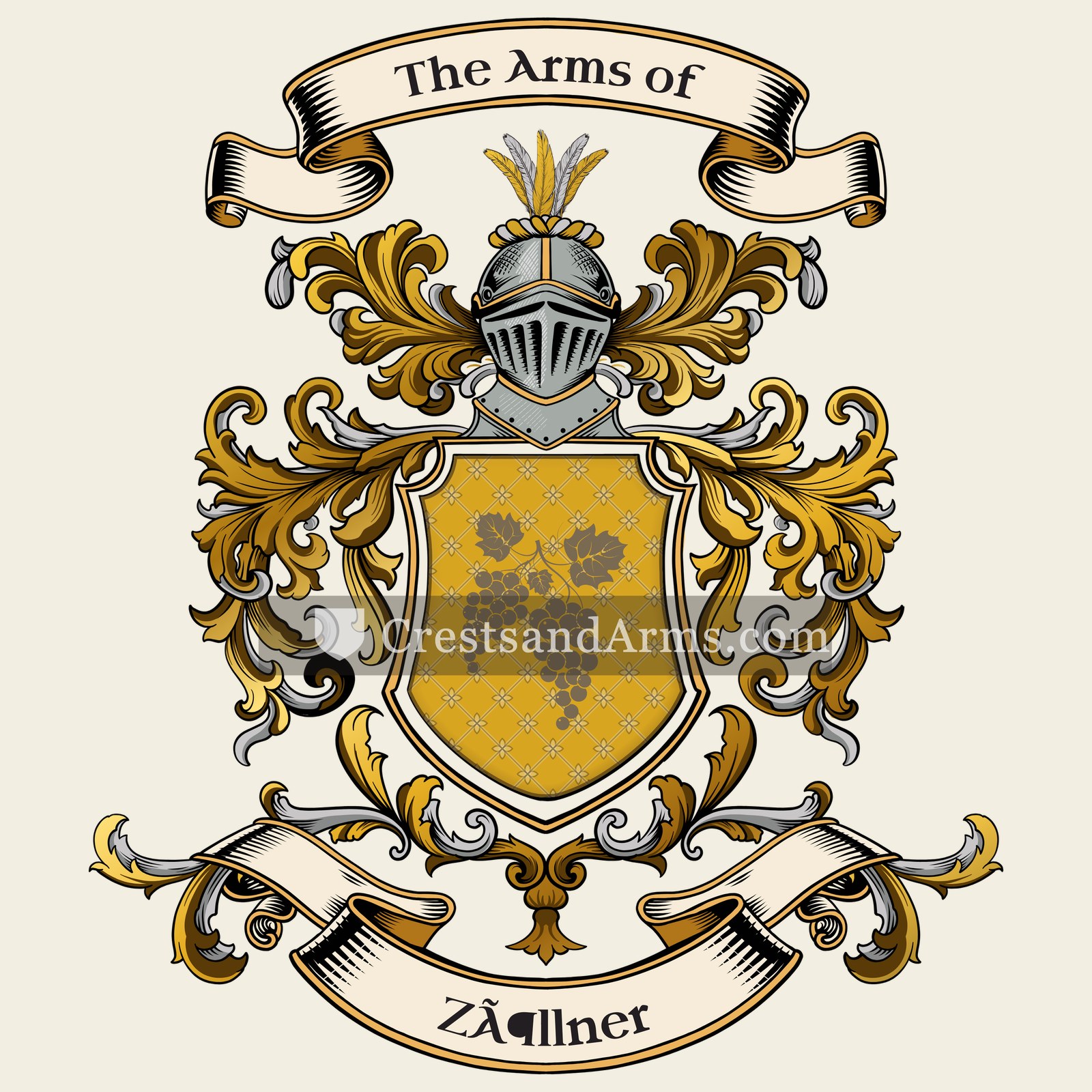
Symbols on this shield
grapesPlenty, and the labour of the vine
Colours
Gold (Or)Means: Generosity
Historical info
Source
J. B. Rietstap, Armorial Général, Gouda: G. B. van Goor Zonen, 1884–87
Blazon (the actual original written record)
“D'or à une grappe de raisins au nat., pamprée de sin. C.: un chicot poussant deux tiges, celle à dextre soutenant une grappe de raisins, celle à sen. une feuille de vigne. L. d'or et de sin.”
Switzerlandc. 1745
Digital archive packCoat of arms PNG, gold border print PDF, vector SVG and the certificate of authenticity. Sent to your email in minutes.
Map of Switzerland showing where the Zöllner arms are recorded
The Zöllner arms were recorded in Switzerland, c. 1745.
Arms such as these were typically recorded in Bern.
Bern was the largest of the Swiss cantons and ran itself, with its own council and its own courts. Its governing families held office for generations, and office of that kind carried a shield with it.
This is where the arms were entered in the register. Families often moved to other parts of the country, so the same name can turn up in more than one region.
The body that granted and recorded arms in Switzerland in this period.
How Arms Worked in Switzerland
In Switzerland, coats of arms were not restricted to the nobility and were often adopted by common citizens and families. These symbols were passed down through generations to show family identity. When branches of a family grew, they often changed small details of the design to distinguish their own line from the original group.
Granting authority
Cantonal and civic authorities managed the use of coats of arms within their specific regions and local jurisdictions.
How they got arms
Families typically assumed their own coats of arms based on local custom rather than receiving them from a central monarch.
Where arms were recorded
Arms were recorded in various cantonal and civic registers starting from the fourteenth century throughout the Swiss region.
The family's standing
Recorded among the armigerous families of Switzerland.
Origin & History of the Zöllner Family in Switzerland
The surname Zöllner is an occupational name that originates from the Middle High German word *zollner*, which refers to a toll collector or a customs official. In the context of Switzerland, the family established a notable presence in the city of Bern by 1745. During this era, individuals carrying this name often held positions of civic responsibility, as the role of a toll collector was essential for managing the trade routes and market taxes that fueled the economy of the Swiss cantons. Because Bern served as a powerful political and commercial hub, families in this profession were frequently integrated into the administrative life of the city. Over time, the Zöllner name became associated with the structured bureaucracy of the region, reflecting a history rooted in the practical management of goods and commerce within the Swiss territories.
Related Branches & Arms
Root word
Zoll
A tax, toll, or customs duty collected at a border.
This name
ZöllnerAn occupational surname for a customs official or tax collector.
also spelled
Zoellner
Zolner
Documented Sources
J. B. Rietstap, Armorial Général, Gouda: G. B. van Goor Zonen, 1884–87
Bahlow, Hans. Deutsches Namenlexikon: Familien- und Vornamen nach Ursprung und Sinn erklärt. 1967
Heintze, Albert. Die deutschen Familien-Namen: geschichtlich, geographisch, sprachlich. 1903
Staatsarchiv Bamberg. Standesamtliche Unterlagen und Kirchenbücher der Region Franken. 1765
Digital archive packCoat of arms PNG, gold border print PDF, vector SVG and the certificate of authenticity. Sent to your email in minutes.


 lionCourage, strength and royalty
 lionCourage, strength and royalty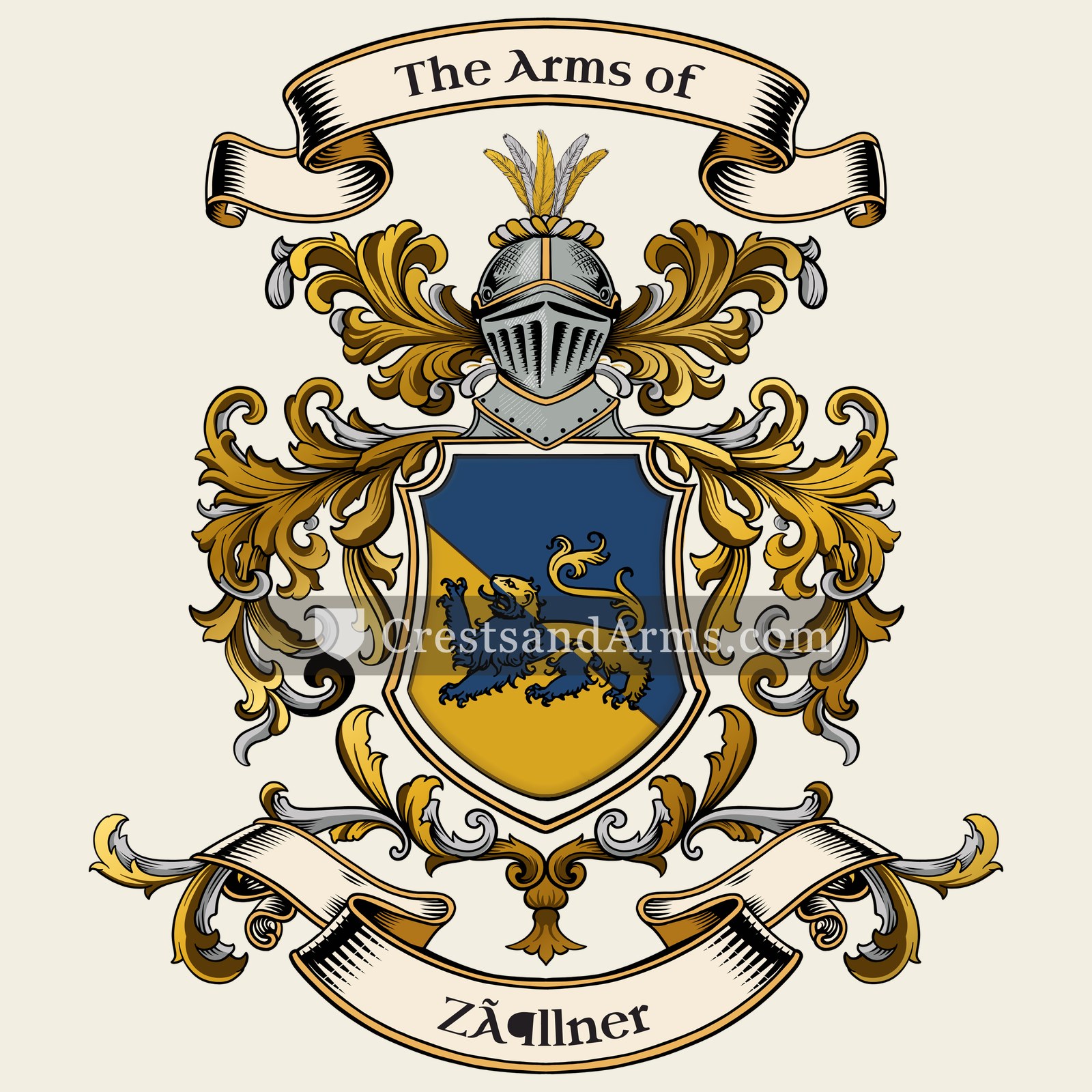


 grapesPlenty, and the labour of the vine